Oxford’s 19 Poems
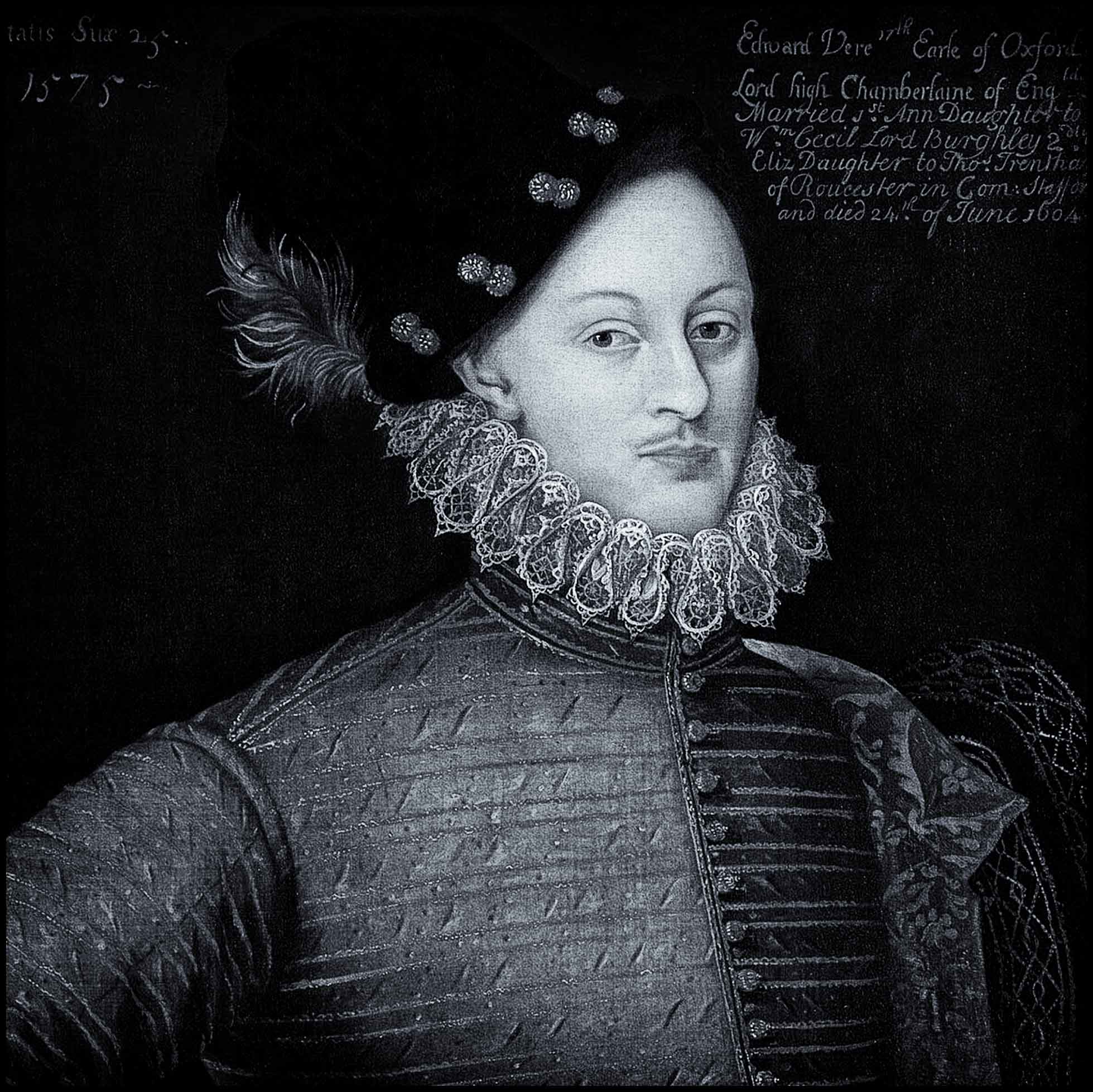
There are different numbers of poems in the various Oxford verse collections. We have not included claimed attributions of work with more scholarly ascriptions to other poets but we have included most of what appears in the De Vere Society canon, even though George Gascoigne’s poem, In Peascod Time is quite obviously not the work of the Earl. Steven May allocates still fewer to Oxford than we have included here in his seminal account of the Elizabethan Courtier poets 1. None of Oxford’s poetry has ever made it into one of the editions of The Oxford Book of English Verse.
1. Labour and its Reward.
The Earl of Oxford to the Reader of Bedingfield’s Cardanus’s Comfort
The labouring man that tills the fertile soil And reaps the harvest fruit hath not indeed The gain, but pain, and if for all his toil He gets the straw, the lord will have the seed. The manchet fine falls not unto his share, On coarsest cheat his hungry stomach feeds. The landlord doth possess the finest fare; He pulls the flowers, the other plucks but weeds. The mason poor, that builds the lordly halls, Dwells not in them, they are for high degree; His cottage is compact in paper walls, And not with brick or stone as others be. The idle drone that labours not at all Sucks up the sweet of honey from the bee. Who worketh most, to their share least doth fall; With due desert reward will never be. The swiftest hare unto the mastiff slow Ofttimes doth fall to him as for a prey; The greyhound thereby doth miss his game we know For which he made such speedy haste away. So he that takes the pain to pen the book Reaps not the gifts of goodly golden Muse, But those gain that who on the work shall look, And from the sour the sweet by skill doth choose. For he that beats the bush the bird not gets, But who sits still and holdeth fast the nets.
2. Care and Disappointment
Even as the wax doth melt, or dew consume away Before the sun, so I, behold, through careful thoughts decay, For my best luck leads me to such sinister state That I do waste with others’ love, that hath myself in hate, And he that beats the bush, the wished bird not gets, But such I see as sitteth still and holds the fowling nets. The drone more honey sucks, that laboureth not at all, Than doth the bee, to whose most pain least pleasure doth befall; The gardener sows the seeds whereof the flowers do grow, And others yet do gather them that took less pain, I know; So I the pleasant grape have pulled from the vine, And yet I languish in great thirst while others drink the wine. Thus like a woeful wight I wove my web of woe; The more I would weed out my cares, the more they seem to grow. The which betokeneth hope, forsaken is of me, That with the careful culver climbs the worn and withered tree To entertain my thoughts, and there my hap to moan, That never am less idle, lo, than when I am alone.
E Ox.
3. The Forsaken Man
A crown of bays shall that man wear That triumphs over me, For black and tawny will I wear, Which mourning colours be. The more I followed one, the more she fled away, As Daphne did full long agone, Apollo’s wishful prey; The more my plaints resound, the less she pities me; The more I sought, the less I found that mine she meant to be. Melpomene, alas, with doleful tunes help then, And sing (bis) woe worth on me, forsaken man. Then Daphne’s bays shall that man wear that triumphs over me, For black and tawny will I wear, which mourning colours be. Drown me you trickling tears, you wailful wights of woe; Come help these hands to rent my hairs, my rueful haps to show On whom the scorching flames of love doth feed you see; Ah a lalalantida, my dear dame hath thus tormented me. Wherefore you Muses nine, with doleful tunes help then, And sing (bis) woe worth on me, forsaken man. Then Daphne’s bays shall that man wear that triumphs over me, For black and tawny will I wear, which mourning colours be. An anchor’s life to lead, with nails to scratch my grave, Where earthly worms on me shall feed is all the joys I crave, And hide myself from shame, sith that mine eyes do see, Ah a alantida, my dear dame hath thus tormented me. And all that present be, with doleful tunes help then, And sing (bis) woe worth on me, forsaken man.
4. Loss of Good Name
Framed in the front of forlorn hope, past all recovery I stayless stand t’ abide the shock of shame and infamy; My life, through lingering long, is lodged in lair of loathsome ways, My death delayed to keep from life the harm of hapless days; My sprites, my heart, my wit and force in deep distress are drowned; The only loss of my good name is of these griefs the ground. And since my mind, my wit, my head, my voice and tongue are weak To utter, move, devise, conceive, sound forth, declare and speak Such piercing plaints as answer might, or would, my woeful case, Help crave I must, and crave I will, with tears upon my face Of all that may in heaven or hell, in earth or air, be found To wail with me this loss of mine, as of these griefs the ground. Help gods, help saints, help sprites and powers that in the heaven do dwell, Help ye that are to wail, ay wont, ye howling hounds of hell, Help man, help beasts, help birds and worms that on the earth doth toil, Help fish, help fowl that flocks and feeds upon the salt-sea soil, Help echo that in air doth flee, shrill voices to resound To wail this loss of my good name, as of these griefs the ground.
5. I am not as I seem to be
I am not as I seem to be, Nor when I smile I am not glad, A thrall although you count me free I, most in mirth, most pensive-sad; I smile to shade my bitter spite, As Hannibal, that saw in sight His country soil, with Carthage town, By Roman force defaced down. And Caesar, that presented was With noble Pompey’s princely head, As ’twere some judge to rule the case, A flood of tears he seemed to shed; Although indeed it sprung of joy, Yet others thought it was annoy; Thus contraries be used, I find, Of wise to cloak the covert mind. I Hannibal, that smiles for grief, And let you Caesar’s tears suffice, The one that laughs at his mischief, The other all for joy that cries; I smile to see me scorned so, You weep for joy to see me woe, And I a heart by love slain dead Presents, in place of Pompey’s head. O cruel hap and hard estate That forceth me to love my foe, Accursed by so foul a fate My choice for to prefix it so, So long to fight with secret sore, And find no secret salve therefor; Some purge their pain by plaint, I find, But I in vain do breathe my wind.
6. Reason and Affection
If care or skill could conquer vain desire, Or reason’s reins my strong affection stay, Then should my sights to quiet breast retire, And shun such signs as secret thoughts bewray; Uncomely love, which now lurks in my breast, Should cease my grief, through wisdom’s power oppressed. But who can leave to look on Venus’ face, Or yieldeth not to Juno’s high estate? What wit so wise as gives not Pallas place? These virtues rare each god did yield amate, Save her alone who yet on earth doth reign, Whose beauty’s string no gods can well distrain. What worldly wight can hope for heavenly hire When only sights must make his secret moan? A silent suit doth seld to grace aspire; My hapless hap doth roll the restless stone; Yet Phoebe fair disdained the heavens above, To joy on earth her poor Endymion’s love. Rare is reward where none can justly crave, For chance is choice where reason makes no claim; Yet luck sometimes despairing souls doth save: A happy star made Gyges joy attain; A slavish smith of rude and rascal race Found means in time to gain a goddess’ grace. Then lofty love thy sacred sails advance; My seething seas shall flow with streams of tears. Amidst disdain drive forth my doleful chance; A valiant mind no deadly danger fears. Who loves aloft, and sets his heart on high, Deserves no pain though he doth pine and die.
7. Love and Wit
My meaning is to work what wonders love hath wrought, Wherewith I muse why men of wit have love so dearly bought; For love is worse than hate, and eke more harm hath done: Record I take of those that rede of Paris, Priam’s son. It seemed the god of sleep had mazed so much his wits When he refused wit for love, which cometh but by fits; But why accuse I him, who earth hath covered long? There be of his posterity alive, I do him wrong. Whom I might well condemn to be a cruel judge Unto myself, who hath the crime in others that I grudge.
8. The Meeting with Desire
The lively lark stretched forth her wing, The messenger of morning bright, And with her cheerful voice did sing The day’s approach, discharging night, When that Aurora, blushing red, Descried the guilt of Thetis’ bed. I went abroad to take the air, And in the meads I met a knight, Clad in carnation colour fair; I did salute this gentle wight, Of him I did his name inquire. He sighed, and said he was Desire. Desire I did desire to stay, Awhile with him I craved to talk; The courteous knight said me no nay, But hand in hand with me did walk. Then of Desire I asked again What thing did please, and what did pain? He smiled, and thus he answered then, “Desire can have no greater pain Than for to see another man That he desireth, to obtain; Nor greater joy can be than this, Than to enjoy that others miss.”
9. Love and Antagonism
The trickling tears that falls along my cheeks, The secret sighs that shows my inward grief, The present pains perforce that love ay seeks, Bids me renew my cares without relief In woeful song, in dole display, My pensive heart for to bewray. Bewray thy grief, thou woeful heart, with speed, Resign thy voice to her that caused thy woe; With irksome cries bewail thy late-done deed, For she thou lovest is sure thy mortal foe, And help for thee there is none sure, But still in pain thou must endure. The stricken deer hath help to heal his wound, The haggard hawk with toil is made full tame, The strongest tower the cannon lays on ground, The wisest wit that ever had the fame Was thrall to love by Cupid’s sleights; Then weigh my case with equal weights. She is my joy, she is my care and woe, She is my pain, she is my ease therefor, She is my death, she is my life also, She is my salve, she is my wounded sore; In fine, she hath the hand and knife That may both save and end my life. And shall I live on earth to be her thrall? And shall I sue and serve her all in vain? And shall I kiss the steps that she lets fall? And shall I pray the gods to keep the pain From her, that is so cruel still? No, no, on her work all your will. And let her feel the power of all your might, And let her have her most desire with speed, And let her pine away both day and night, And let her moan, and none lament her need, And let all those that shall her see Despise her state, and pity me.
10. Revenge of Wrong
Fain would I sing, but fury makes me fret And rage hath sworn to seek revenge of wrong; My mazed mind in malice so is set As death shall daunt my deadly dolours long; Patience perforce is such a pinching pain As die I will, or suffer wrong again. I am no sot to suffer such abuse As doth bereave my heart of his delight, Nor will I frame myself to such as use With calm consent to suffer such despite; No quiet sleep shall once possess mine eye Till wit have wrought his will on injury. My heart shall fail and hand shall lose his force, But some device shall pay despite his due, And fury shall consume my careful corse, Or raze the ground whereon my sorrow grew; Lo, thus in rage of ruthful mind refused, I rest revenged of whom I am abused.
11. Fond Desire
Come hither, shepherd swain! Sir, what do you require? I pray thee show to me thy name; My name is Fond Desire. When wert thou born, Desire? In pomp and prime of May. By whom, sweet boy, wert thou begot? By good conceit, men say. Tell me, who was thy nurse? Fresh youth in sugared joy. What was thy meat and daily food? Sad sighs with great annoy. What hadst thou then to drink? Unfeigned lovers’ tears. What cradle wert thou rocked in? In hope devoid of fears. What brought thee then asleep? Sweet speech, that liked me best. And where is now thy dwelling-place? In gentle hearts I rest. Doth company displease? It doth in many a one. Where would Desire then choose to be? He likes to muse alone. What feedeth most your sight? To gaze on favour still. What findest thou most to be thy foe? Disdain of my goodwill. Will ever age or death Bring thee unto decay? No, no, Desire both lives and dies Ten thousand times a day. Then, Fond Desire, farewell; Thou art no mate for me; I should be loath, methinks, to dwell With such a one as thee.
Earle of Oxenforde.
12. Winged with Desire
Winged with desire, I seek to mount on high, Clogged with mishap, yet am I kept full low; Who seeks to live and finds the way to die, Sith comfort ebbs and cares do daily flow, But sad despair would have me to retire, When smiling hope sets forward my desire. I still do toil, and never am at rest, Enjoying least when I do covet most; With weary thoughts are my green years oppressed, To danger drawn from my desired coast, Now crazed with care, then haled up with hope, With world at will, yet wanting wished scope. I like in heart, yet dare not say I love, And looks alone do lend me chief relief; I dwelt sometimes at rest, yet must remove; With feigned joy I hide my secret grief; I would possess, yet needs must flee the place Where I do seek to win my chiefest grace. Lo, thus I live twixt fear and comfort tossed, With least abode where best I feel content; I seld resort where I should settle most; My sliding times too soon with her are spent; I hover high, and soar where hope doth tower, Yet froward fate defers my happy hour. I live abroad, but still in secret grief, Then least alone when most I seem to lurk; I speak of peace, and live in endless strife, And when I play, then are my thoughts at work; In person far, that am in mind full near, Making light show where I esteem most dear. A malcontent, yet seem I pleased still, Bragging of heaven, yet feeling pains of hell; But time shall frame a time unto my will, Whenas in sport this earnest will I tell; Till then, sweet friend, abide these storms with me Which shall in joys of either fortunes be.
13. Love compared to a tennis-play.
Whenas the heart at tennis plays, and men to gaming fall, Love is the court, hope is the house, and favour serves the ball. The ball itself is true desert; the line ,which measure shows, Is reason, whereon judgment looks how players win or lose. The jetty is deceitful guile; the stopper, jealousy, Which hath Sir Argus’ hundred eyes wherewith to watch and pry. The fault, wherewith fifteen is lost, is want of wit and sense, And he that brings the racket in is double diligence. And lo, the racket is freewill, which makes the ball rebound; And noble beauty is the chase, of every game the ground. But rashness strikes the ball awry, and where is oversight? “A bandy ho,” the people cry, and so the ball takes flight. Now, in the end, good-liking proves content the game andgain. Thus, in a tennis, knit I love, a pleasure mixed with pain.
14. These beauties make me die
What cunning can express The favour of her face, To whom in this distress I do appeal for grace? A thousand Cupids fly About her gentle eye. From whence each throws a dart That kindleth soft sweet fire Within my sighing heart, Possessed by desire; No sweeter life I try, Than in her love to die. The lily in the field, That glories in his white, For pureness now must yield And render up his right; Heaven pictured in her face Doth promise joy and grace. Fair Cynthia’s silver light, That beats on running streams, Compares not with her white, Whose hairs are all sunbeams; Her virtues so do shine As day unto mine eyne. With this there is a red Exceeds the damask rose, Which in her cheeks is spread, Whence every favour grows; In sky there is no star That she surmounts not far. When Phoebus from the bed Of Thetis doth arise, The morning, blushing red, In fair carnation wise, He shows it in her face As queen of every grace. This pleasant lily-white, This taint of roseate red, This Cynthia’s silver light, This sweet fair Dea spread, These sunbeams in mine eye, These beauties make me die.
15. Who taught thee first to sigh, alas, my heart?
Who taught thee first to sigh, alas, my heart? Who taught thy tongue the woeful words of plaint? Who filled thine eyes with tears of bitter smart? Who gave thee grief, and made thy joys to faint? Who first did print with colours pale thy face? Who first did break thy sleeps of quiet rest? Above the rest in court, who gave thee grace? Who made thee strive in virtue to be best? In constant troth to bide so firm and sure, To scorn the world, regarding but thy friend, With patient mind each passion to endure, In one desire to settle to thy end? Love then thy choice, wherein such faith doth bind As nought but death may ever change thy mind.
16. Were I a King1
Were I a king, I could command content; Were I obscure, unknown should be my cares, And were I dead, no thought should me torment, Nor words, nor wrongs, nor loves, nor hopes, nor fears; A doubtful choice, of these things one to crave, A kingdom, or a cottage, or a grave. Return to the top
17. Sitting Alone Upon My Thought
Sitting alone upon my thought in melancholy mood, In sight of sea, and at my back an ancient hoary wood, I saw a fair young lady come, her secret fears to wail, Clad all in colour of a nun, and covered with a veil; Yet (for the day was calm and clear) I might discern her face, As one might see a damask rose hid under crystal glass.
Three times, with her soft hand, full hard on her left side she knocks, And sigh’d so sore as might have mov’d some pity in the rocks; From sighs and shedding amber tears into sweet song she brake, When thus the echo answered her to every word she spake:
Oh heavens ! who was the first that bred in me this fever ? Vere (Ver.) Who was the first that gave the wound whose fear I wear for ever ? Vere. What tyrant, Cupid, to my harm usurps thy golden quiver ? Vere. What sight first caught this heart and can from bondage it deliver ? Vere.
Yet who doth most adore this sight, oh hollow caves tell true ? You. What nymph deserves his liking best, yet doth in sorrow rue ? You. What makes him not reward good will with some reward or ruth ? Youth. What makes him show besides his birth, such pride and such untruth ? Youth.
May I his favour match with love, if he my love will try? Ay. May I requite his birth with faith ? Then faithful will I die ? Ay. And I, that knew this lady well, Said, Lord how great a miracle, To her how Echo told the truth, As true as Phoebus’ oracle.
The Earle of Oxforde.
18. If Women Could be Fair and yet not Fond
If women could be fair and yet not fond, Or that their love were firm not fickle, still, I would not marvel that they make men bond, By service long to purchase their good will; But when I see how frail those creatures are, I muse that men forget themselves so far.
To mark the choice they make, and how they change, How oft from Phacbus do they flee to Pan, Unsettled still like haggards wild they range, These gentle birds that fly from man to man; Who would not scorn and shake them from the fist And let them fly fair fools which way they list.
Yet for disport we fawn and flatter both, To pass the time when nothing else can please, And train them to our lure with subtle oath, Till, weary of their wiles, ourselves we ease; And then we say when we their fancy try, To play with fools, O what a fool was I.
19. In Peascod Time3
In peascod time when hound to horn gives ear while buck is killed, And little boys with pipes of corn sit keeping beasts in field, I went to gather strawberries tho’ when woods and groves were fair, And parched my face with Phoebus, lo, by walking in the air. I lay me down all by a stream and banks all overhead, And there I found the strangest dream, that ever young man had. Methought I saw each Christmas game, both revels all and some, And each thing else that man could name or might by fancy come, The substance of the thing I saw, in silence pass it shall, Because I lack the skill to draw, the order of them all. But Venus shall not ’scape my pen, whose maidens in disdain Sit feeding on the hearts of men, whom Cupid’s bow hath slain. And that blind Boy sat all in blood, bebathed to the ears, And like a conqueror he stood, and scorned lovers’ tears. “I have more hearts,” quoth he, “at call, than Caesar could command. “And like the deer I make them fall, that overcross the land. I do increase their wand’ring wits, till that I dim their sight. Tis I that do bereave them of their joy and chief delight.” Thus did I see this bragging Boy advance himself even then, Deriding at the wanton toys, of foolish loving men, Which when I saw for anger then my panting breast did beat, To see how he sat taunting them, upon his royal seat. O then I wished I had been free, and cured were my wound; Methought I could display his arms, and coward deeds expound But I perforce must stay my muse, full sore against my heart, For that I am a subject wight, and lanced with his dart. But if that I achieve the fort, which I have took in charge, My hand and head with quivering quill, shall blaze his name at large.
Footnotes
1 Steven W. May, The Elizabethan courtier poets: The poems and their contexts, (University of Missouri Press: Columbia [u.a.], 1991).
2 Here is Sydney’s response, which rather than a riposte, looks more like a disappointed teacher correcting the work of an errant pupil;
Wert thou a King yet not command content,
Since empire none thy mind could yet suffice,
Wert thou obscure still cares would thee torment;
But wert thou dead, all care and sorrow dies;
An easy choice of these things which to crave,
No kingdom nor a cottage but a grave.
3 Included to allow readers to judge, having read what lies above, whether this poem sounds like Oxford’s work. It is firmly attributed, in all non-Oxfordian anthologies, to George Gascoigne.