%%{init: {'theme': 'base'}}%%
flowchart LR
  classDef summary fill:#e8e4d4,stroke:#999,color:#333
  classDef conclusion fill:#4b86ab,stroke:#2c2c2a,color:#fff

  A(Knowledge & Theory) --> B[Evidence \& Observation]:::summary
  B --> C{Inference and Reasoning}
  B --> D{Cause and Effect}
  C --> E[Conclusion]:::conclusion
  D --> E
The Role of Evidence
What counts in the Authorship Balance?
Terraforming,
Narrative synthesis
Francis Bacon
Pseudonyms
Allonyms
Stigma of Print
Evidence
Geography
Every contention positing an alternative candidate, whether it be an Earl, a woman, a Spanish novelist or an alien, is forced to bypass the requirement for tangible evidence. In 150 years of trying, no proponents of any alternative author, however zealously fixated, have produced a single item of tangible evidence in support of their claim. For years Doubters insisted that evidence for Shakespeare was also intangible, circumstantial, insufficient to warrant unequivocal credit for the canon. Arguments would seek to assert an equivalence between evidence in the record and evidence generated by thought experiment.
The art of creating an alternative candidacy lies in the skill applied to synthesising a harbouring narrative with moorings for invented or artfully massaged stories which can be passed off as circumstantial evidence. Yet however intricate the construction of vessels at the quayside, you cannot dismiss the documentary record nor overcome historical singularities with tissue-paper battleships and pooh sticks. Everything will sink immediately once outside the harbour gates.
Francis Bacon, first claimant and still the premier alternative, is moved from the silent backroom world of Privy Council intellectuals into an adjacent even more shady backroom at an invented Ministry of Culture. The Earl of Oxford now dwells in a private ivory tower surrounded by secretaries and other writing minions, finishing plays years before they are performed. Christopher Marlowe is resurrected, his coronary inquiry dismissed, now sends in his work in from a still undiscovered hiding place in Holland. The harbours for Emilia Bassano Lanier (for Shakespeare was clearly a woman) and the Klingon candidate (for Shakespeare was clearly an alien) are all in need of a bit more dredging.
How were all these secrets kept? Pseudonyms, to hide a true author’s identity, barely exist in the theatre and allonyms, essential to any proposition in which Shakespeare is real person, don’t exist at all. Writing a script is only part of the work in producing a play.
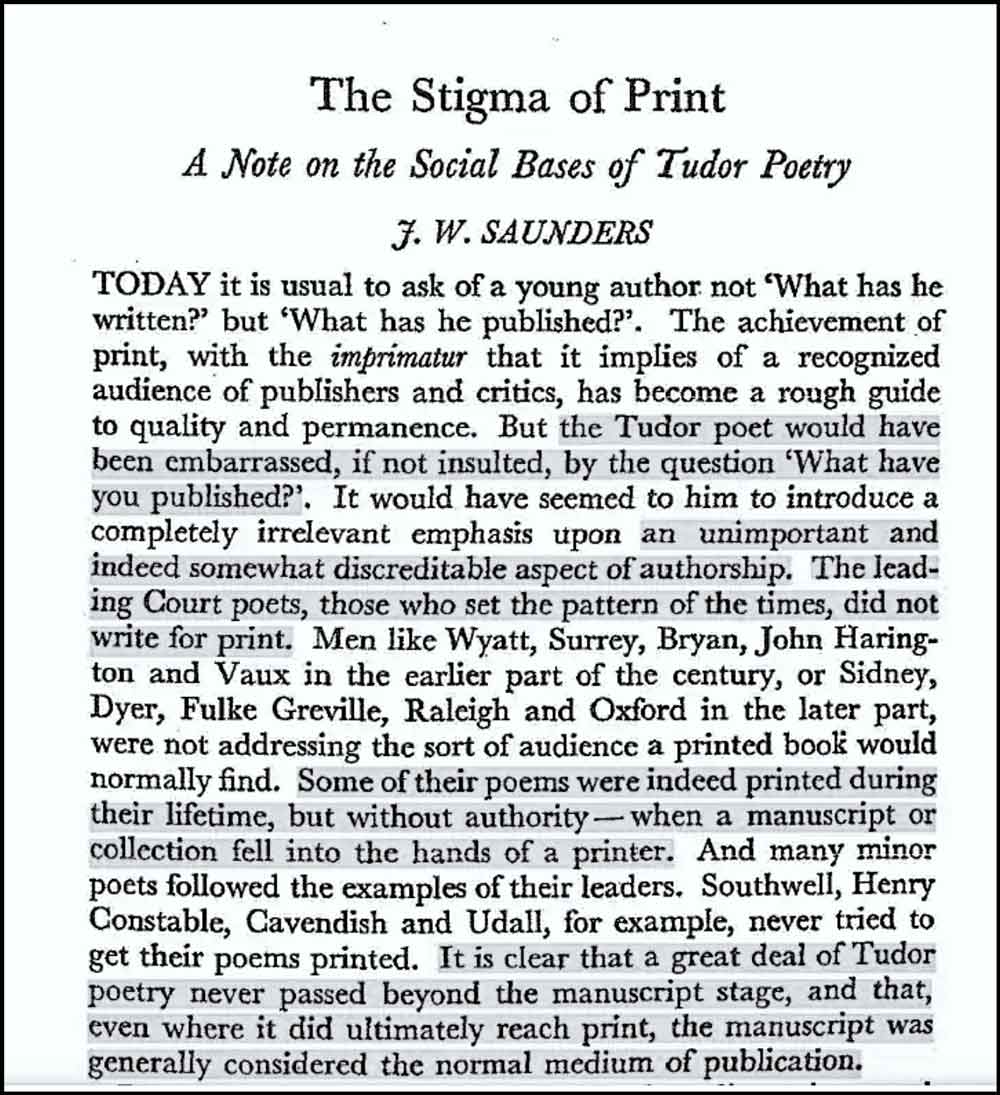
The invented cover for this keystone of doubt is the stigma of print. The source of the phrase is never cited. Popularised by Edward Arber in 1870, more recently, it has been associated not with aristocratic reticence (a fault few have ever possessed), but with feigned diffidence, which has always been more popular in the class. In his 1951 article J W Saunders points out how little aristocrats care about the attention of those beneath them. Elizabethan courtier poets were fond of vainly pretending that producing poetry was an effortless pastime,1 an unimportant frippery in their grand schemes—“just a little thing I dashed off in the bath before the tournament.”
This perfectly sound concept is converted from the false modesty of Wyatt, Sidney, Surrey and Vaux into a wholly invented fear that publishing work aimed at the masses would embarrass the ruling class to the point of compromising the reputation of the state. Other ideas–De Vere needing to work in secret to bypass liability for potentially dangerous subversion–are equally feeble. Censorship was a simple mechanism for dealing with public acceptability which drew simple lines, well understood by playwrights, actors and audience. Henry VI—political turmoil, edgy but acceptable; Julius Caesar—mob rule, edgy but sufficiently distant and scarily chaotic; deposition scenes—check your circumstances but usually permissible if it’s ancient history; apprentices rioting against immigrants—not a chance. Satirise the Queen herself—“Come along, Mr Jonson, we don’t want no trouble, there’s a nice room in The Tower waiting for you”.
In reality (as opposed to The Looking Glass World of the Doubter), the history of theatre contains no playwright concealed behind a facade for a 25-year career.
Oxford was more of a subversive than Shakespeare, a regular and incompetent, interfering malcontent. Shakespeare used the whole dramatic canvas, extending it wherever he could, but never, as Jonson and Nash did, would he use it to settle scores or endanger his own freedom to continue. He was running a business. Besides, playwrights need to talk to actors, dressers, painters, stagehands, musicians, carpenters. They need to understand props, write for costume changes and deal with actors who find their lines difficult to deliver. This is especially true of playwrights who want to innovate. They need to be present in their work environment. It’s why they are playwrights rather than playwriters.
The concealed genius scenario is impossible however you look at it. Every sovereign in Europe was courting popular poets, writers, artists and musicians to enhance their reputation for enlightenment. An aristocratic Shakespeare would have been the ultimate rosette at Elizabeth’s court, like Dante and Tasso in Italy or Gongora and De Vega in Spain. Since primary rosette status was De Vere’s all-consuming lifetime ambition, hiding his unmatchable qualifications behind a screen of anonymity would have been madness—for him, for Burghley and especially for the Queen.
This facile mask-making isn’t evidence yet seemingly rational people accept it as keystone belief.
The Role of Evidence in Hypothesis.
A hypothesis is a precursor to a theory. First comes a conjecture. A conjecture is a proposition that is unproven but appears likely to be true and can survive some experiment. A hypothesis is a specific, testable prediction. It is a proposed explanation for a narrow set of factual data. To qualify as a hypothesis, it must be falsifiable—there must be a theoretical way to prove it wrong through observation or experimentation. A theory is a well-substantiated explanation of some aspect of the evidence, acquired through method and repeatedly tested and confirmed through observation. Unlike a hypothesis, a theory provides a broad framework that integrates and generalizes hypotheses. Beyond theory lies law.
Shakespearean Doubt counts as none of the above.
It is not a theory: it lacks verified, peer-reviewed evidence and does not offer a predictive framework which can withstand scrutiny.
It rarely amounts to a hypothesis: most authorship doubts are formulated in ways that are intentionally difficult or even impossible to falsify. If every piece of evidence for “Shakespeare of Stratford” is dismissed as part of a “cover-up”, the idea cannot be tested or disproven.
It is often less than a conjecture: while a conjecture is based on observing a consistent pattern, authorship doubt often relies on argumentum ex silentio—the absence of things that should be in the record—rather than the presence of things that actually are, especially those in the form of contradictory evidence. Ideas that merely require counter evidence to be disregarded, rather than disproved, lead nowhere.
The Falsifiability Trap
The primary reason Doubt can never reach the status of a hypothesis is its lack of falsifiability. When every piece of documentary evidence for the Stratford man–the First Folio, the monument, the legal record–is dismissed as irrelevant, inadmissible or part of a clandestine cover-up, the counter claims become immune to evidence. An idea that cannot be proven wrong is not a scientific or historical proposition. It is dogma. It is the Doubters who are “orthodox”. Dogma is the foundation of orthodoxy.
%%{init: {'theme': 'base'}}%%
flowchart LR
  classDef summary fill:#e8e4d4,stroke:#999,color:#333
  classDef conclusion fill:#4b86ab,stroke:#2c2c2a,color:#fff

  A(Thought experiment) --> B[Embroidery]:::summary
  B --> C{Invention}
  B --> D{Conclusion Leap}
  C --> E[Dogma]
  D --> E
  E --> F[Orthodoxy]:::conclusion
Ultimately, these contentions belong in the realm of speculative fiction. They function by “moving the goalposts”—demanding to see a 21st-century level of bureaucratic documentation for a Bankside playwright, while providing nothing whatsoever for their own candidates. Oxfordians cannot show that Oxford ever set foot in a Bankside theatre or even saw a play, much less wrote one. Shakespeare has a documented life in the theatre.
False Grails
Of course, this does not stop people attempting to apply academic or scientific method to the search for circumstantial evidence. Many years have been spent chasing false grails in the hope that they might contain an explanation of circumstances favourable to their ideas. There are academic theses on the subject of Doubt (two), there are hundreds of books (9000 was the most recent claim, nearly all self-published). None start where they should, dealing convincingly with the evidence that actually does exist. As their authors rationalise their way to conclusions, they never seem to test their initial concepts against reality’s benchmarks.
The more venturesome doubters, willing to acknowledge that real evidence for Shakespeare does exist, concoct imaginative counter-explanations. These become complex stories with creatively embroidered ‘circumstantial’ evidence explaining why their candidate was overlooked, why their candidate died too early (or not at all), why they had to remain hidden, why they wrote in from abroad, stored plays in drawers, or how they secretly commanded a writers room, or how they dictated plays to a secretary whose handwriting was very like Shakespeare’s.3 All feature contorted cover-ups that are intended to account for the absence of mechanisms and practices involved in production for the stage. These tales have to be accompanied by their obverse, explanations of why the the evidence which does exist for Shakespeare can be rendered meaningless.
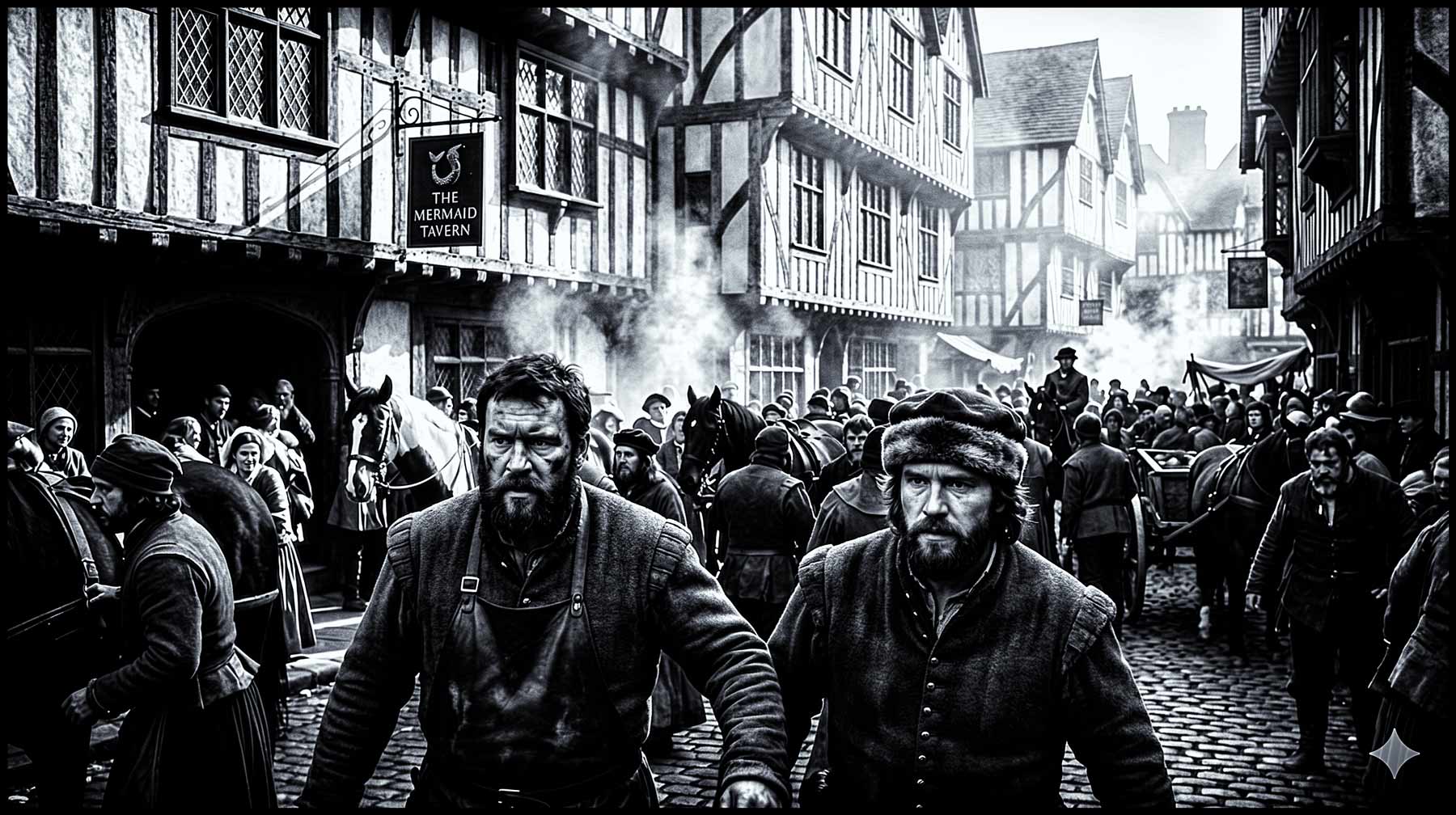
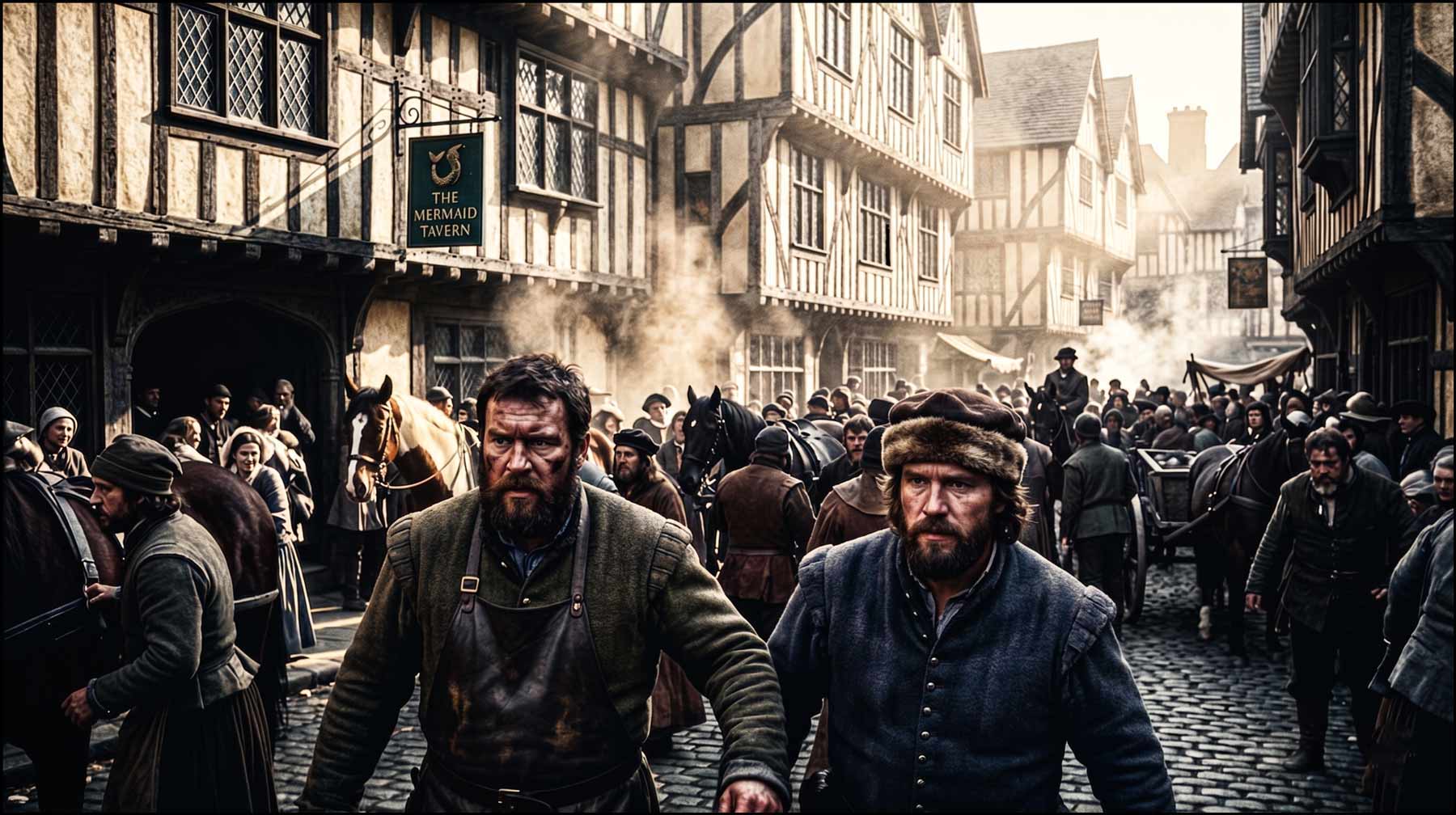
The audience leaving the Mermaid Tavern, Bankside, after a performance. ⌕
Whole pages in these books often seem to be written in rhetorical questions. “How did a Stratford schoolboy become the greatest writer on earth?”. “How did he know about life at court?” “Where did he get his knowledge of Italy?”, “He must have seen this painting as it depicts Adonis with a hat”. When the coincidence can be made to appear as if it concurs with the truth, it immediately weighs in the balance evidence of elite expertise or arcane tourist knowledge gained from personal experience.
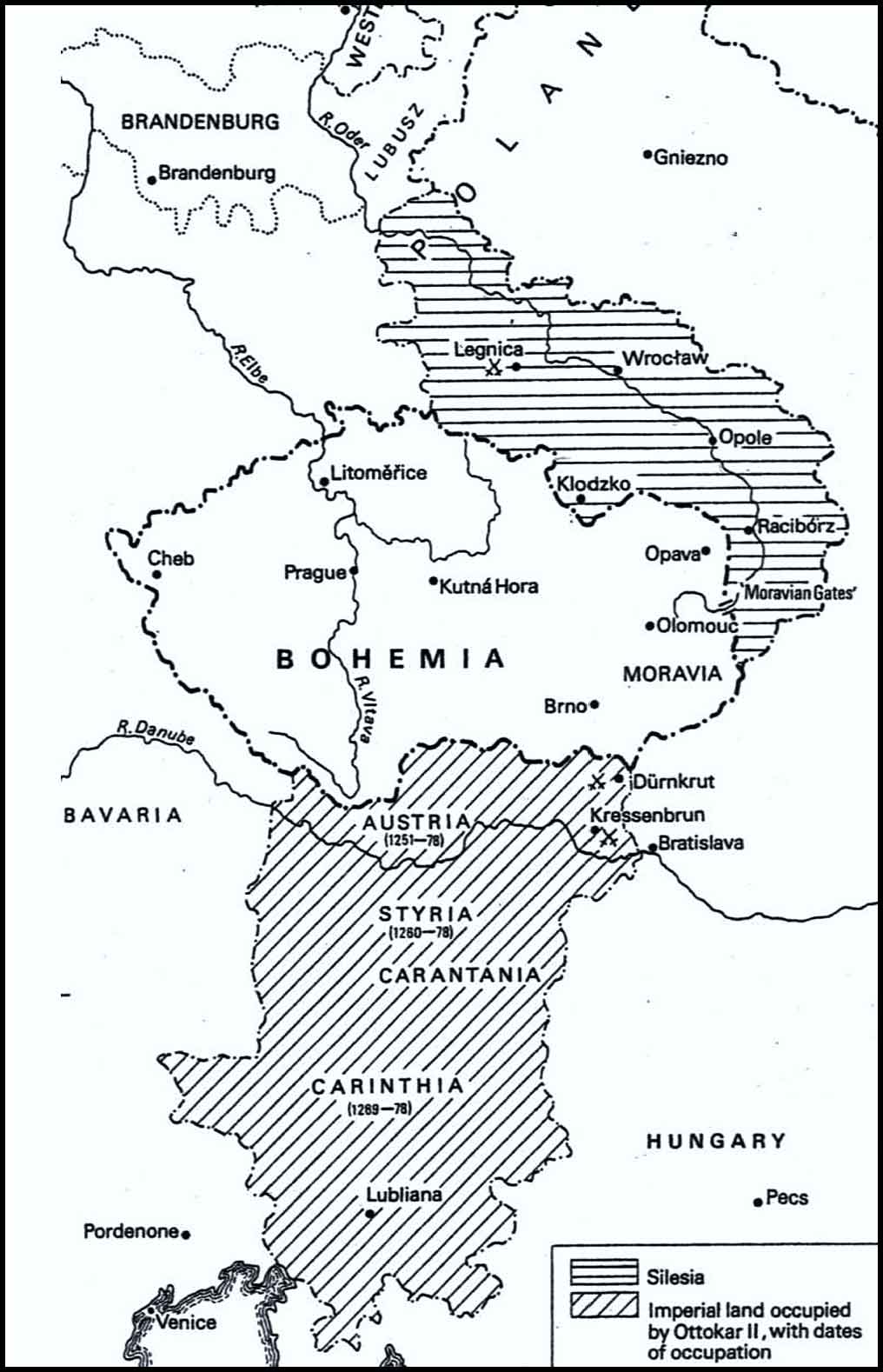
When, by contrast, it comes to Shakespeare’s geographical mistakes—giving Venice a Duke, senators and tides that need to be caught, or floods in Verona and sycamore groves against its walls—their inventions stretch beyond all patience as flimsy straws are clutched to cover the playwright’s carelessness with detail. “Bohemia did technically have a short coastline for five years in the 12th century thanks to a morganatic marriage—Shakespeare/Oxford is exact in his knowledge, again!”. An interminable online discussion on whether ot not it was possible to sail from Verona to Milan broke the Amazon review commenting system after 10,000 lengthy postings.4
The so-called “difficult” questions posed by doubters all have simple answers. Quests to find elite knowledge in the plays that must have come from personal visits or experience or professional training ultimately fail. It’s another failure of the imagination. A barrister can exhibit fantastic knowledge of the chemistry of tar production in a two week trial, but the detailed knowledge will have disappeared completely a fortnight after the verdict is in.
There is no problematic, arcane, unusual or elite knowledge in any Bankside play that demands we look for an alternative author. Will Shakespeare might be the most narrowly accurate observer of the human race who ever lived but the boundaries of his knowledge of the world are a good match for his fellow, grammar school educated peers. Bankside playwrights all make similar mistakes when it comes, for example, to court procedure and access to the monarch. Playwrights of the time mostly follow their sources without checking to see if Milan was a port, if Bohemia had a coastline or the Mediterranean had tides. Ben Jonson, with a more enquiring mind,5 poked fun at their negligence in his later published work.
It is futile to pretend that errors in scene-painting can be used to dismiss what lies, easily accessed, in the records or has been uncovered in 400 years of scholarship.
Comment
If you are a Doubter and believe there is tangible evidence supporting your candidate, please, list it below and we’ll be happy to consider it. It takes seconds to create a github account using one of your other IDs. Besides allowing you to comment here, it will give you access to technology’s engine room, allowing you to kick its tyres, and remind you of what life was like before online monetisation.
Footnotes
J. W. Saunders, “The Stigma of Print: A Note on the Social Bases of Tudor Poetry,” Oxford University Press (OUP), Essays in Criticism, Vol. I, no. 2, 1951, pp. 139–164.↩︎
Even one of the Doubter’s most famous recruits, Supreme Court Justice J P Stevens, acknowledged that the Oxfordian cause suffered from not having a single unified theory. The 2011 film Anonymous demonstrated this more effectively than any argument showing just how impossible it is to thread Oxfordian theory into a coherent narrative.↩︎
Fran Gidley, “Shakespeare in composition, Evidence for Oxford’s Authorship of ‘The Book of Sir Thomas More’,” SOF, The Oxfordian, Vol. Vi, 2003, “Yet, however important More may prove to be in the authorship debate, even more exciting to Oxfordian scholars must be the revelations about the process by which Oxford/Shakespeare composed his plays. It demonstrates how energetically he revised, although the tedious task of producing the fair copy was something he assigned to a secretary, in this case, Anthony Munday. With improvements in mind, Munday’s neat transcription got turned into a mere working draft, marked up and worked over by the two scribes now taking his dictation.””.↩︎
Sadly, the evidence for this pointless marathon disappeared when Amazon realised what the ability to post reviews of reviews had become, removing the entire system, deleting every comment on everything. It has never been repeated but thanks to books like The Shakespeare guide to Italy (Richard Paul Roe, The Shakespeare guide to Italy: Retracing the Bard’s unknown travels, (Harper Perennial: New York [u.a.], 2011)), hope for proving the necessity of a trip to Italy springs eternal. Oxfraud excavated a 16th century 500-page travelogue and ran the text through LaTeX, indexing the Oxfordian destinations to demonstrate how people really got from one place to another. It’s been completely ignored by everyone who might need to be enlightened by its extravagant period travel detail. Download it and explore.↩︎
Grant Williams, Rory Loughnane, and William E. Engel (eds.), “Ben Jonson, Timber, or, Discoveries (1641),” in “Ben Jonson, Timber, or, Discoveries (1641),” The Memory Arts in Renaissance England: A Critical Anthology, (Cambridge University Press: Cambridge, 2016), pp. 135–137.↩︎