An End to Doubt
Shakespeare’s authorship is a Fact
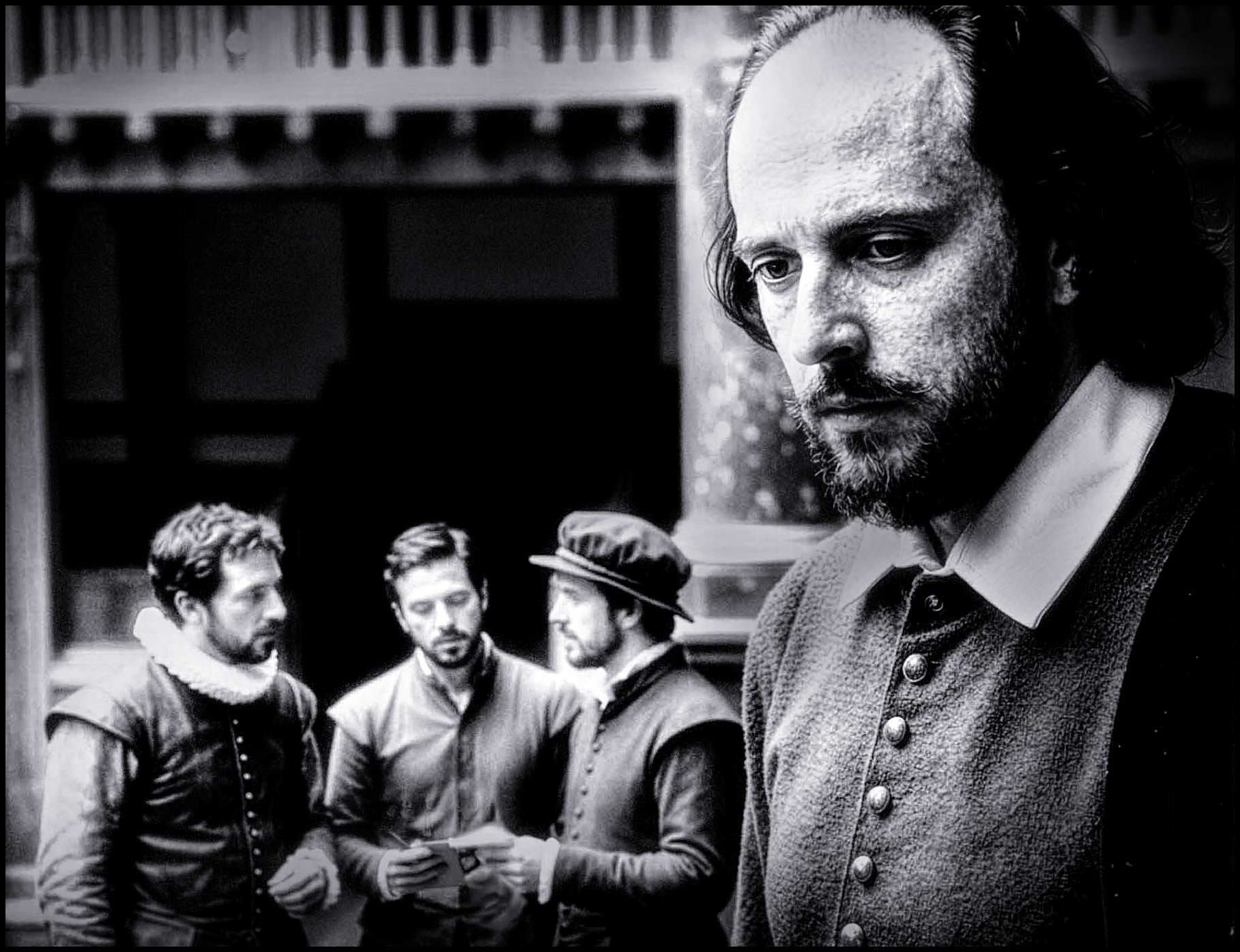
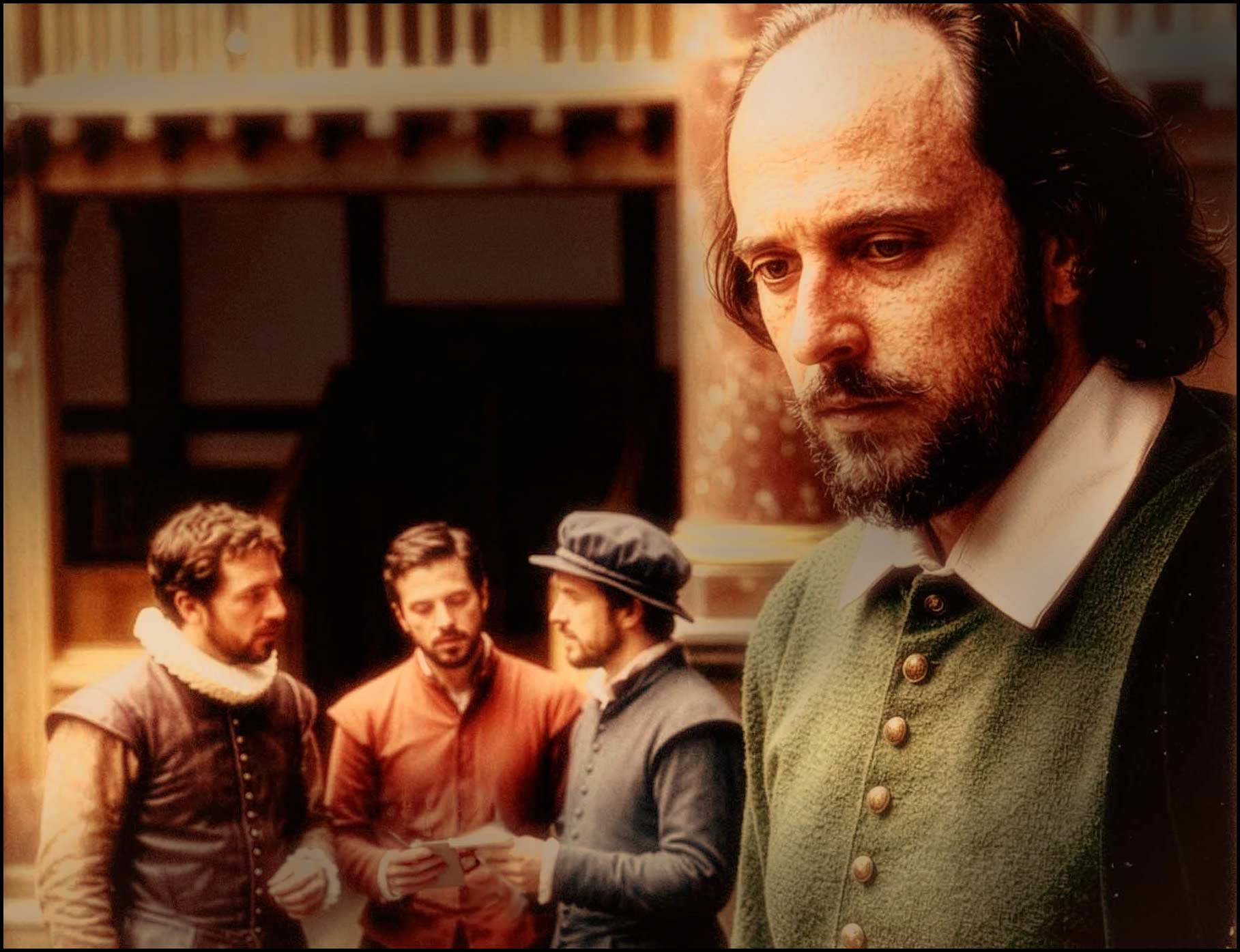
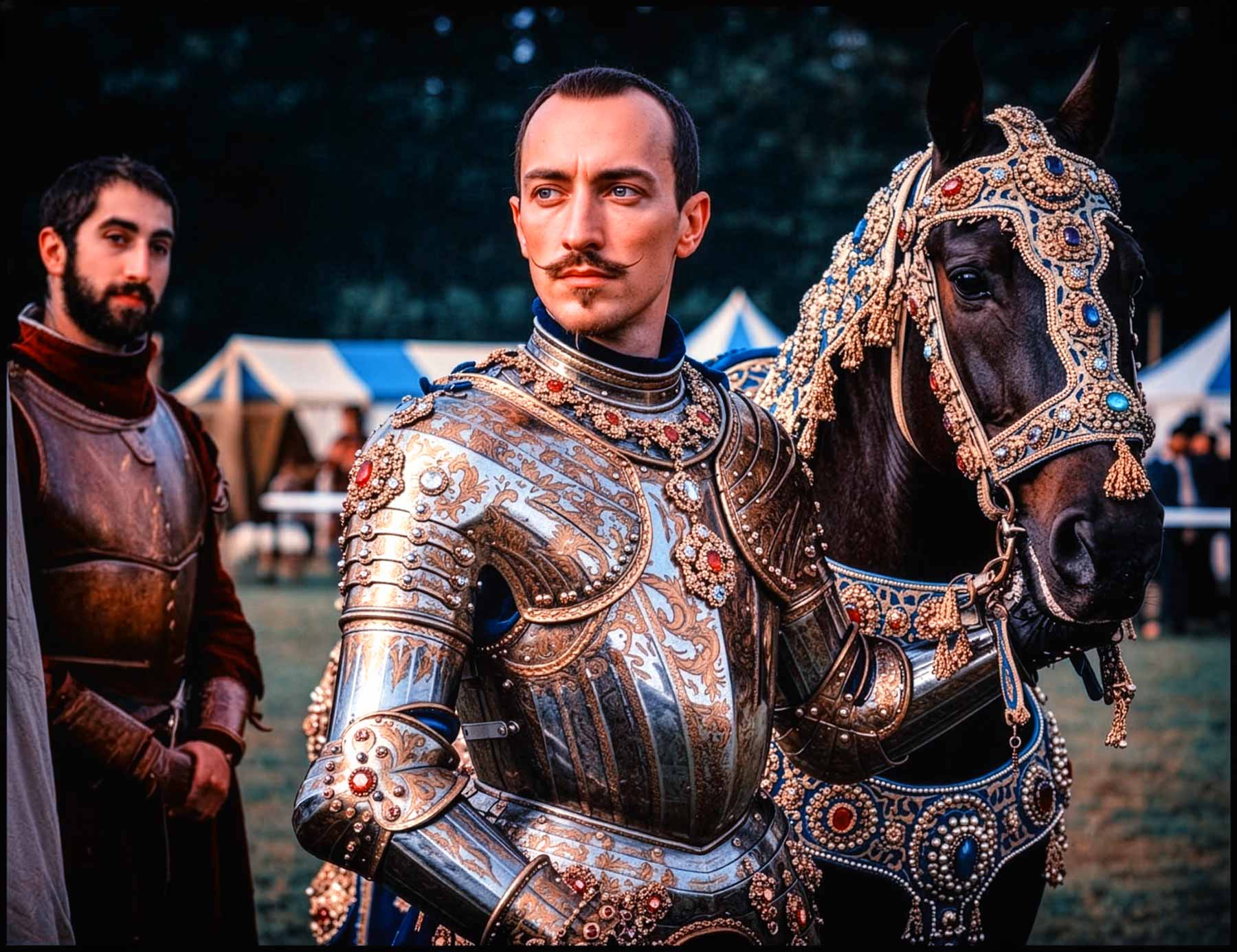
The image is an AI reconstruction of the 40-year old Shakespeare created by first correcting the drafting errors in the Droueshout engraving. Using the corrected skull metrics, harmonised with those of the monument. Using forensic reconstruction techniques, we’ve rebuilt a face that we hope his colleagues would recognise. Our man looks completely at home at The Globe, with the worried look of every playwright a day or two before the première. Place your pointer on the image to see the man himself in colour. Follow the process of construction here. ⌕
Prima Facie Shakespeare
Welcome to a new authorship domain, a site with no doubts about Shakespeare. This new site grew from an older one, Oxfraud.com, which in turn was the product of a group with decades of experience in defending Shakespeare from attempts to separate him from the credit for his work. Trying to disinherit one of the greatest dramatists who ever lived–parting him from his artistic legacy without tangible evidence or sensible hypotheses–can hardly be called a noble quest. It has proved, however, in the past at least, an easy way for headline-seekers to create dramatic headlines, then turning those into profitable clickbait.
Speculation about a hidden author for the whole canon begins, in almost all cases, with fanciful, ill-defined claims that his work was too grand in its vision, too broad in its knowledge of high society, too specific in its understanding of women, and too accomplished in its art to have been created by a middle-class man from a small town 100 miles north of London in the late sixteenth century.
The notion that someone higher-born, better-qualified, better-gendered or better-educated must have been responsible can be an alluring enigma at first glance. However, pursuing this path toward alternative candidates is fated to arrive at a dead end—an evidence vacuum in which authorship has to be wrenched away from historical evidence then drowned in rhetorical questions and thought experiment. Chisel away at what isn’t necessary and eventually all that remains is blind faith—“well, if all these famous people think so, there must be something in it”.
The authorship debate, in the absence of logic, reason and evidence becomes a Looking Glass World where words mean only what the speaker says they mean. As art historian Simon Schama notes, the pursuit of candidates better suited to the role of the world’s best playwright represents a “catastrophic failure of the imagination on the subject of imagination”. Will’s colleagues and competitors–the pioneers of Bankside professional theatre–were not aristocrats or philosophers; they were businessmen, professional writers and well-paid actors. And the West Midlands has always been England’s primary source of entrepreneurial money makers. It’s not just a failure of imagination though. Understand the history of Bankside Theatre development and imagination will correctly locate its creators, not lead you astray like the White Rabbit.
Instead of arguing with every new thought experiment we looked for a simple, short, evidence-based demonstration.
An Alternative to Alternatives
After years, decades sometimes, of arguing with proponents of alternative cases, we have looked for an alternative ourselves. Those who favour alternative candidates have developed a form logic with sufficient elasticity to accommodate the wildest suppositions. They will claim, without a scrap of evidence, that by the age of 14 a young Edward De Vere produced and published his uncle Golding’s three-volume translation of Ovid, while he was still receiving two hours latin tuition a day. Yet they reject a simple historical fact, supported in numerous, unimpeachable primary sources proving, (we will be using that word), that Shakespeare was an actor, a sharer and a householder in the King’s Men.1
Instead of arguing with every new proposition, every new self-published book, every new thought experiment, we looked for a simple, short, evidence-based demonstration that Shakespeare of Stratford was Shakespeare of Bankside. And of course, there is one. More than one. We present the first, The Prima Facie Case here.
Simplicity
Start with a simple fact. There is no tangible evidence supporting any candidate other than Will of Stratford. None. Ask any Shakespeare Doubter for tangible evidence of alternative authorship. Everything offered in return will be inference, supposition and guesswork. Every conclusion will involve at least one prodigious leap.
We have reduced the proof to nine items of evidence and 100 words. A two-minute read, ten if you look at the primary sources.
Scholarship and evidence countenance no alternative authorship. Today, there are over 500 items of tangible evidence in a growing collection at the Folger Museum, all connecting Shakespeare’s life to his work. Lena Orlin’s masterly work The Private Life of William Shakespeare2 clears the biographical mists of time that doubters use as a weapon. Her book offers extensive new research and excellent scholarship on the lives of the Shakespeares and their neighbours in Stratford delivering genuinely new insight into their world. A more recent collaboration has extended this landscape with a detailed picture of the cultural and intellectual life of the Midlands in Shakespeare’s youth.3 The science of modern algorithmic stylometry has advanced from simple frequency analysis of basic digital texts to sophisticated metadata-tagging of gigantic corpora now ready for stylistic analysis based on usage of parts of speech rather than tokenised word usage. New versions of EEBO, new comparative tools, and new research techniques have opened the doors to greater certainties in attribution with tools like the new CQP interface to Early English Books on Line (EEBO) at the University of Lancaster.
But to banish doubt, you don’t need Principal Component Analysis or years in the archives. This site offers simplicity. Software architects know that simplicity is the hardest thing to design into anything. The Prima Facie Case (PFC) is the result of distilling the “Authorship Question” into two minima:
the minimum amount of evidence to link the man to the work
the minimum number of words needed to explain it.
As Shakespeare scholars have always known, the task of attributing the canon to its owner using existing tangible evidence becomes straightforward once you are determined to ignore what does not contribute.
The Prima Facie Case
We have reduced the proof to nine items of evidence and 250 words. A two-minute read if you ignore the captions, seven minutes if you don’t. Less time than you have spent following us this far.
The PFC links documentary, conclusive evidence that William Shakespeare of Stratford wrote the First Folio. Everything else, the objects of the Sonnets, the identity of the dark lady, the sources of Hamlet, canals in Italy, hidden codes in the text, 17-based gematria—the entire diaphanous fogbank of imaginary circumstantial “evidence” created by Doubters lies outside its scope. None of that affects the central hypothesis. Until challenged by valid counter evidence it denies all alternative claims. It doesn’t preclude collaboration with other authors or any new scholastic research; it simply presents an insurmountable hurdle to anyone arguing for a “hidden” author.
And…
If Shakespeare wrote the plays in the First Folio, the rest of the canon belongs to him. Ironically, the modern focus on identifying non-Shakespearean contributors has only served to eliminate all of the hidden authors of the whole canon. The more we understand about the creators of Bankside theatre, the further outsiders seem from the process. Perhaps with the possible exception of time-travelling, shape-shifting aliens, capable of transforming themselves into Will himself—but Klingons? Like aristocrats and dead people, they’re permanently out of the race.
More articles
Hand D
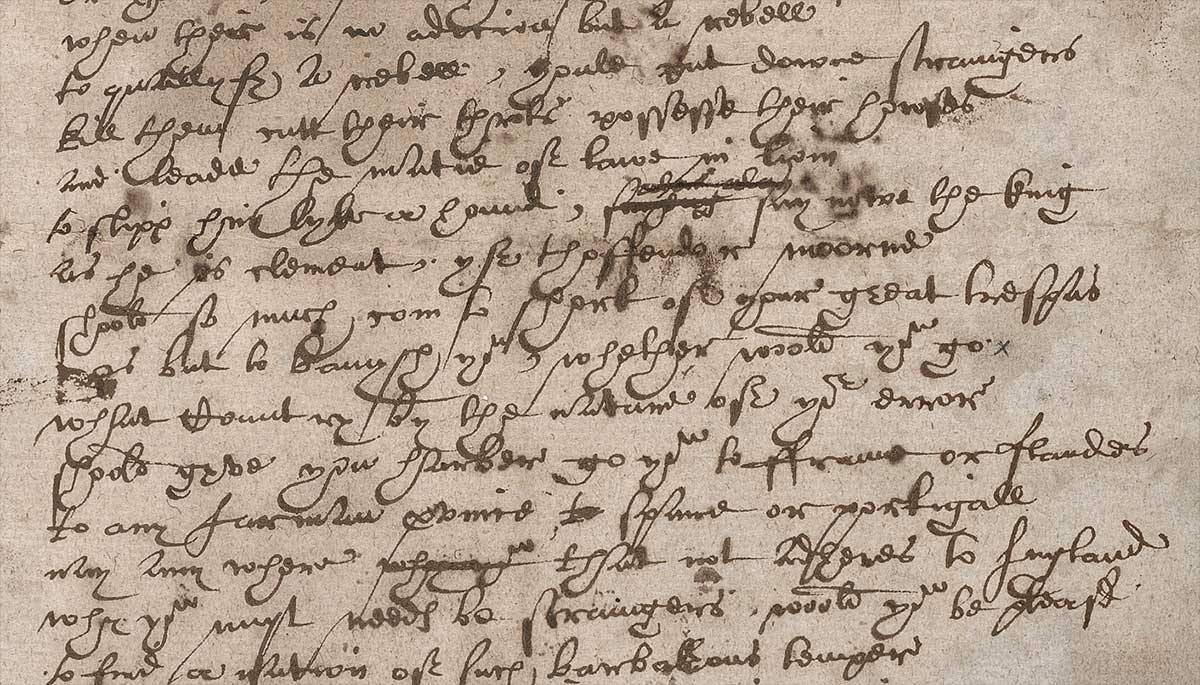 Canonical handwritten work. The witnessed signatures are unquestionably those of Will Shakespeare and the owner of Hand D is unquestionably that of an Elizabethan playwright who is really good at his job.
Travels
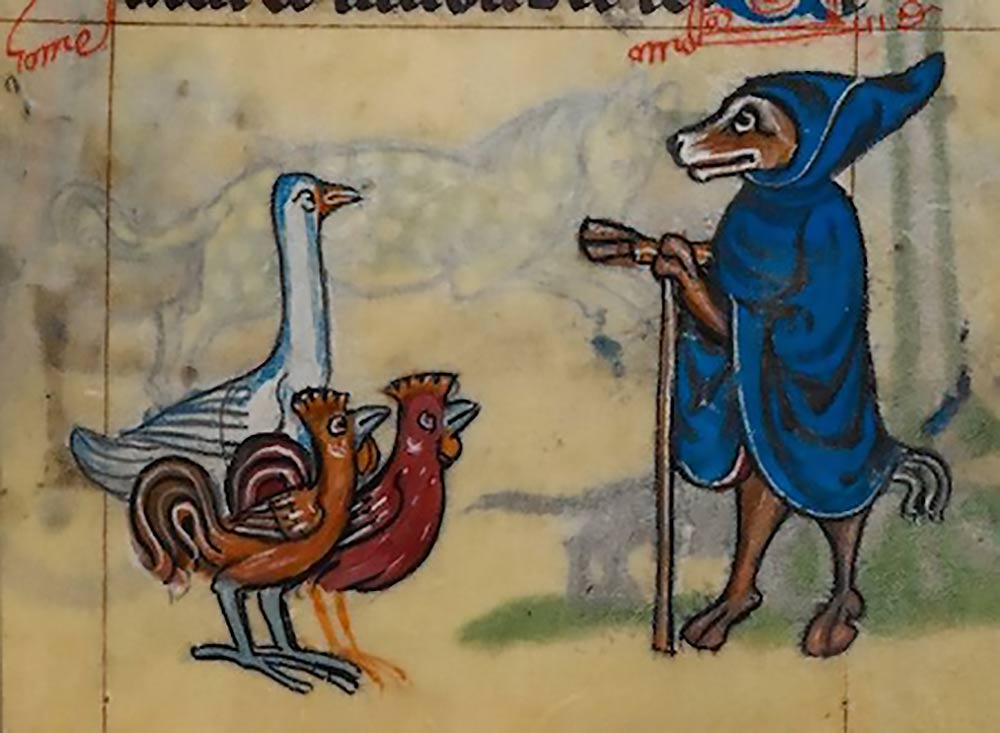 Mapping the Author’s travels. Where the “Italianate Englishman” found his settings. But who really found what? Is there any elite knowledge demanding foreign travel? Is Romeo’s sycamore still there in Verona?
The Courtier
 The Whitehall Presence Chamber. Was the playwright really familiar with the procedure and etiquette of the court? Inside the complex ritual of a world that only an aristocrat could describe with such precision.
Footnotes
See The Prima Facie Case which includes the necessary documents from the period.↩︎
Lena Cowen Orlin, The Private Life of William Shakespeare, (OUP Oxford: Oxford, 2021).↩︎