Cervantes
Reaching for the Unreachable Star
We have been reliably informed on this group’s Facebook page that “It is no secret that one author is behind the Shakespeare and Cervantes corpus”. That should probably be ‘corpora’, but anyway, it is an intriguing thought. Could the author of the greatest Spanish and English literary works be one in the same?1 The person who brought this fascinating self-evident truth to our attention assumed that this meant Oxenford also wrote Don Quixote, but he ignored the more likely alternative: that Miguel de Cervantes is, in fact, the true author of the works of William Shakespeare1. The language barrier means that it is not an easy argument to make, but where is the fun in easy? Challenge Accepted!
This is going to be worse than the windmills…
SanchoPanza
Cervantes’s life matches up with Shakespeare’s canon in many interesting ways, most notably in the leaving of it; there is no need to alter the timeline of Shakespeare to accommodate an unfortunately timed death. That alone makes him a better candidate than Oxenford, but there is more! Cervantes was most likely born in 1547, in a village of Castile the name of which I do not care enough to remember. The family, pursued by debt, relocated to Madrid, where it is speculated Cervantes may have gone to college–there is no documentary evidence he had any education–and from which he fled in 1569 apparently to avoid charges related to a duel. He travelled to Italy, settling for a time in the household of a Cardinal in Rome, before travelling to Naples and joining the war against the Ottoman Empire.
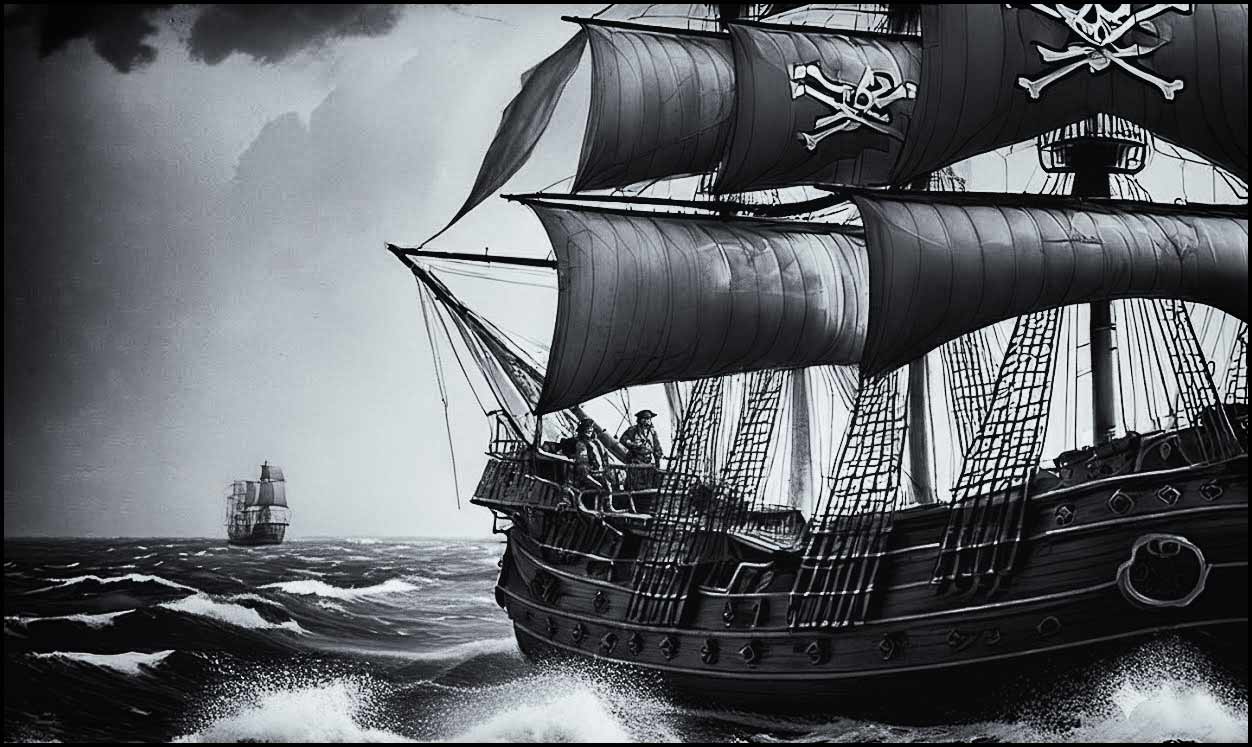
Pirates
Cervantes served heroically in “the greatest event ever seen in past or present times”, the Battle of Lepanto, being wounded twice in the chest and suffering another wound that permanently cost him the use of his left arm.2 After his service in the war, Cervantes was sailing home with his brother Rodrigo when their ship was waylaid by corsairs. Cervantes and Rodrigo were both captured and held for ransom; his family had only enough resources to ransom one brother, and his family chose the younger brother, Rodrigo.3
Cervantes was ransomed by a charity in 1580 after 5 years of captivity. With his place in the family hierarchy made abundantly clear, Cervantes returned home to presumably very awkward Thanksgiving dinners.
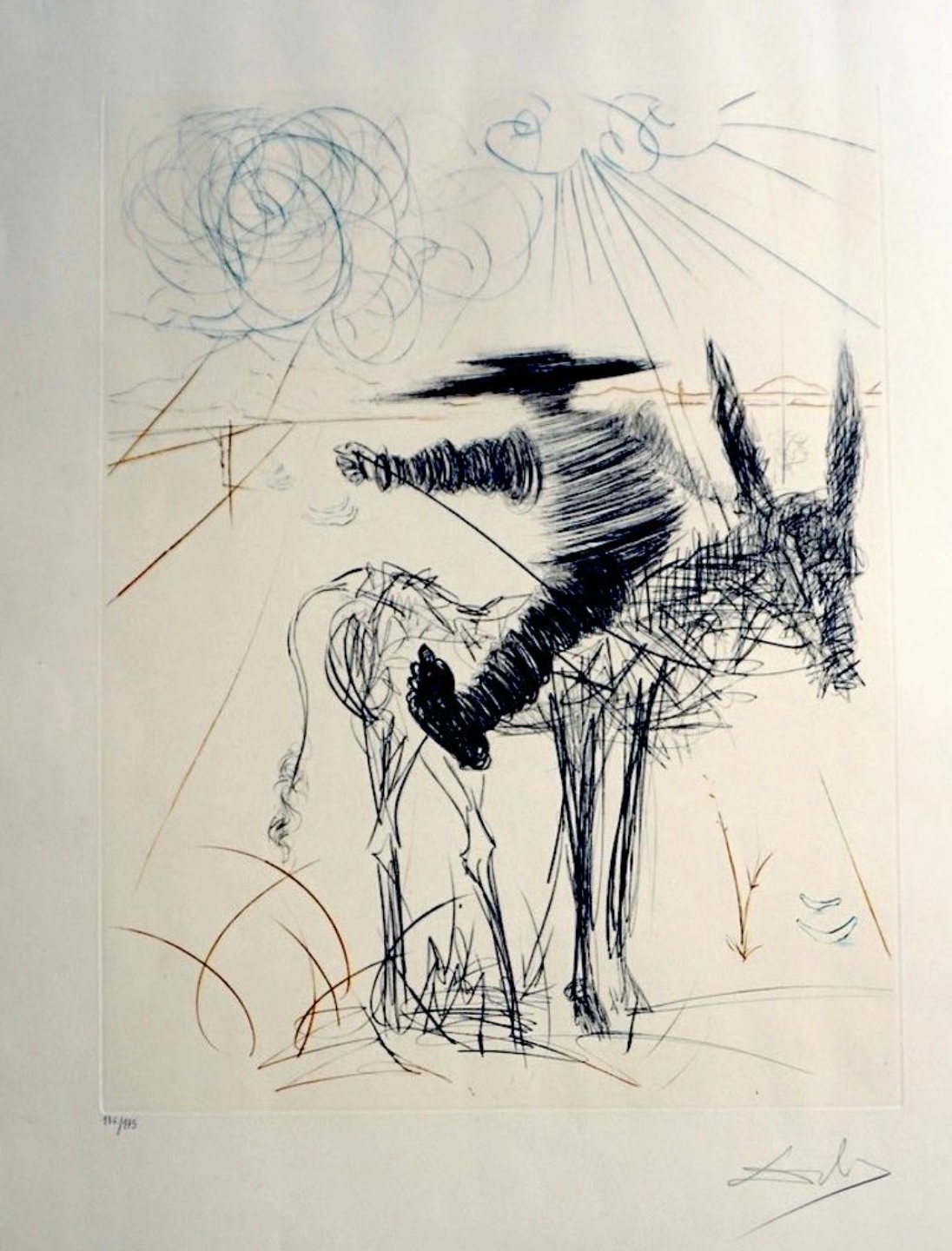
His post war life in Spain was not marked by success. He held several posts, including being a government procurement officer (for the Spanish Armada, which went well), a tax collector and a spy. He wrote one published novel and sought but did not obtain a government position in the Americas. And then, 25 years after his return, Cervantes published the first part of Don Quixote to immediate acclaim and became one of the most famous men in Spain. A second, startlingly meta, part followed ten years later. Together they form the greatest prose work the world has ever known, which I read on an annual basis after finishing my formal education until, first, I wed and my time was no longer solely mine own, and second, the creeping realization of my ever-diminishing share of human mortality began to argue against spending any of it on such projects.
Too Many Coincidences
Cervantes claimed to have written over 20 plays before Don Quixote was published, but none of them survive… or do they?1 Between the publication of La Galatea in 1585 and publication of the first part of Don Quixote in 1605, there are no published works attributed to Cervantes. Shakespeare’s first plays were performed around 1590, 10 years after Cervantes was ransomed, leaving plenty of time for Cervantes to start writing the Shakespeare part of his canon before the plays first were acted in England. Could it be that Cervantes was unable to make a living with plays in Spain, and saw the burgeoning market for plays for the English public stage as an opportunity?1 Could he have had his plays, ahead of their time in his native land, surreptitiously passed to his “front” in England, small time actor William Shakespeare?1 Is it too much to think that those “more than 20” lost plays are, in fact, the works that make up the Shakespeare canon?4 What else could he have been doing during those 20 years of literary non-productivity?5 Could the inventor of the modern novel really have written nothing of lasting note during those years?4 The logic is inescapable.
Sure, he COULD have written Shakespeare but did he?1 Granted, it seems odd that only one of Cervantes’s Shakespeare plays is set in Spain, but remember that many of the plays came hard on the heels of the Armada. Also, as we know from the work of the eminent Elizabethan historian Shekhar Kapur, Spain was constantly plotting to put the Infanta Isabella in Elizabeth’s place. It would not have been wise, butts in seats wise, to focus the plays on Spain. He did travel to Italy, which would explain why so much Italy shines through the Shakespeare/Cervantes plays. From the signatures we have, Shakespeare was definitely right-handed, so Cervantes’s inability to use his left arm is also a point in his favor.6 And as a kicker, in Chapter IX of the first part of Don Quixote, Cervantes claims that from that point forward, Don Quixote was translated from the works of an Arab historian named Cide Hamete Benengeli. If you squint really hard at the first name (Cide is the equivalent of Sir) you can sort of torture “Hamlet” out a common Castilian version of a traditional Arab name. And “Benengeli” kind of looks like it has something to do with England. Well, or angels, or an eggplant, or a Vermont based ice cream company. Anyway, EVIDENCE!
On the negative side, as with Shakespeare, there is no documentary evidence Cervantes had any education. For some reason this does not seem to have unleashed a flurry of aghast internet based experts drinking the Dunning Kruger grape Flavor Aid and declaring he could not have written Don Quixote. Yet.
The bigger drawback is that assuming his education and literacy, the language he was educated in is not English. Spanish was Cervantes’s native tongue and there is no evidence that he was literate in English. Granted, both Jozef Korzeniowski7 and Vladimir Nabokov wrote masterful novels in English despite it not being their native tongue, but there must be a source for Cervantes’s knowledge of the English language and none springs to the eye. While he could have learned the language while in captivity, there is no obvious connection to anyone who could have taught him.
Translation is the more likely alternative. Learned Morisco translators were apparently wandering the streets and markets of Toledo in Cervantes’s time, willing to work for raisins and wheat, so there is an obvious source. Problem solved! It may not be a GOOD answer, but by God it is AN answer! Written by Cervantes, translated by a kidnapped roving scholar8, recopied in English by Shakespeare! It all fits!
The translated works, though, are all that remains. The Spanish language originals were lost to time. The “Shakespeare” works were not translated back into Spanish until the 18th century, by which time Spanish had progressed from the Early Modern Spanish of Cervantes’s day to modern Spanish.9 It is sad to think that reading Shakespeare in Spanish today is like reading something rammed through Google Translate twice. So much is lost on the transfer from Spanish to English; think how much more is lost in the translation back to a different form of Spanish. I am reminded of Charles Kinbote in his Timonian cabin in Utana, trying and failing to piece out the title reference in John Shade’s poem Pale Fire by translating Timon of Athens back into English from his Zemblan edition of Timon Afenski.10
Anyway, Cervantes continued to write as Shakespeare after the success of Don Quixote, even turning part of his Spanish masterpiece into a play, now lost. Cervantes died and was buried on April 23, 1616. His amanuensis died on the same date, ten days later.

Notes
1 No.
2 It also earned him the sobriquet “The One-Handed Man of Lepanto” and gave his numerous literary enemies (including the author of a spurious second volume of DQ) the opportunity to use his wounded warrior status against him as an insult because, well, those were different times. “Thank you for your service” was apparently not a thing.
3 His mother’s name was Leonor. But maybe it should have been Sophie.
4 Yes.
5 Skimming money as a tax collector.11
6 A point admittedly undercut by the idea that the plays were written by Cervantes, translated by another man and later transcribed by a third. Who cares? If you wanted intellectual consistency, you would not be a Denialist.
7 Smart ass. Joseph Conrad.
8 Rereading Chapter IX recently, it suddenly occurred to me that while Cervantes paid the translator in raisins and wheat he also apparently… held the translator captive in his house until he finished. How did I not notice this before? I hope he did not do that with his English translator but patterns of behavior are hard to break.
9 Maybe. I am not actually researching this.
10 “The sun is a thief: she lures the sea
and robs it. The moon is a thief:
he steals his silvery light from the sun.
The sea is a thief: it dissolves the moon.”
Pale Fire is my favorite English language novel of all time and sometimes you just have to SCRATCH THAT ITCH.12 My fondness for Pale Fire may also well explain my predilection for footnoting my footnotes.
11 Allegedly.
12 Also Cf, fn 7, supra.13
13 The Sonnets. Crap. I forgot about the sonnets…. I have it! Maybe Cervantes helped his close friend14 Lope de Vega get some of his sonnets published in England, using the same translator and same front man. Lope de Vega wrote something like 1600 sonnets. What is 154 more? Problem solved!
14 “[B]ut there is not one [poet] as bad as Cervantes, nor so stupid as to praise Don Quixote.” So, maybe not “close”. Or for that matter, “friend”.15
15 Lope de Vega’s last words were reportedly a scandalous deathbed confession: “All right, now I’ll say it. Dante makes me sick.” Epic. Granted, Union Major General “Uncle John” Sedgwick’s last words at the Battle of Spotsylvania still take the candle,16 but epic nonetheless.
16 “[Those sharpshooters] could not hit an elephant at this distance.”