Why is there a ‘debate’?
Why separate Shakespeare from the Bankside playwrights?
It’s not just a question of evidence
It can’t be denied that Shakespeare could have left a little more behind. Times were different. An Oxfordian will write gigabytes of ‘reasoned’ argument about what the absence of school records means whilst paying not the smallest attention to contemporary references, such as that made by William Basse, to Shakespeare as an author, tragedian and playwright. The latter, a contributive, contemporary primary source is ignored. The former, which contributes nothing whatsoever to the advance of any argument, is a cornerstone of the Oxfordian case.
Why?
Shakespeare was uneducated
The most powerful myth in The Flat Shakespeare Society is that Stratford upon Avon was a bookless backwater far from London, and that Will grew up impoverished and uneducated simply because no enrolment records from the grammar school exist. Although the same is true of Ben Jonson and other Bankside professionals, this is the springboard for the disqualification of Shakespeare because contrarians feel that without records entitled to conclude he didn’t go to school. This extends to the idea that his family and children were also illiterate, that the whole of Warwickshire was mostly illiterate and even to the manifestly ludicrous contention (since his role as an actor has to be accepted) that actors could also be illiterate.
You can disprove the last contention by reading Midsummer Night’s Dream, in which the subject of an actor’s literacy pops up on stage. Only the oldest of the Rude Mechanicals has problems reading his part. Peter Quince, the director, a lowly carpenter despite his artistic pretensions, probably didn’t go to grammar school himself but he knows the latin for improvisation ex tempore. Shakespeare gives us living guides to Bankside theatre production in his plays within plays. Hamlet has two, The Taming of the Shrew, Love’s Labours Lost, The Tempest and The Merry Wives of Windsor all contain actors at work. As do half a dozen plays by his Bankside competitors. Drama, interludes and masques at court were expensive indulgences for the wealthiest men in London. Plays on Bankside were showbiz, for everyone who could spend a penny. The audiences measured 10-20,000 a month. Yet to sustain their fantasies of a hidden Earl, Oxfordian must ignore all of that, inventing a new history of English theatre development, tailored to a candidate who didn’t live long enough to see a Jacobean drama, let alone write ten of them.
Shakespeare was far from uneducated. He would have been fluent in Latin (and had some ‘small Greek’), familiar with the ancients, geography and even a bit of science. His knowledge, as measured from his drama, is a match for all the other grammar school boys who wrote for Bankside.
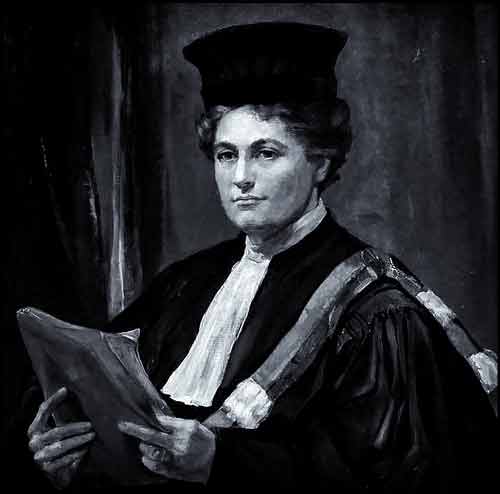
In fact Will’s knowledge in the plays maps onto the education he would have received in Stratford more or less perfectly. Oxford’s, not so much. Caroline Spurgeon spent her academic life studying Shakespeare’s vocabulary and though her 1935 book, Shakespeare’s Imagery has never been a best seller it comprehensively surveys 7,000 images. She lists, categorisesm annotates and describes the vocabulary and background of a Midlands countryman. No Oxfordian, to my knowledge, has ever tried to take issue with her. We know from his letters, in which he spelled phonetically, and by rhymed words in his poems, that Oxford had an East Anglian accent.
Shakespeare should have been more interesting
Romantic poet, Samuel Taylor Coleridge started this. His romantic chums, Byron, de Quincy, Shelley and Keats were all interesting types, experimenting with sex, drugs, the subconscious and making a name for themselves as rebels. The previous generation featured larger than life types such as Garrick, Dr Johnson and Mad John Wilmot, Earl of Rochester. Why does the little we know of Shakespeare reveal him to be so prosaic and money-obsessed? Why couldn’t he be more like the Earl? We are mythmaking again—the hard evidence De Vere left behind reveals him to be even more prosaic and money-obsessed. 2
To build a legend around a man who could possibly be the greatest writer ever to pick up a pen requires more than wills, property transactions and details of his legal nitpickings. Why, when we want heroic deeds, can we only find venal parsimony? That’s just life. I doubt many people would want T S Eliot at their dinner table either.
Shakespeare was an actor
There can be no doubt about this. Title pages, court records and cast lists prove it. Shakespeare received a grant of cloth from the Master of the King’s wardrobe for James’ coronation. You can’t deny it.
However, you don’t like actors. You might say not. You might even think not. You might admire their work. There might be one you like, you may have a great friend who acts but mostly you avoid them. If you don’t you are one. And even then you probably still steer clear of actors. If you stopped actors from beginning their sentences with ‘I’ they would have nothing to say. Worst of of all, when this writer acted on the stage at college, they pulled faces at him.
Shakespeare, the greatest English lyrical poet can’t have been an actor. Damon and Affleck are actors. Look at how many people are engaged in arguing that they did not write Good Will Hunting. A full-blooded modern authorship debate. Because they are actors.
Shakespeare wasn’t upper class
Most people who wrote poetry had to be men of leisure before the Elizabethan theatre changed everything. Writing entertainments for the court took time, consumed expensive resource and definitely demanded the sort of education that only aristocrats could afford. All of the plays are about aristocrats so the author must have been one. Yet not only is court life in the plays depicted from the point of view of a commoner, full of inaccuracy and ignorance of court procedure, but the characters we love tend not to be Kings and Queens and Heads of State. For every Anthony there is an Enobarbus. For every Hal there is at least one Falstaff. Will is
“always sympathisingly cognisant with the talk of the illogical classes”
says Walter Bagehot. Shakespeare made himself wealthy writing about these people, selling tickets and filling theatres. He didn’t write for courtiers. All the other successful playwrights of his day were also commoners. Writing for commoners.
There’s very little more to it
There is no more to it that that. Read Anderson3 and his contorted, riddling, faux detection of you like. Read Strittmatter’s profound delusions if you must.4 Read Eva Turner Clark’s utterly impossible alternative dating scheme intended to account for the embarrassing failure of her candidate to live long enough to write all the plays.5 Read Ogburn,6 who wouldn’t recognise a Shakespeare scholar if a US Supreme Court Judge ordered one to bite him. All the Oxfordian Authorship Studies Experts are self-appointed authorities with an annoying tendency to cite themselves and friendly co-workers over and over again, rather than engage in debate.
Their contentions have been repeatedly and consistently reasoned away by scholars but this matters naught to them. In online debate, they don’t come back to support their contentions with new evidence or discoveries. They simply wait till they think it’s safe, then come back with the same disproved ideas and start again. Another trick is to sell the idea that authorship is a vast and fer reaching controversy (instead of a very small tent of contrarians) by saying ‘can we leave this issue aside and talk about something else?’. Lamest of all, they will distract from the weakness of their case by throwing tantrums about non-issues or their supposed ill-treatment.
In 150 years not a single item of solid evidence for any alternative candidate’s authorship has emerged from the woodwork. Apart from inference, supposition and deduction, guesswork and invention there is nothing at all to counter the idea that the work was written by the man whose name it bears and who his contemporaries knew as Will from Stratford.
Footnotes
Arthur Schopenhauer and T. Bailey Saunders, Art of Controversy, (Lulu Press, Inc., 2020).↩︎
To understand the Earl’s obsession with money, try reading the letters he wrote trying to secure a tin monopoly.↩︎
Mark Anderson, "Shakespeare" by another name: The life of Edward de Vere, Earl of Oxford, the man who was Shakespeare, (Gotham Books: New York, NY [u.a.], 2005).↩︎
Roger A. Stritmatter, On the Date, Sources and Design of Shakespeare’s The Tempest, (McFarland & Company, Inc., Publishers: Jefferson, 2013).↩︎
Eva Turner Clark, The Man who was Shakespeare, (Richard R Smith, 1937).↩︎
Dorothy Ogburn and Charlton, This star of England: "William Shake-speare," man of the Renaissance, (Greenwood Press, 1972).↩︎