Armada
Oxford, piqued at not being offered a more senior role in the Armada crisis of 1588, refused to organise the defence of Harwich, failing to understand its crucial military…
The Archive of the Earl’s Correspondence
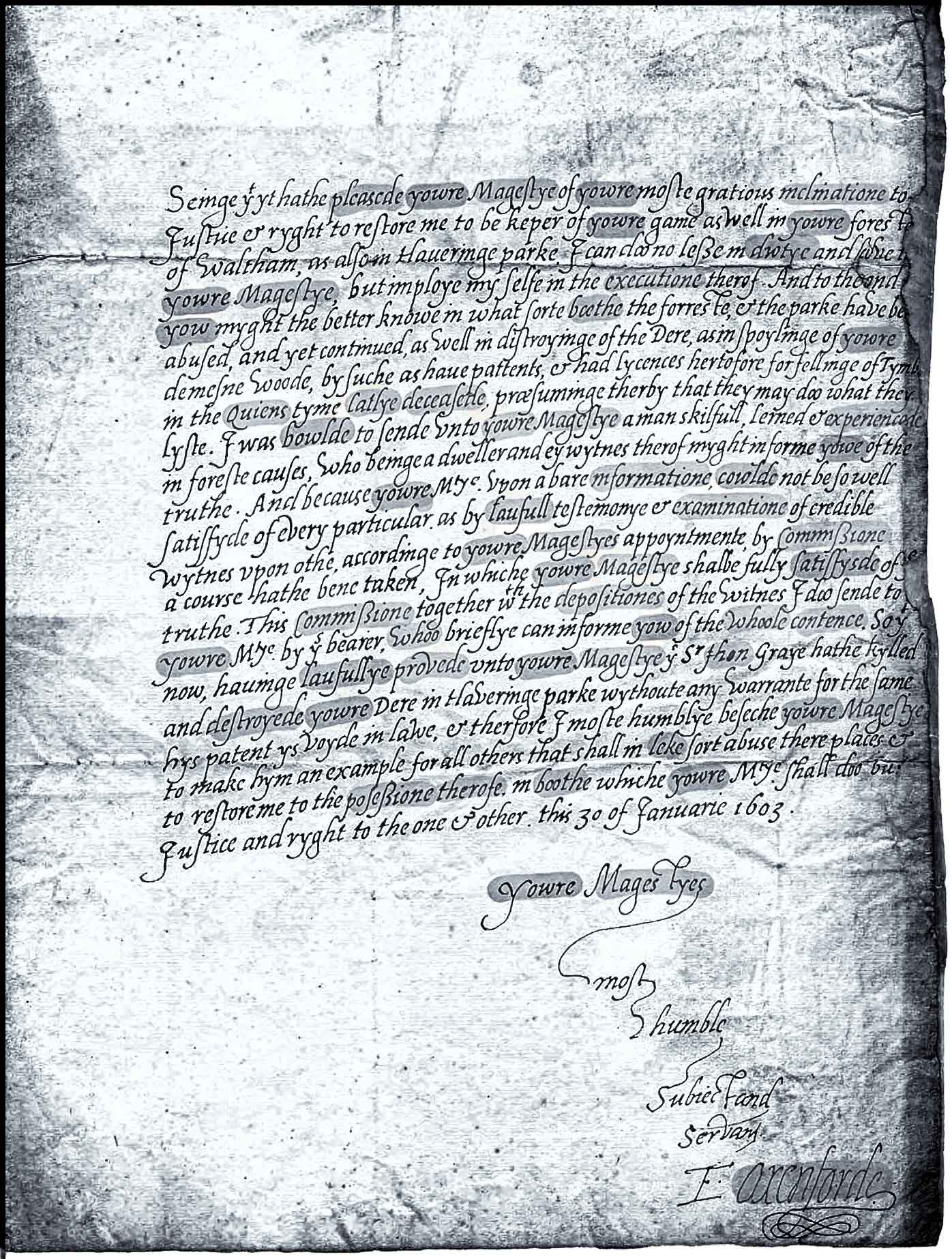
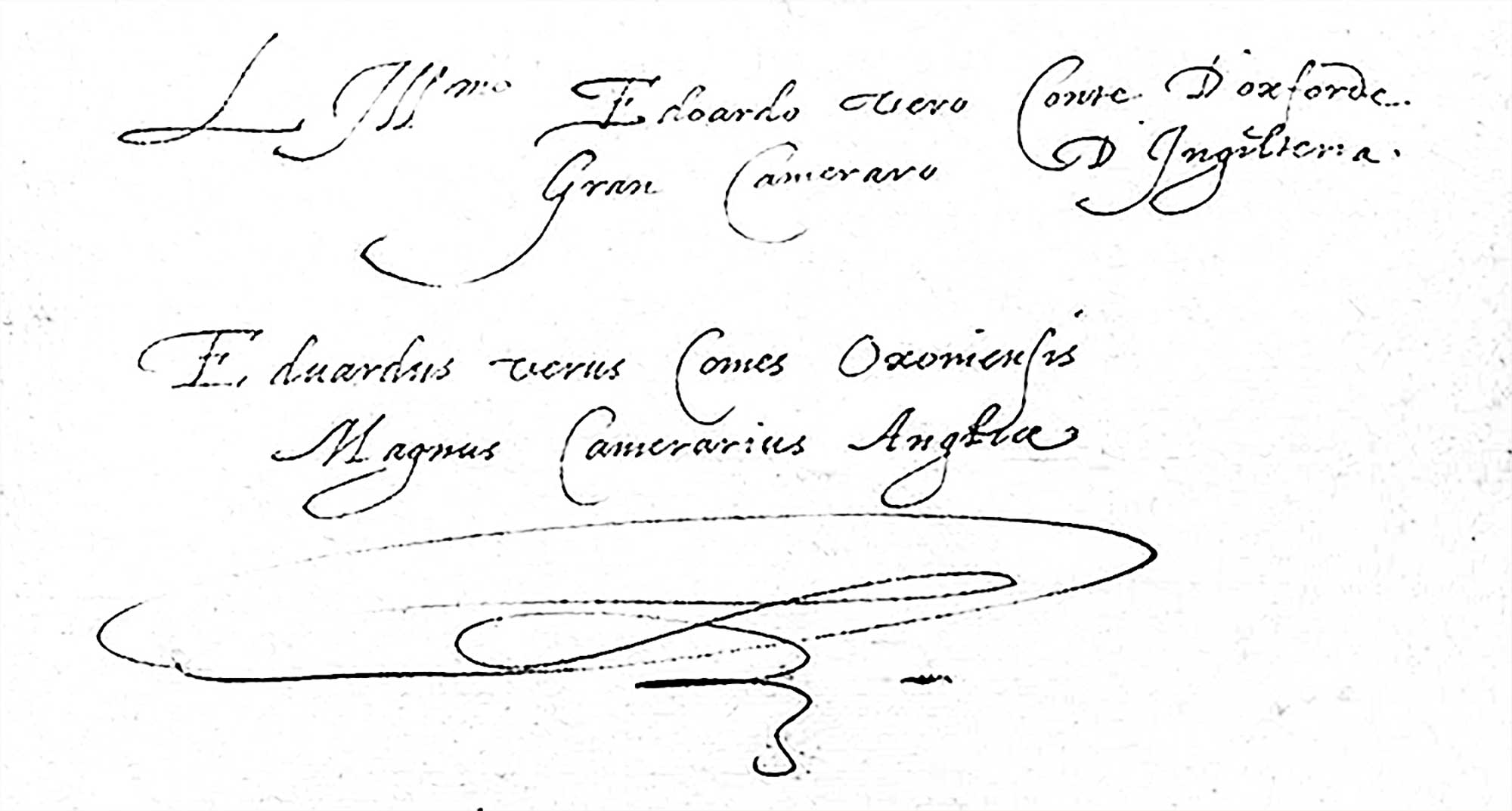
This repository is part of the painstaking work of Professor Alan H. Nelson, part of his research for the only peer-reviewed biography of the Earl of Oxford, Monstrous Adversary.1 They are drawn here from the repository at socrates.oxfraud.com without alteration.
Oxford’s correspondence is rarely quoted in authorship dispute yet here we have a Hamlet and a half written (mostly) in his own hand revealing his startling original idiolect, allowing us to compare it directly with Shakespeare’s own, now the army of Shakespeare scholars and museum curators have crossed the Rubicon and attributed it firmly to the man from Stratford.
The infamous bwyrde not getting got by the man beating the bush was rejected, after a battering from critics, as juvenilia but it turns up again in a letter to Burghley in 1595 20 years after the poem was published when Oxford was 45 years old. The letter is a plea for money, in which he tries to persuade Burghley to give him a pension. The letter is a fascinating insight into Oxford’s state of mind and his relationship with Burghley. It also shows that he was still using the same metaphor 20 years after it was published, which suggests that it was not just a youthful fancy but something that he believed in.
So he that takes the pain to pen the book,
Reaps not the gifts of goodly golden muse;
But those gain that, who on the work shall look,
And from the sour the sweet by skill doth choose,
For he that beats the bush the bird not gets,
But who sits still and holdeth fast the nets.
Cardanus Comfort, 1573
and my self forgotten yt myght be, and as they
thowght most lekly,
her Maiestie wowld yelde and be
browght to be contentend (contented)
with a small sume, or att the most
with so muche as I had offred.
Thus I was to have beaten the bushe,
whylst other howldinge the nett, had taken the bwyrd.
Letter to Burghley, 1595
The poem was first published in 1573 as a preface Cardanus Comfort, a translation of the Italian physician and philosopher Girolamo Cardano’s De Consolatione by Thomas Bedingfield. Oxfordians insist it is the book Hamlet is reading in II(ii), though how they would know is rarely explained. It is, they claim, the source of Hamlet’s philosophy. Reading their essays on the subject, where they stack claim upon claim upon claim, all unsupported2, you will find yourself wondering who has read any of it, the letters, the poem, the book or the play.
Alan H. Nelson, Monstrous adversary: The life of Edward de Vere, 17th Earl of Oxford, (Liverpool University Press: Liverpool, 2003).↩︎
This essay, by Roger Stritmatter is a classic overblown, fantastical morass in which you will find Ovid, Brecht, Galileo and Descartes all gasping for air as the poem ascends (he claims) to “a remarkable testimony to a philosophical realism and a critical class consciousness centuries in advance of anything Western Europe was to produce (with the possible acceptance of St Thomas Aquinas).”↩︎