George Buc
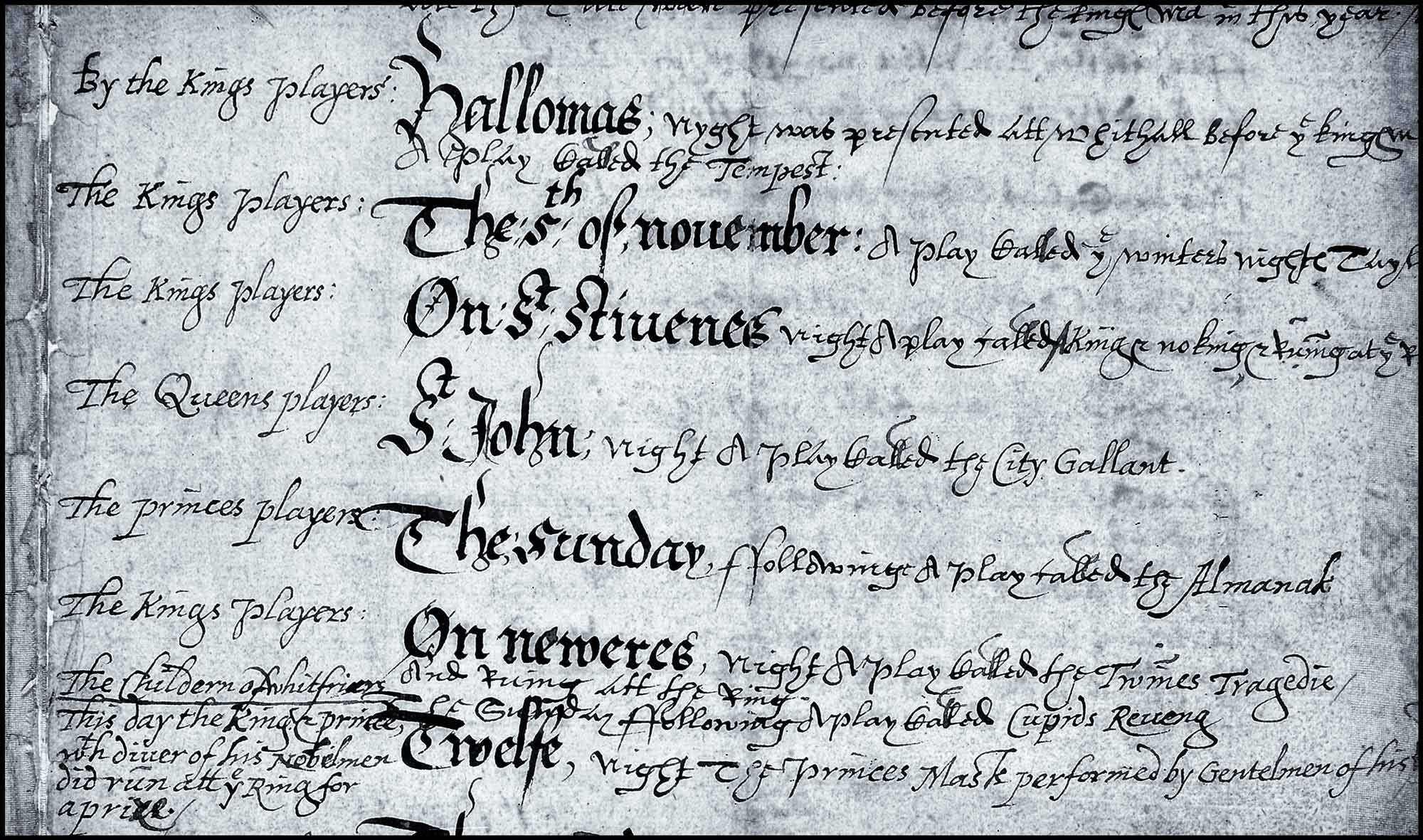
Sir George Buc (1560-1622) was an English scholar. Antiquarian, poet and writer who from 1603 to his death served in the office of Master of Revels (the office responsible for the licensing of plays for performance), first as assistant to Edmnund Tilney until 1610 when he took full possession of the office.
Why is he important to the Shakespeare authorship question? Well, we know that he was familiar with Edward De Vere, describing the Earl of Oxford as ‘a magnificent and a very learned and religious man’. However, we also know that at some point in his life, Buc must have asked William Shakespeare if he remembered who the author of a play called George A Greene was. And we also know that Shakespeare must have replied that he couldn’t remember who the writer was but that he was a minister and that he had also acted in the play himself. We know this because we have a copy of the play published in 1599 which has been annotated by Sir George Buc himself with the words “Written by….a minister, who acted the pinner’s part in it himself. [Witnessed by] W Shakespeare”
So we know that, after 1599, William Shakespeare was considered knowledgeable enough about the world of theatre to be consulted by someone from the office of the Master of Revels. This is not definitive proof, but it is certainly evidence that Shakespeare was certainly not the illiterate grain merchant claimed by Oxfordians. Buc demonstrates that people connected to the theatre, in this case working in the theatre, clearly know Oxford and Shakespeare as two different people.| Title | Description |
|---|---|
| Letter 1 | In 1597 George Buc received a copy of the 1561 edition of Chaucer’s Works from Lady Margaret Radcliff, one of Queen Elizabeth’s maids of honour. The volume, which also contained marginal annotations by Robert Tofte, was sold in 1976 to a private individual and its current whereabouts are unknown. |
| Letter 2 | A catalogue of printed books annotated by Buc, ranging from a 1479 incunable to a 1618 geographical compendium. Buc’s characteristic interventions include identifying anonymous authors, correcting titles, and adding biographical notes on bishops and writers — sometimes updating his own annotations years after first inscribing a volume. |
| Letter 3 | Three surviving copies of Buc’s poem Daphnis (1605) bear inscriptions in his hand. Two were presentation copies dedicated to patrons — Lord Ellesmere and Henry Howard, Earl of Northampton — while a third contains a textual emendation but no dedication. |
| Letter 4 | The Folger Shakespeare Library copy of George a Greene (1599) contains two inscriptions in Buc’s hand, one citing William Shakespeare personally as a source on the play’s authorship. These inscriptions reveal that Buc, who served as Master of the Revels from 1610 to 1622, knew Shakespeare and regarded him as a reliable informant on Elizabethan theatrical history. |
| Letter 5 | A census of manuscripts written, annotated, or licensed by Buc, including his history of Richard III (BL Cotton Tiberius E.x), transcriptions from Domesday Book, play manuscripts corrected in his capacity as Master of the Revels, and personal letters addressed to Robert Cecil, Sir Robert Cotton, and others between 1599 and 1621. |
| Letter 6 | A catalogue of sixteen play quartos certainly inscribed by Buc and four further quartos possibly in his hand. Buc’s typical interventions include attributing authorship of anonymous plays, correcting or expanding titles, and adding a characteristic cursive ‘E’ to title-pages — the last a practice whose meaning remains unexplained. |