Lifetime references
If you have only recently fallen into argument with Shakespeare Doubters, this page might look like forbidden knowledge. Doubters insist there is no lifetime reference to Shakespeare as a writer, yet here we have a baker’s dozen selected from a much larger collection at the Folger Shakespeare Library.
Rather than acknowledge items from the collection of lifetime references, the largest for any single Bankside dramatist, Doubters respond with contorted arguments to dismiss it or rule each item out as irrelevant, usually for a new reason. They will invent artificial conditions to disqualify it, and when all else has failed just give in completely, claiming that whatever has stumped them refers to the Earl of Oxford working as Shakespeare in disguise. This lifetime of conspiracy and silence was supposedly conjured by Burghley, the busiest man in England. All to avoid bringing Elizabeth’s court into disrepute by allowing people think English Earl’s had to work to support themselves. A bit like Batman then, the Doubter’s Shakespeare worked with Alfred and a team of dramatists in the Oxcave. When a play was ready, they’d turn on the Oxlight over Bankside. This Looking Glass World existence is most apparent when tackling this evidence.
These documents, and many more, can be found in the Folger Library in Washington which generously allows reproduction of their images provided their licence is always observed and the source quoted. To look at hundreds of other Shakespeare items follow this link to Shakespeare Documented.
Meres and Harvey
Two of these items of tangible, hard evidence intersect firmly with the career of Shakespeare of Stratford. The first is from Gabriel Harvey whose reference to Hamlet here is the earliest known. This is the same Harvey who told Oxford 20 years earlier, in a formal speech in front of the court, to put away his feeble pen. Like Shakespeare, there were no books mentioned in Harvey’s will but his habit of covering the margins in detailed notes has enabled over 150 to be identified. Harvey, therefore, distinguishes Oxford and Shakespeare as two different writers, of differing ability. Doubters are forced to claim one writer is masquerading as the other.
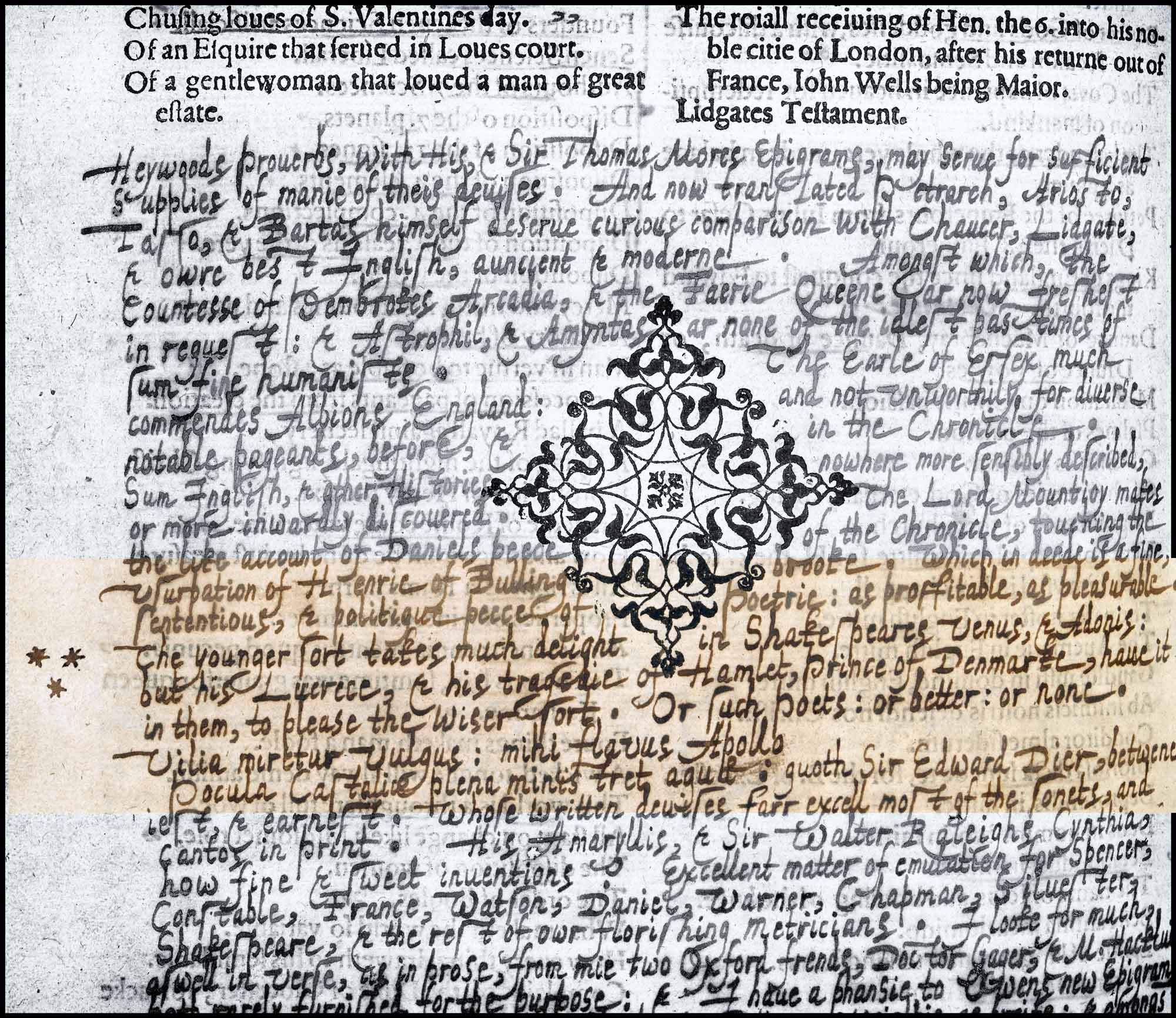
Thomas Speght’s edition of The Workes of… Chaucer, 1598, with autograph notes by Gabriel Harvey.
Francis Meres is the motherlode of lifetime references. In his guide to Elizabethan theatre, published in 1598 his Palladis Tamia he makes numerous flattering comparisons of Shakespeare to the greats of Greek and Roman theatre. He mentions Shakespeare often and lists his plays at the time of writing, 1598, a list which perfectly coincides with the chronology Shakespeare scholars have derived from study and metrical analysis. With the intriguing addition of Love’s Labour’s Won possibly an alternative title for Much Ado about Nothing which gets no mention.
There is deep irony here. The most detailed 16c discussion of Bankside playwrights contains the sole mention of Oxford as a producer of interlude, “best for comedy” at the head of list containing a few other almost unknown names. That isn’t what he means. He later lists Shakespeare as best for comedy, naming the plays that made him laugh. It’s very unlikely he ever saw anything Oxford wrote or delivered at court. Yet Oxfordians demand that you expand Meres’ unspecific, small mention of the Earl then completely disregard the expansive praise of the true author and his named works. The explanations for this vertiginous volte face are sensationally complex and often hilarious but never, ever plausible.
However, despite detailed answers to the question “did anyone mention Shakespeare in his lifetime”, with attached evidence, Doubters still refuse to accept the answer as if the evidence didn’t exist or was written in some bizarre numerological code.
Whatever Meres says, like Harvey, he identifies Shakespeare and Oxford as two different writers and there should be no escaping that.
![“As the soul of Euphorbus was thought to live in Pythagoras, so the sweet witty soul of Ovid lives in mellifluous and honey-tongued Shakespeare, witness his Venus and Adonis, his Lucrece his sugared Sonnets among his private friends, etc…As Plautus and Seneca are accounted the best for Comedy and Tragedy among the Latins, so Shakespeare among the English is the most excellent in both kinds for the stage…for Comedy, witness his Gentlemen of Verona, his Errors, his Love[’s] Labours Lost, his Love Labours Won, his Midsummer Night’s Dream, and his Merchant of Venice; for Tragedy his Richard the 2, Richard the 3, Henry the 4, King John, Titus Andronicus, and Romeo and Juliet.](images/1598.jpg)
Francis Meres, Palladis Tamia, 1598
Lifetime Reference Gallery
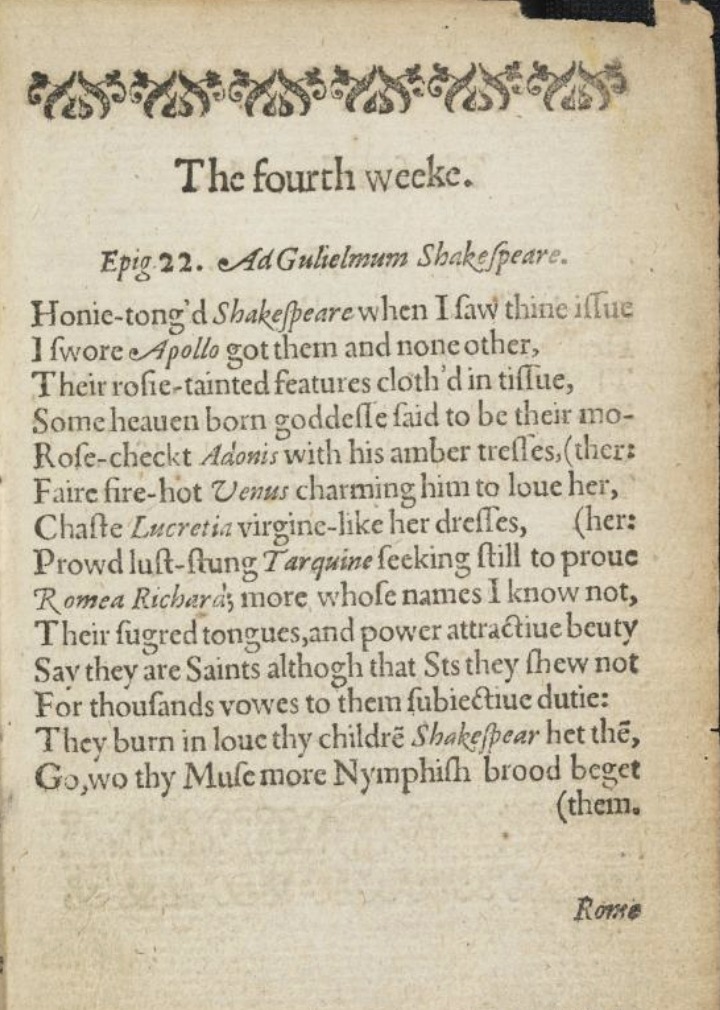
The Folger Shakespeare Library now has a repository of over 500 items linking Shakespeare, his work and his life both in London and Stratford upon Avon. Doubters claiming there is no lifetime evidence of Shakespeare as a writer possibly need to spend a bit more time there. Here is a sample.
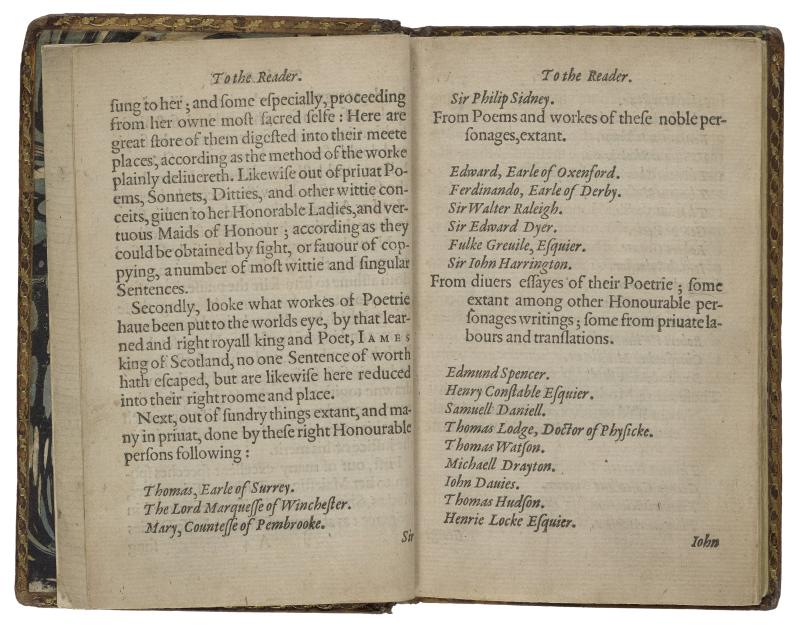
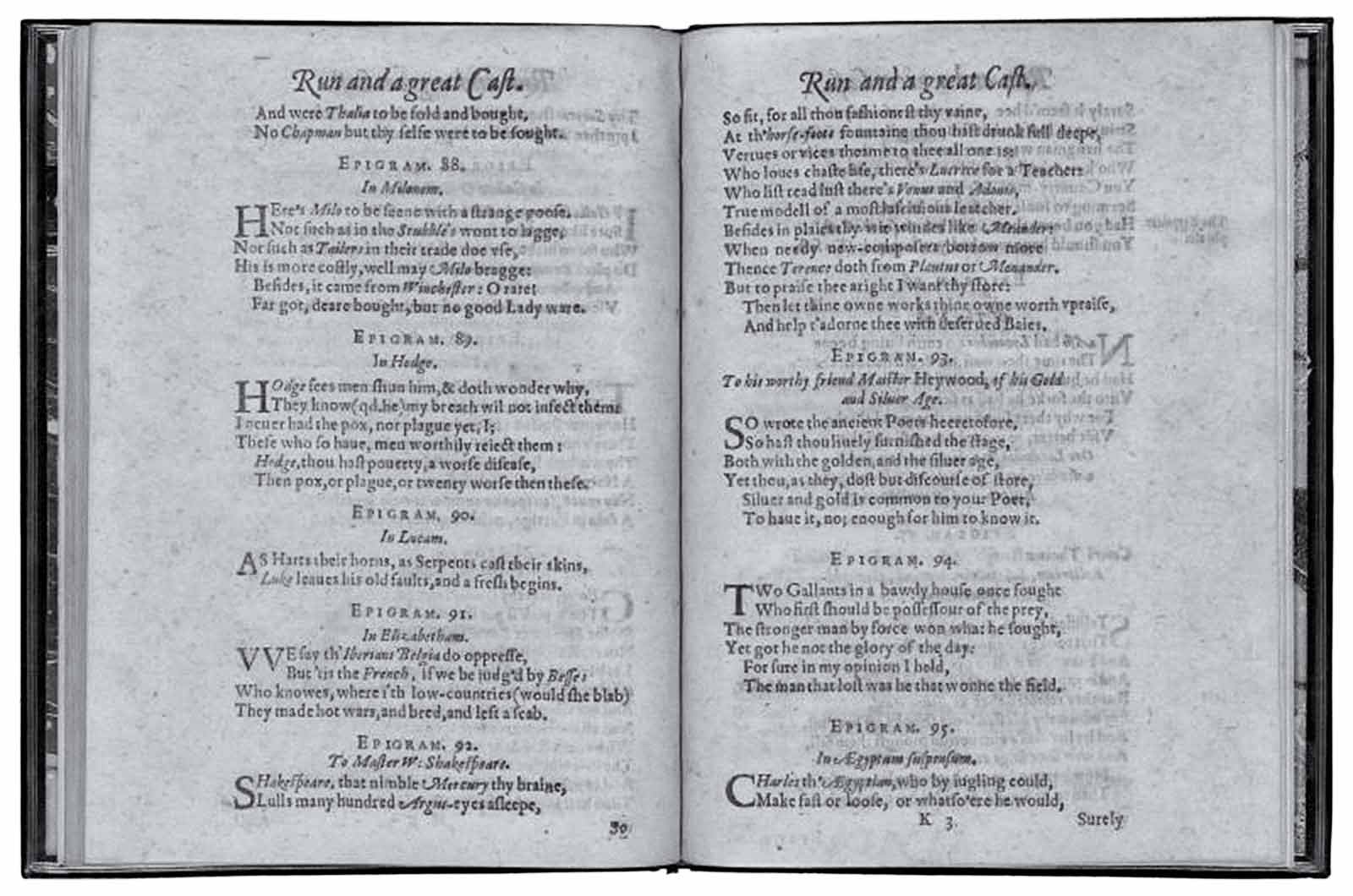
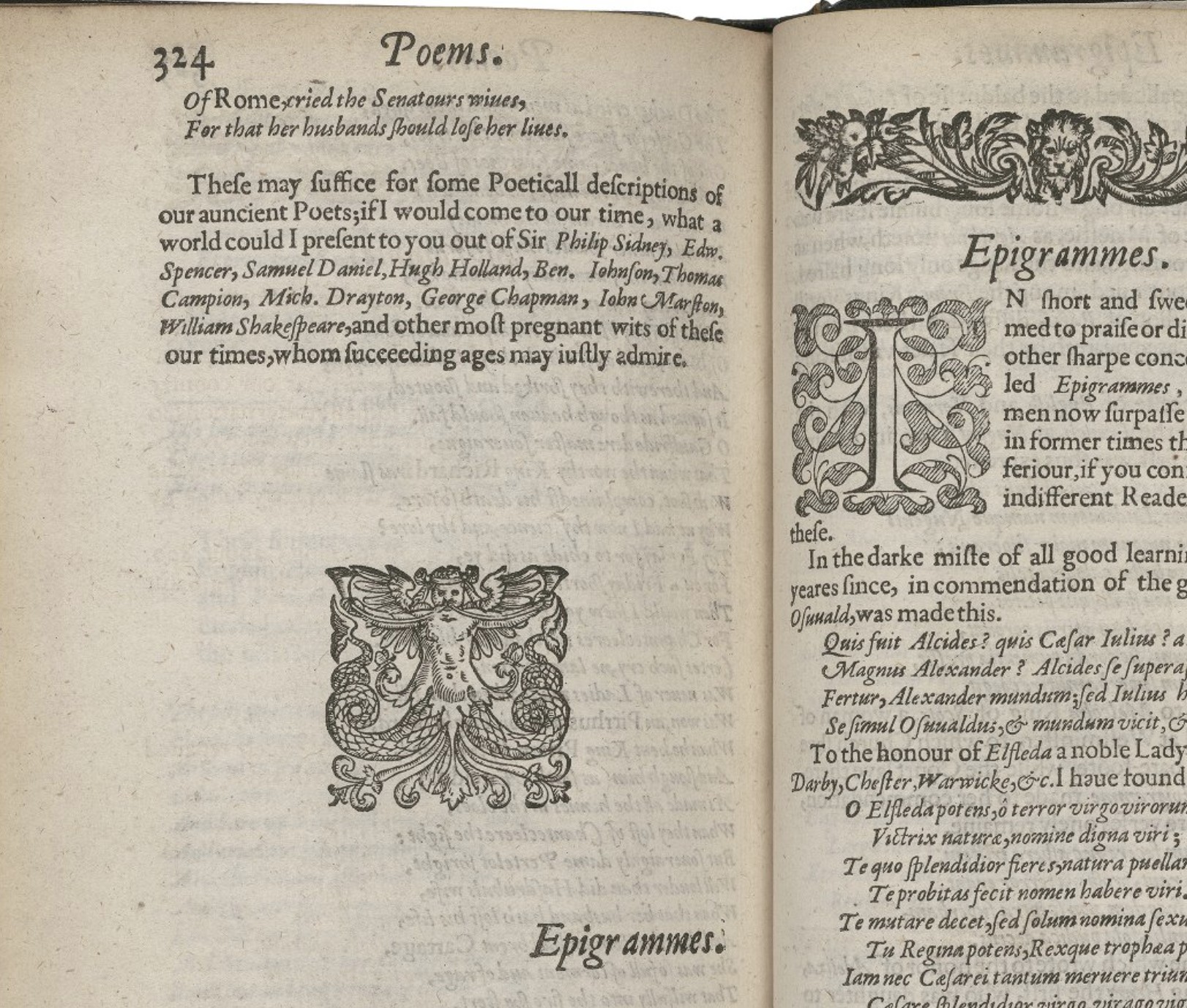
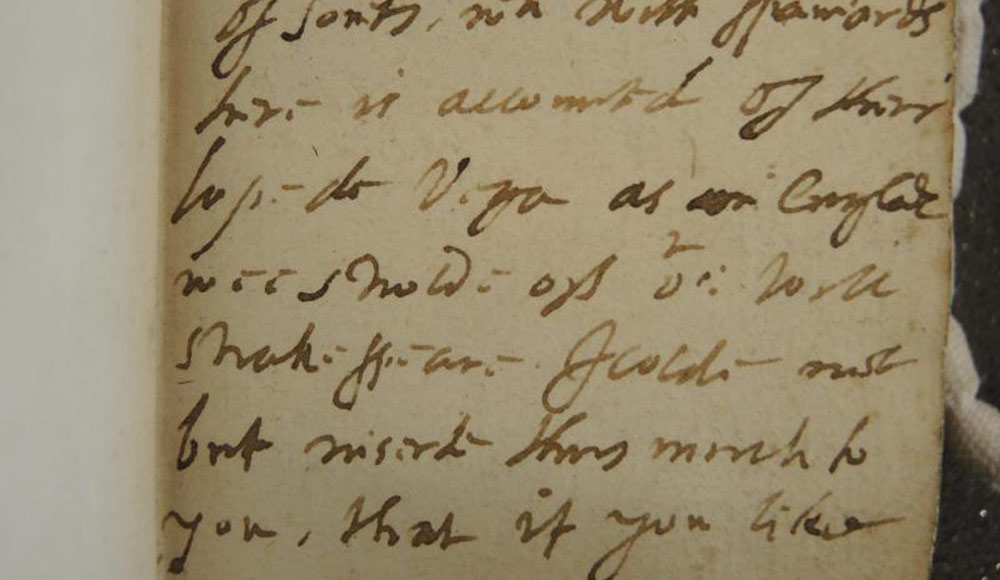
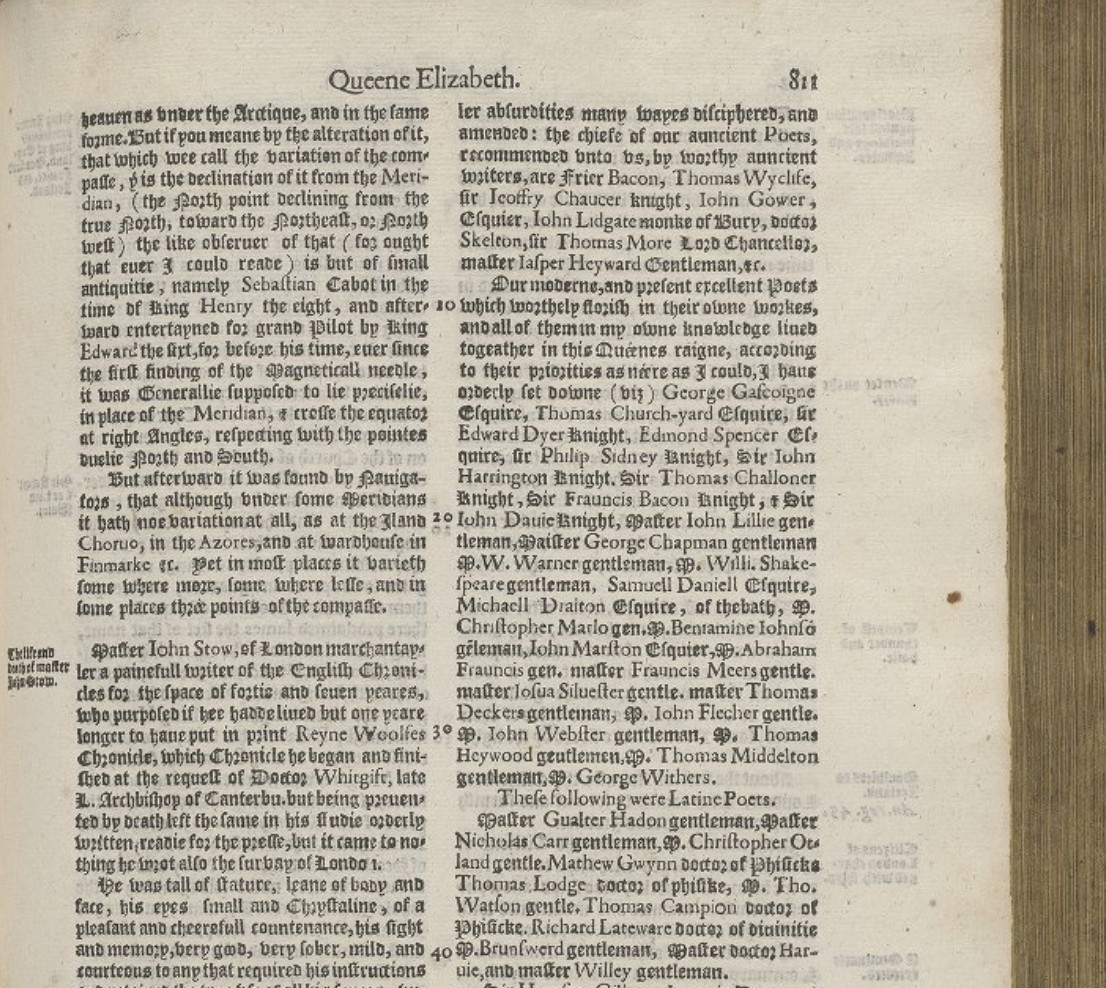
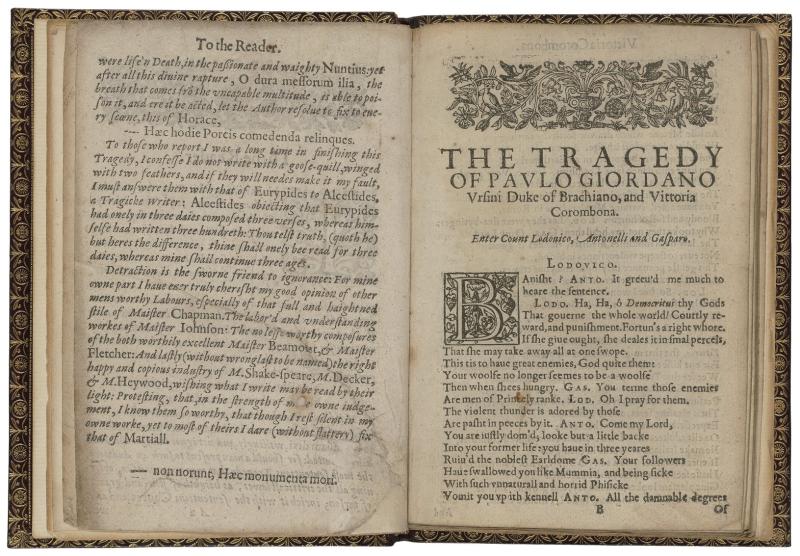
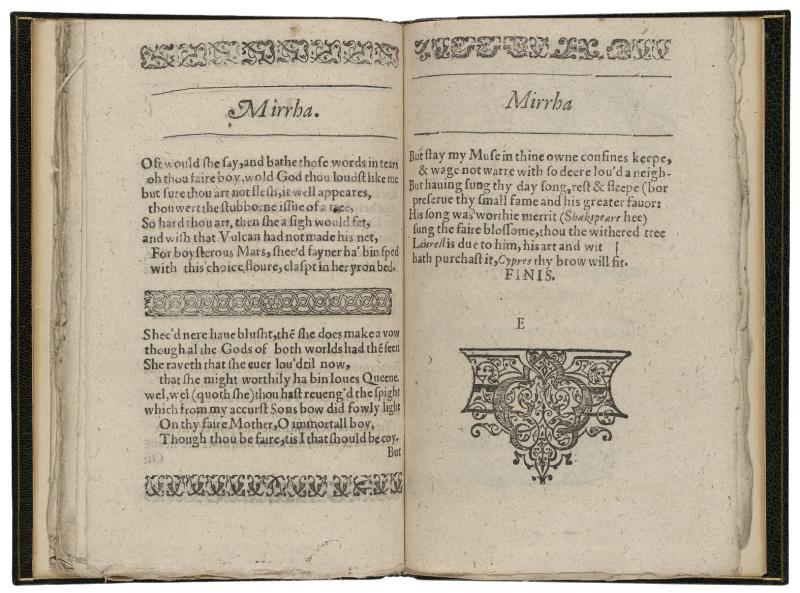
![John Davies of Hereford 1610:John Davies of Hereford could have his own lifetime reference gallery. We’ve chosen this one from 1603. Hereford is a long day’s ride from Stratford. The ODNB lists everyone Davies felt close to. The King [James I], Francis Bacon, Sir John Davies [a namesake], Fulke Greville, Thomas Campion, Samuel Daniel, Ben Jonson, William Shakespeare, John Fletcher, John Marston, Joseph Hall, Herbert of Cherbury, Francis Beaumont, Michael Drayton, and George Chapman. Praise here for men “that pass time not abus’d”. He was probably insufferable at dinner but you have to believe in fairies to think that Davies could not tell Oxford and Shakespeare apart.](images/johndavies1603.jpg)
A heartfelt lament
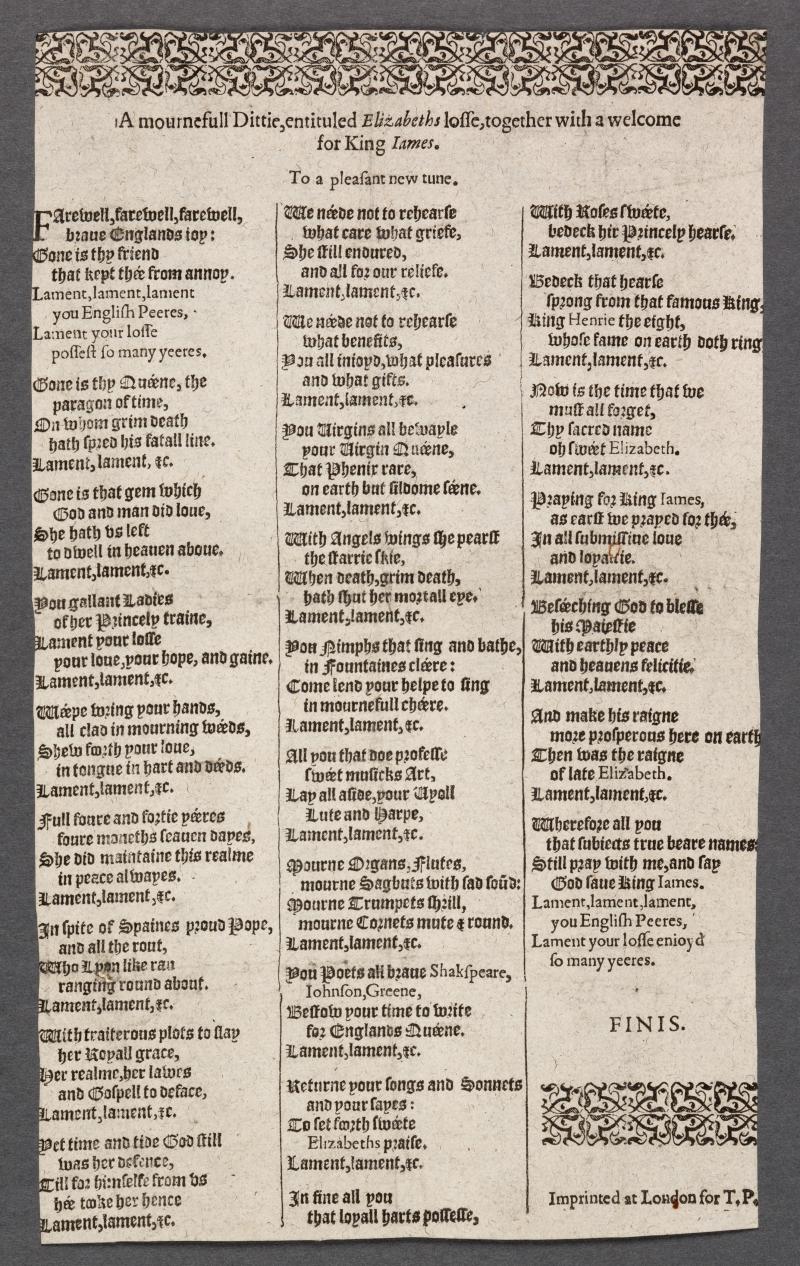
You poets all brave, Shakspeare,
Johnson, Greene,
Bestow your time to write
for England’s Queene…
Retune your songs and Sonnets
and your sayes
To set foorth sweet
Elizabeths praise
The Parnassus Plays
William Shakespeare is alluded to often in these three student plays, and his works are quoted 95 times. He is explicitly mentioned by name in the last two plays. At almost every turn he is satirized or mocked, which is only to be expected when the target of the satire has become very successful and well known.
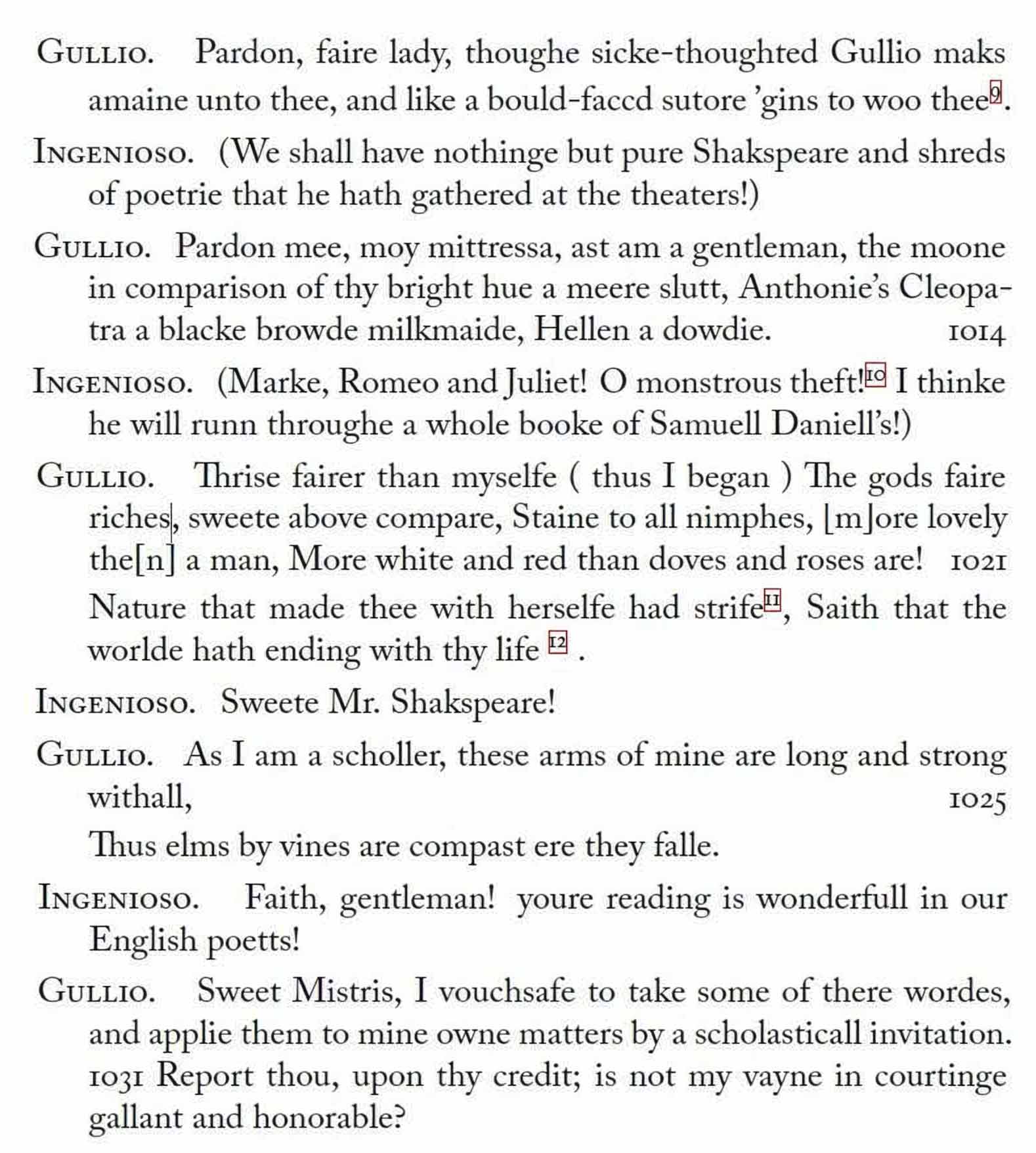
The Parnassus plays are seen, at least in part, as extending the war of words that had been occurring between the university men and writers. mainly playwrights, who did not included themselves that group. The university men would include Cambridge alumni Thomas Nashe and Robert Greene, who both had attacked Shakespeare in print: Nashe in his pamphlet, Pierce Penniless, and Greene in Greene’s Groats-Worth of Wit. Shakespeare had replied in turn with some mockery of Nashe in his play Love’s Labour’s Lost.
Shakespeare and his theatre company were on tour in 1601 and visited Oxford and Cambridge, sometime between the performances of parts two and three of the trilogy. This is indicated on the title-page of the first quarto of Hamlet (1603), where the play is said to have been acted “in the two Universities.”
Doubters have only their last line of defence against Shakespeare’s appearance, as a playwright, in Parnassus. “They are referring to Oxford, they simply didn’t know it was a pseudonym/allonym”, yet the authors knew Marston had used the name “Kinsader” on a publication and thoroughly enjoyed outing him. And they would have seen Shakespeare himself, probably as Hamlet’s Father, on the boards.
The Return from Parnassus, Part II (and I and III), in which this early Monty Python crew of comedians from Cambridge University give their views on Shakespeare, Burbage and the Bankside crew is in the list of our own texts, here.