Oxford’s 19 Poems
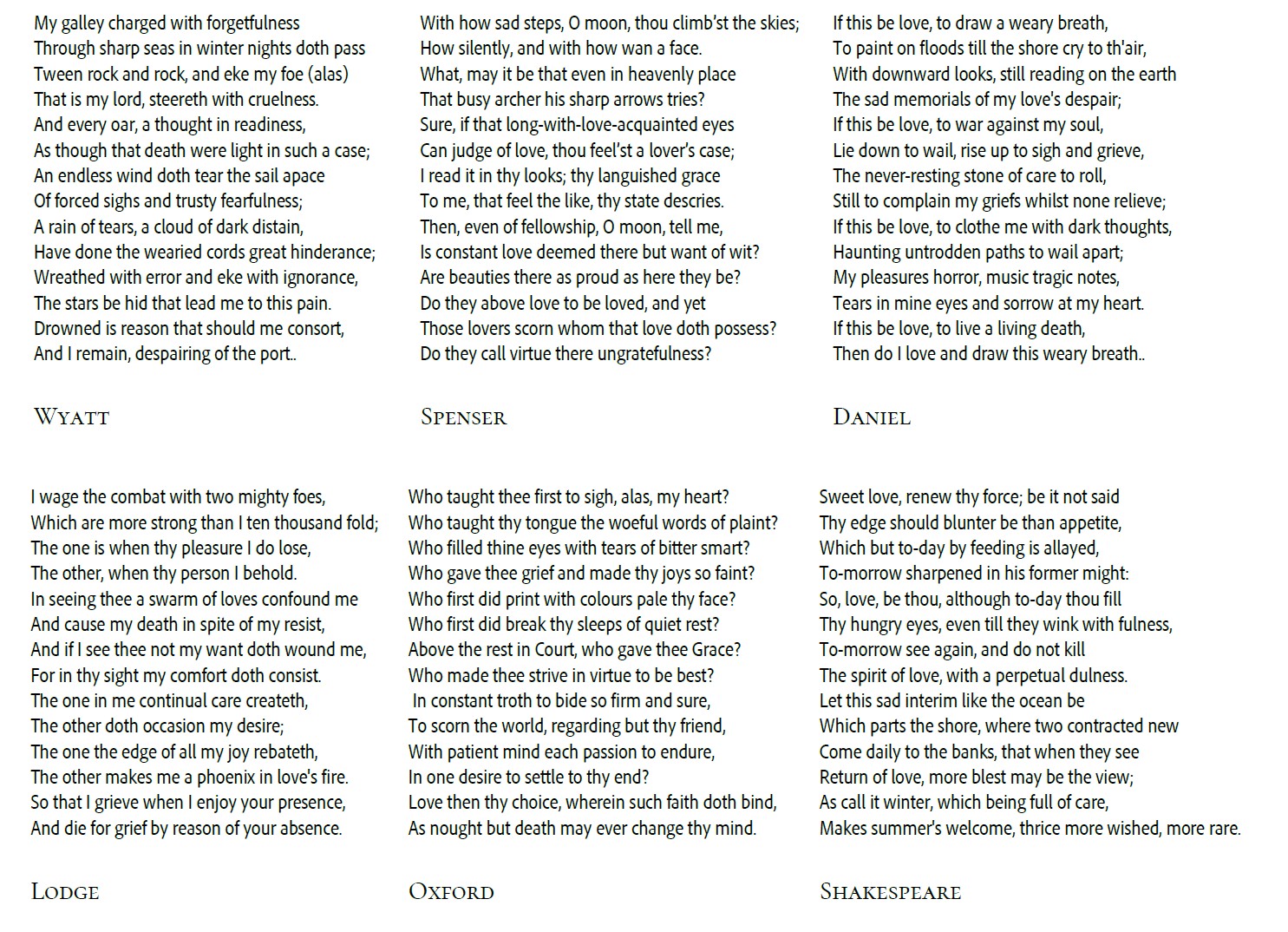
19 poems from the Oxford collection including at least one he did not write. A companion piece to his plays.
The man who died too early
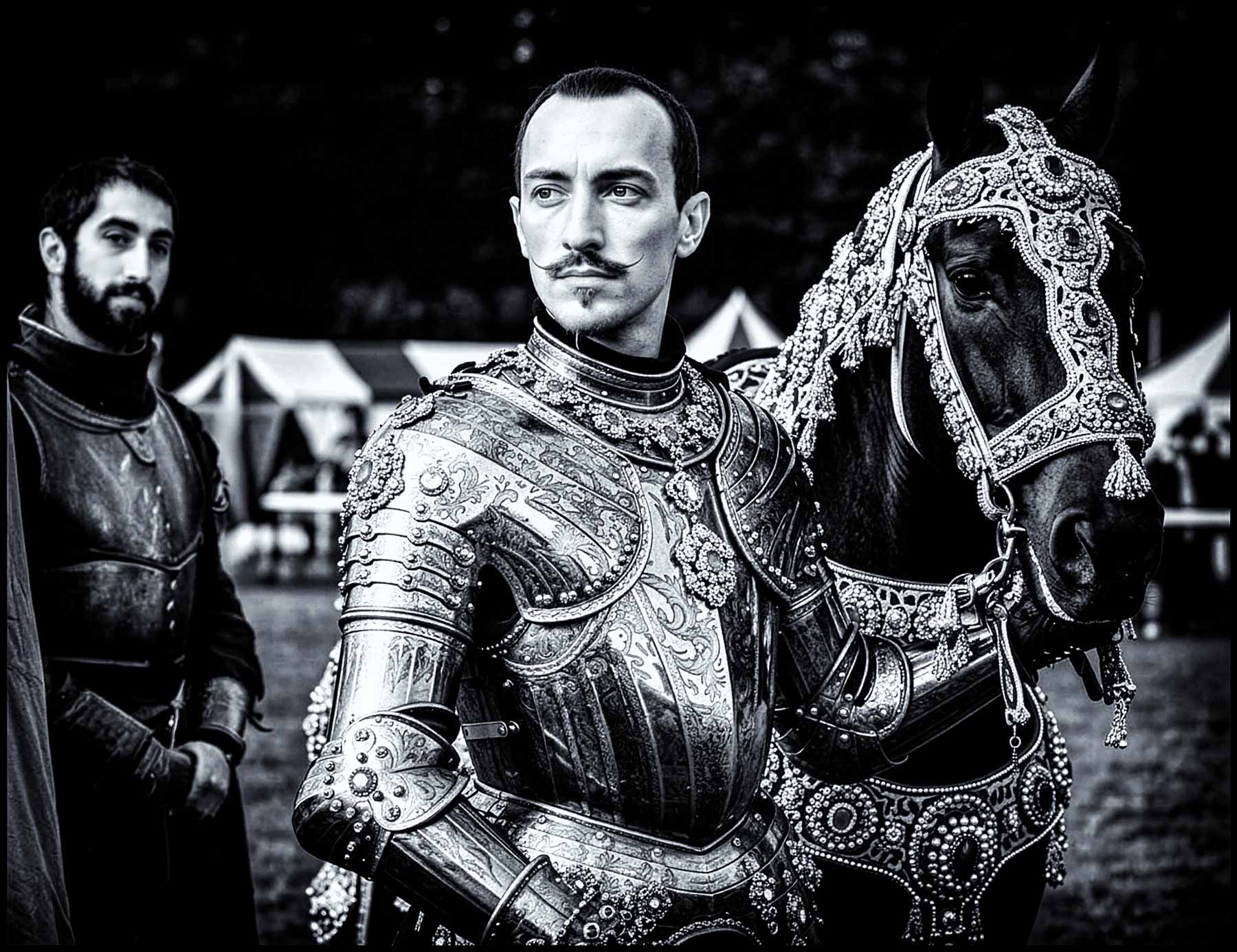
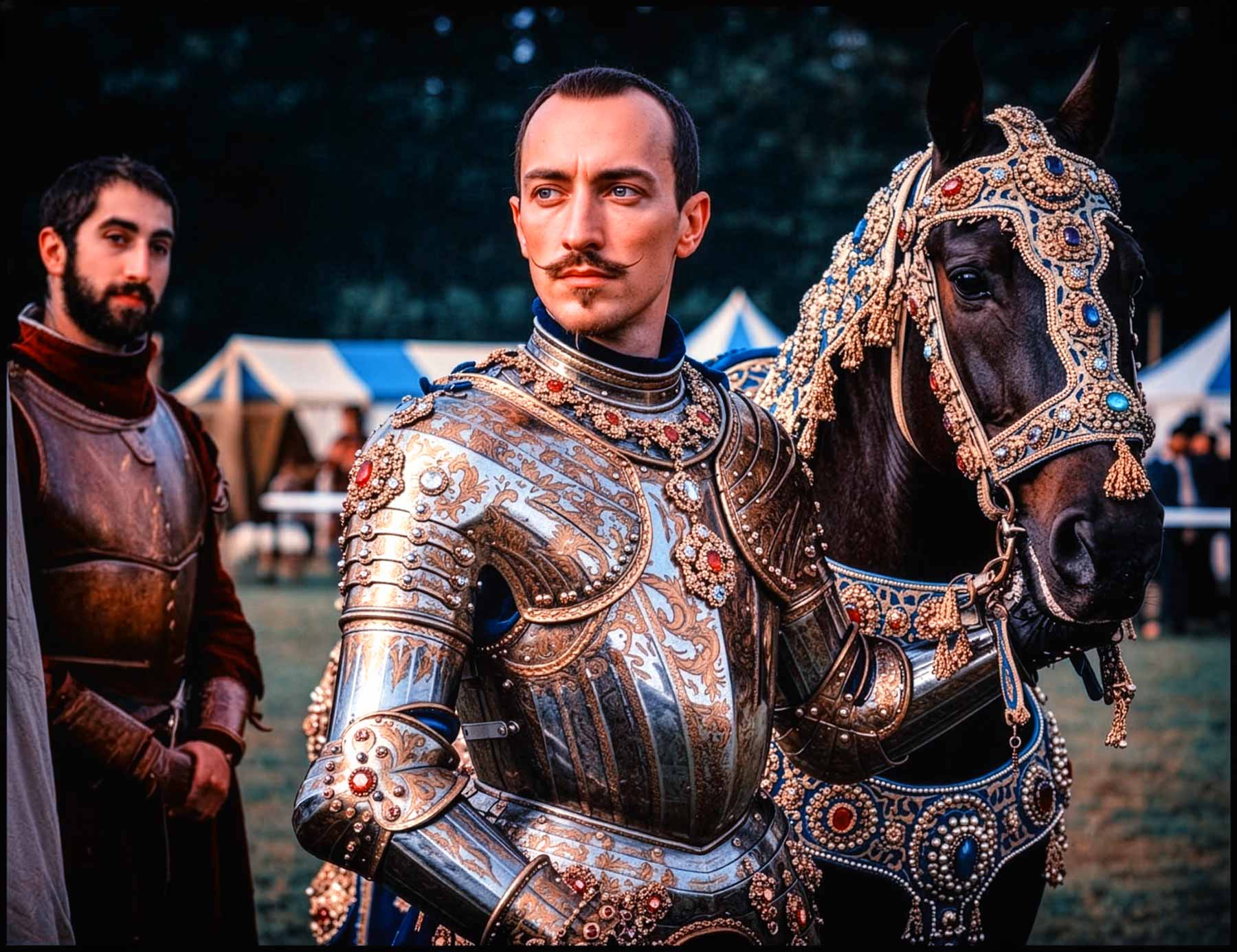
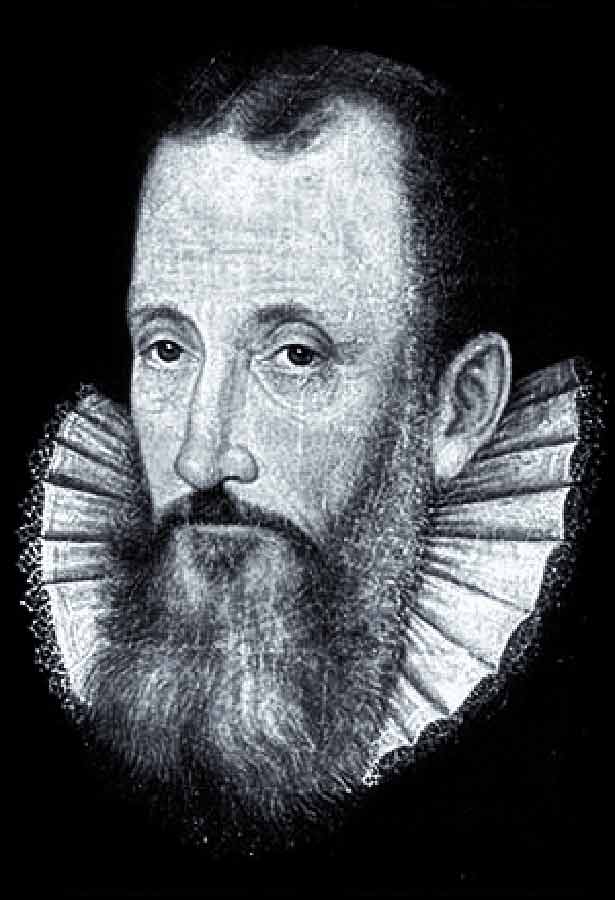
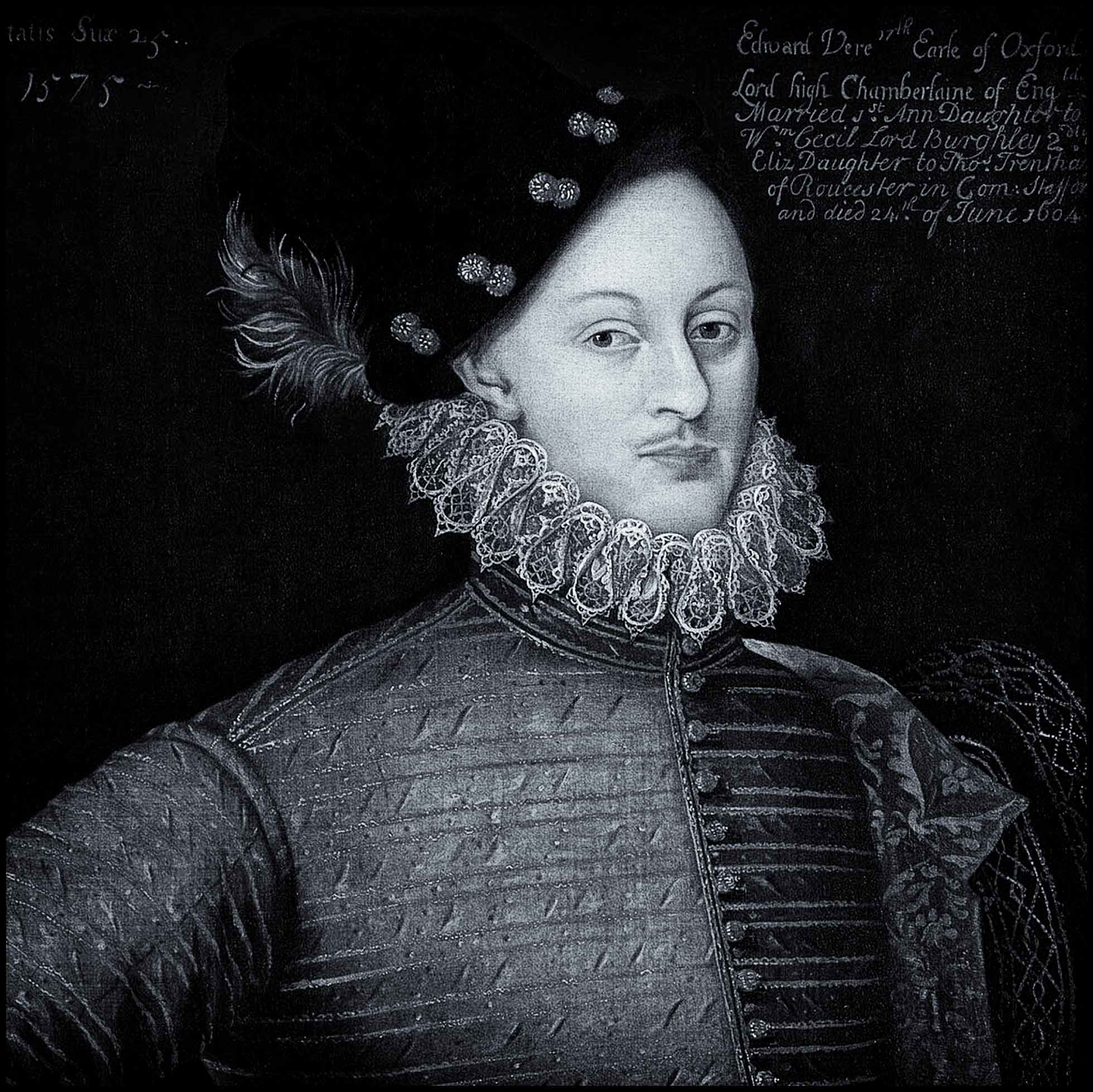
This image is based on the appearance and facial metrics of the recreated 1575 portrait of De Vere in the National Portrait Gallery, London. The original portrait is in black and white, so the colour version is an artistic interpretation based on the colours of his clothing and the style of the period. We have taken things just a little further than the original, while respecting its anthopometric properties as closely as possible. ⌕
There are copious reasons advanced, many of them claiming to be conclusive, as to why the Earl of Oxford simply has to be the author of Hamlet. Similarities between his life and the Prince’s, characters at the Elizabethan court who are mocked or otherwise represented, feuds amongst his staff that resemble on stage feuds are cited. Details of court procedures about which only an Earl could have known are reviewed in painful legalese. Biographical detail after biographical detail is called into evidence — all in an attempt to make it seem impossible that a young man from Warwickshire might be able to claim credit for work which is full of what Oxfordians see as elite knowledge, aristocratic perspective and accurate biographical detail.
However, in addition to that ascribed to him by Oxfordian theorists, The Earl of Oxford had a life of his own. This life, since he was in the public eye, is actually well documented. This life barely resembles the Oxfordian version, constructed to fill the evidence vacuum.
Oxford’s real life, the life this side of The Looking Glass, ended before a third of the work was written. It cannot be the life of a dramatist who led the revolution in Jacobean theatre. The Earl died in June 1604 after a period of protracted, debilitating illness and absence from court. A well-ordered archive suggests his life as a writer ended some time before. He was beyond the theatrical scene before anyone knew what Jacobean theatre was, gave it a name or had time to wonder how it might be different from Elizabethan theatre. Shakespeare continued to write for another decade.1
Oxford’s only peer-reviewed biographer, Dr Alan Nelson certainly doesn’t think he wrote plays for money.2 Nor does Professor Steven May,3 the leading authority on Elizabethan courtier poets believe Oxford’s poetry comes close to corresponding to any of Shakespeare’s work.
Contemporary ascriptions of plays in the First Folio to Shakespeare are unchallenged by any other contemporary claimant or evidence. Before 1920 no one had ever attributed any of Shakespeare’s works to the Earl of Oxford. What then is the evidence that Oxford was even a playwright, and what assumptions must be made to conclude that he in fact wrote Shakespeare’s works?
De Vere’s connections with the drama of his time are well documented, but they do not link him in any way to any of Shakespeare’s writings, dramatic or non-dramatic.4
Oxford’s life does not easily map onto the life of a successful Elizabethan playwright. You can follow him through his letters, reproduced here with permission of Alan H Nelson who collected them as part of his research for his biography of the Earl.5
De Vere’s priorities and concerns reveal that he lived worlds apart from Bankside. Aside from being dead when Macbeth was being written–a play full of ominous residue from The Gunpowder Plot of 1605–when Oxford should have been in Southwark, working out the details of staging the balcony scene in Romeo and Juliet, he was actually trying to secure a monopoly on alcohol testing. When he should have been working on Bottom’s headgear to amaze the Rude Mechanicals, he was writing begging letters and trying to win the Governorship of Jersey. And when he should have been assessing sound effects for the great storm on the heath scene in King Lear, he was sleeping The Big Sleep.
Most modern editions of The Complete Works now feature Two Noble Kinsmen, for example. Fletcher, Shakespeare’s collaborator, didn’t appear on Bankside until after Oxford’s death. It features in The Arden Shakespeare Complete Works—considered one of the most thoroughly annotated and scholarly collections; the RSC Shakespeare Complete Works published by the Royal Shakespeare Company, which performs and recognizes the play and The Oxford Shakespeare: The Complete Works, widely regarded for using the most up-to-date academic research↩︎
Alan H. Nelson, Monstrous adversary: The life of Edward de Vere, 17th Earl of Oxford, (Liverpool University Press: Liverpool, 2003).↩︎
Steven W. May, The Elizabethan courtier poets: The poems and their contexts, (University of Missouri Press: Columbia [u.a.], 1991).↩︎
“Tennessee Law Review Vol 72 Iss 1,” https://ir.law.utk.edu/tennesseelawreview/vol72/iss1/, April 2004, p. 232. Steven W. May graduated B.A. from Rockford College, and M.A. and Ph.D. from the University of Chicago. He taught for 35 years at Georgetown College in Georgetown, KY. During retirement he has served as Adjunct Professor of English at Emory University and as Senior Research Fellow in the School of English at the University of Sheffield. From 2009-2013 he served as Principal Investigator on “Early Modern Manuscript Poetry: Recovering our Scribal Heritage,” funded through the University of Sheffield by the Arts and Humanities Research Council.↩︎