%%{init: {'theme': 'base'}}%%
flowchart TD
  classDef summary fill:#e8e4d4,stroke:#999,color:#333
  classDef conclusion fill:#2c2c2a,stroke:#2c2c2a,color:#fff

  T1(["Part I: Identity"]) --> A
  A["1 — Named on title pages"] --> B
  B["2 — Gentleman"] --> C
  C["3 — Only Shakespeare gent."] --> D(["Identity established"]):::summary

  T2(["Part II: Association"]) --> E
  E["4 — Sharer in the King's Men"] --> F
  F["5 — Business relationship"] --> G
  G["6 — Fellow player as trustee"] --> H(["Association documented"]):::summary

  T3(["Part III: Explicit Testimony"]) --> I
  I["7 — Named in Phillips' will"] --> J
  J["8 — Bequests to fellow players"] --> K
  K["9 — Friend and fellow"] --> L(["Testimony explicit"]):::summary

  D --> M["Prima facie case established"]:::summary
  H --> M
  L --> M
A Prima Facie Case for Shakespeare
The simplest proof of authorship
Prima Facie Case
Identity
Association
Explicit Testimony
Monument
Arms
Hemmings
Condell
Nine evidentiary links connect the author of the works in the First Folio1 to William Shakespeare, born in April 1564 to John and Mary Shakespeare of Henley Street, Stratford upon Avon. Taken individually, each link is significant. Taken together–spanning twenty-five years of shared business, mutual legacies in wills, and the testimony of men with every reason to know and no reason to lie–they constitute a prima facie case that admits only one conclusion. The burden of proof lies entirely with those who assert otherwise.
Click on the square tiles to follow the evidence trail and click on the images until they reach their maximum size.
Part I: Identity
He was uniquely identifiable—named, titled, and documented as the only William Shakespeare entitled to that designation.
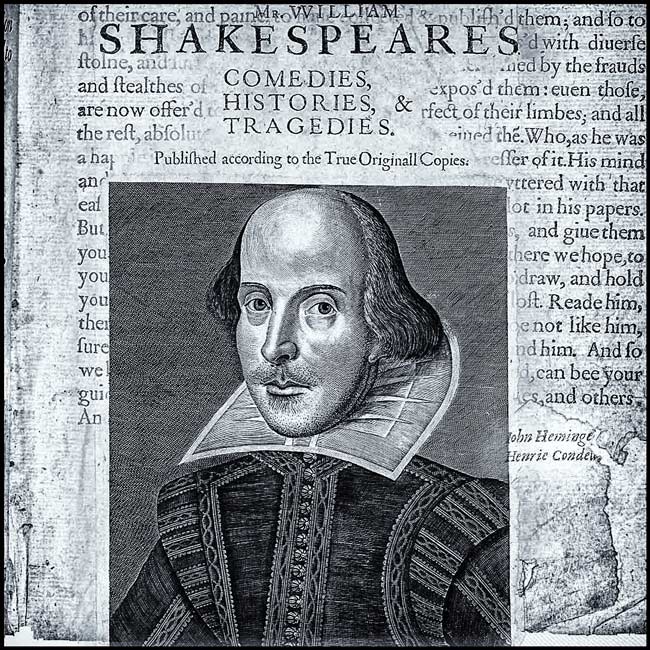
1. Named on title pages
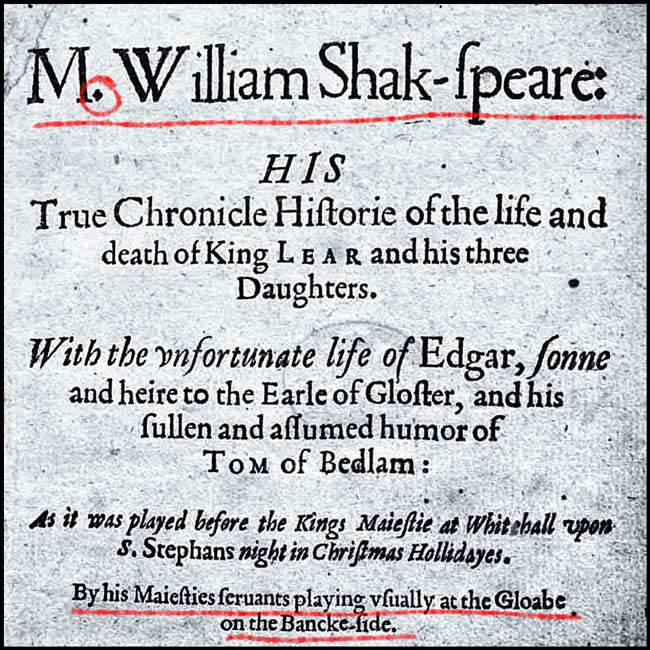
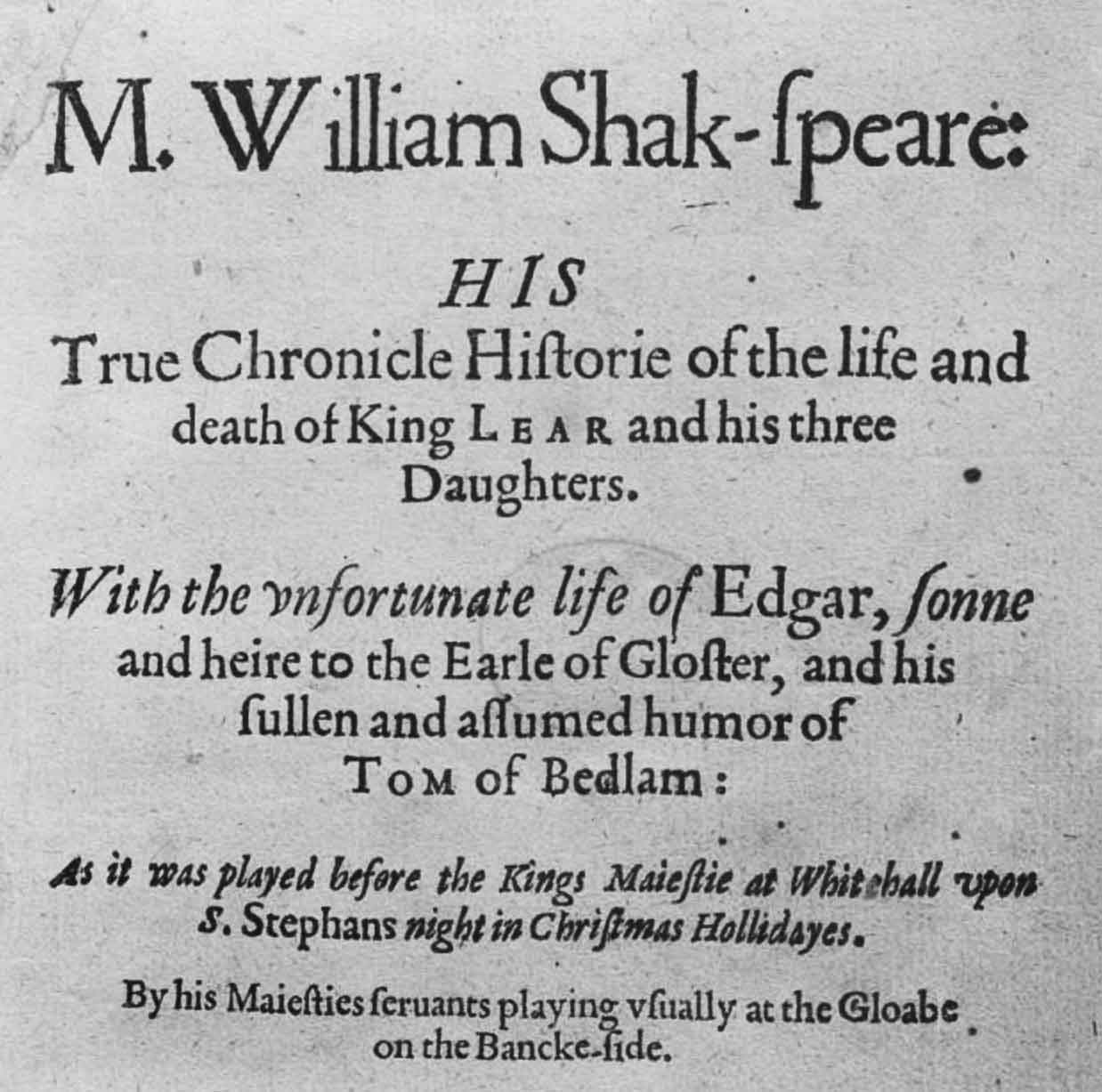
2. Shakespeare gentleman
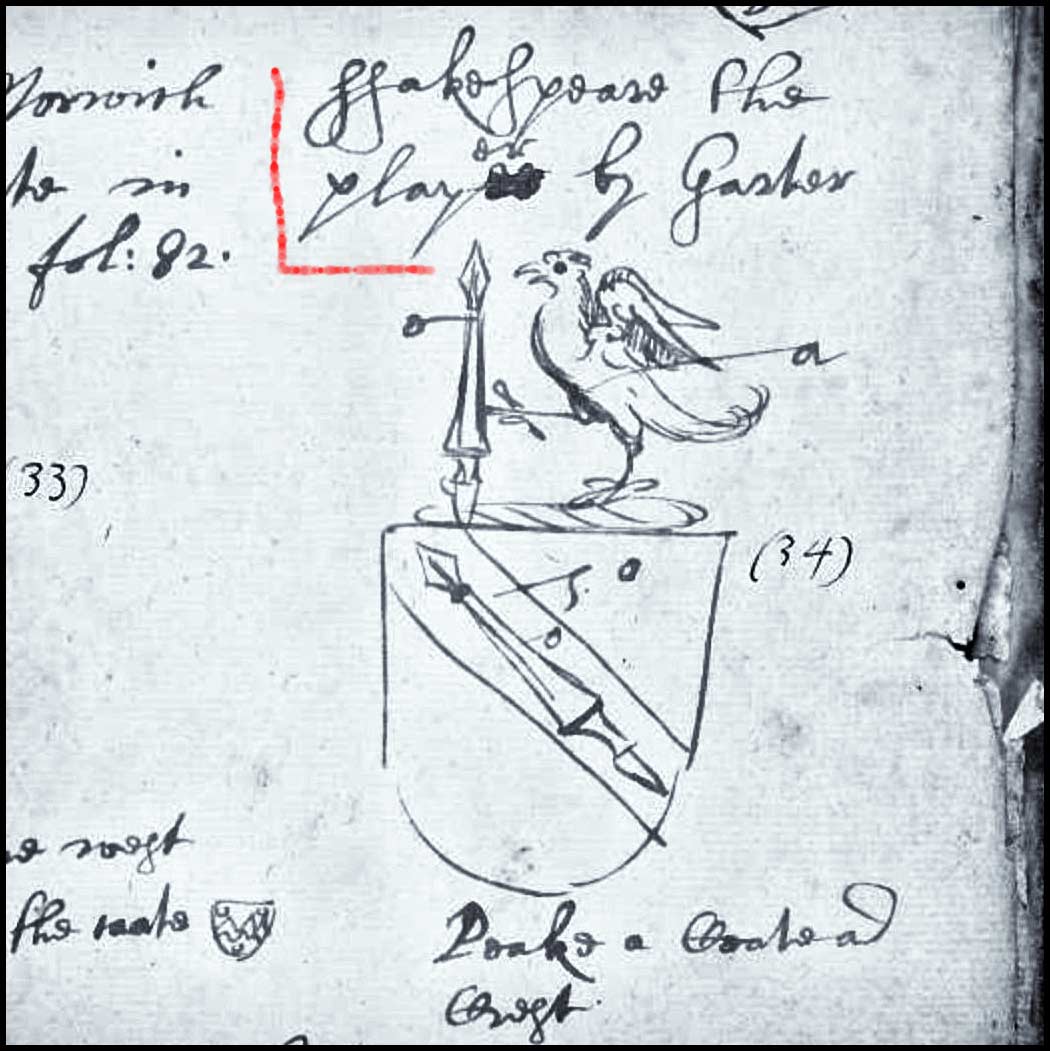
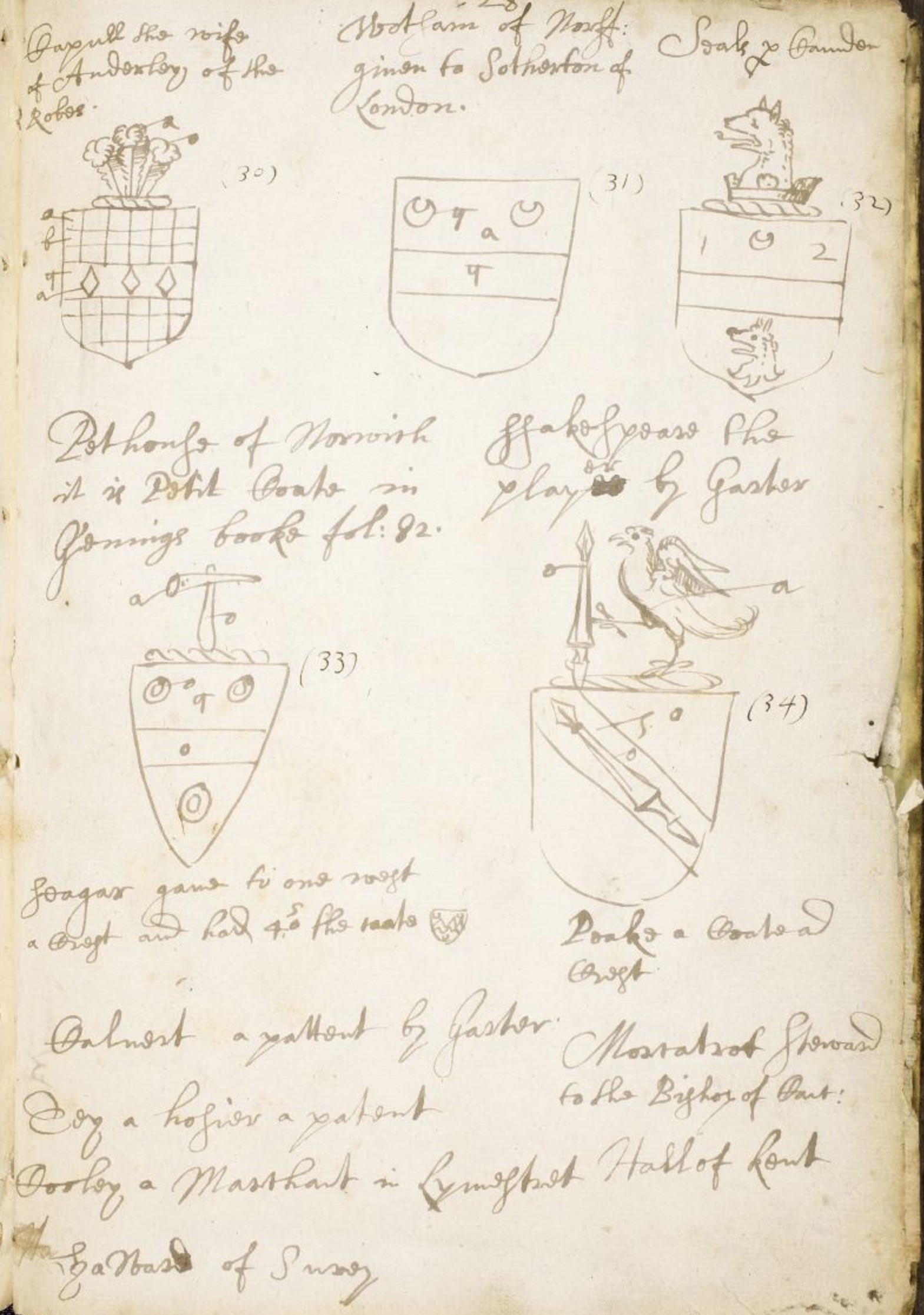
3. The ONLY Shakespeare Gentleman
Part II: Association
For twenty-five years he was embedded in the same business with the same partners, documented in independent legal records that were never intended as testimony about authorship.
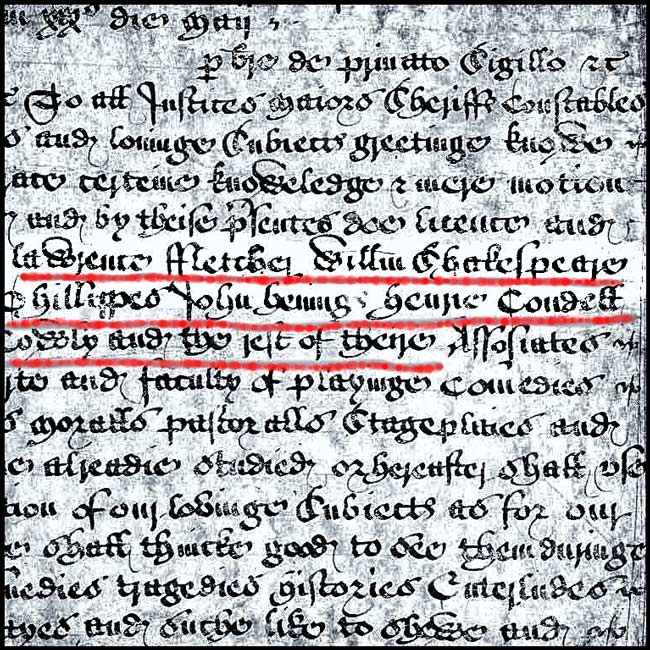
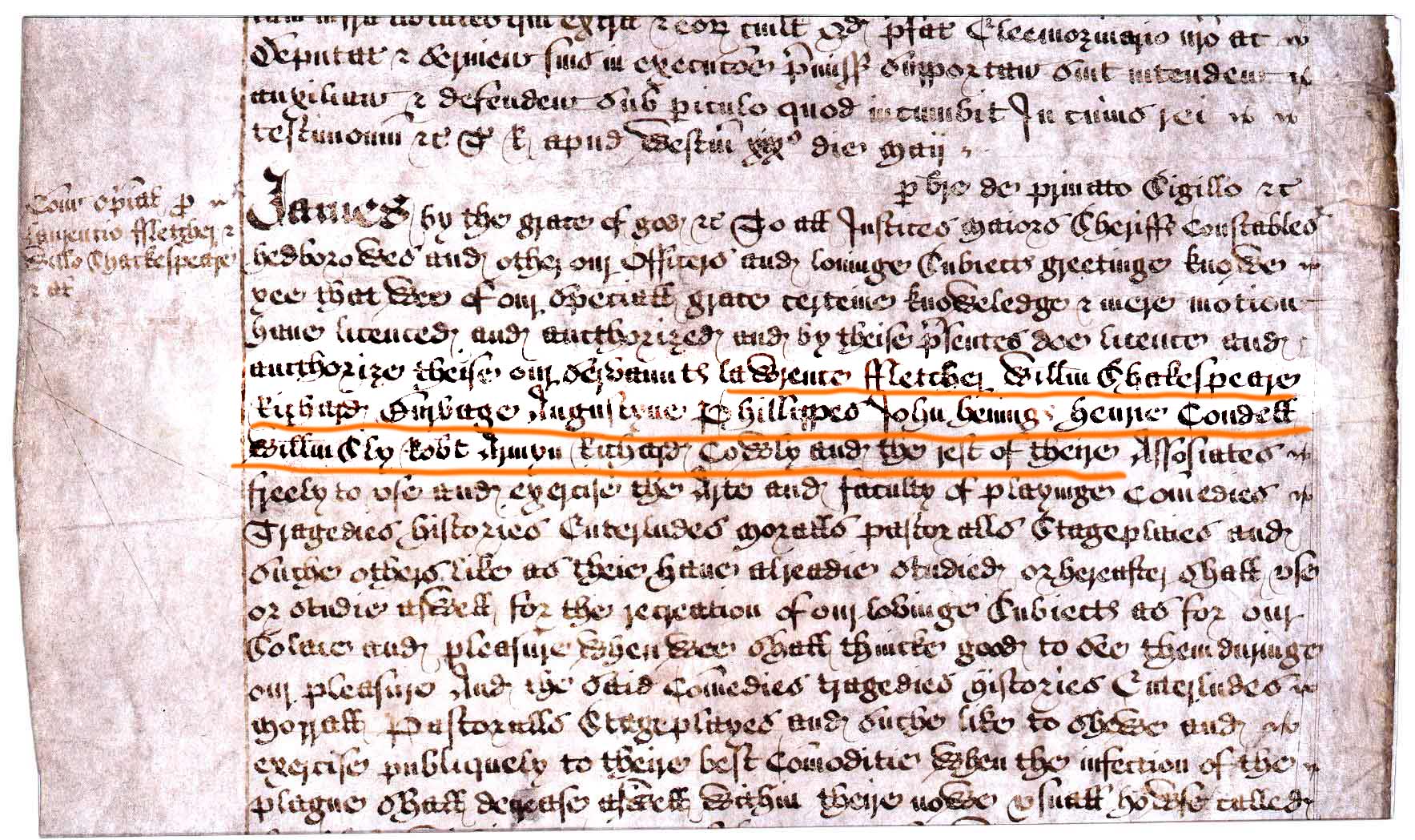
4. Sharer in the King's Men
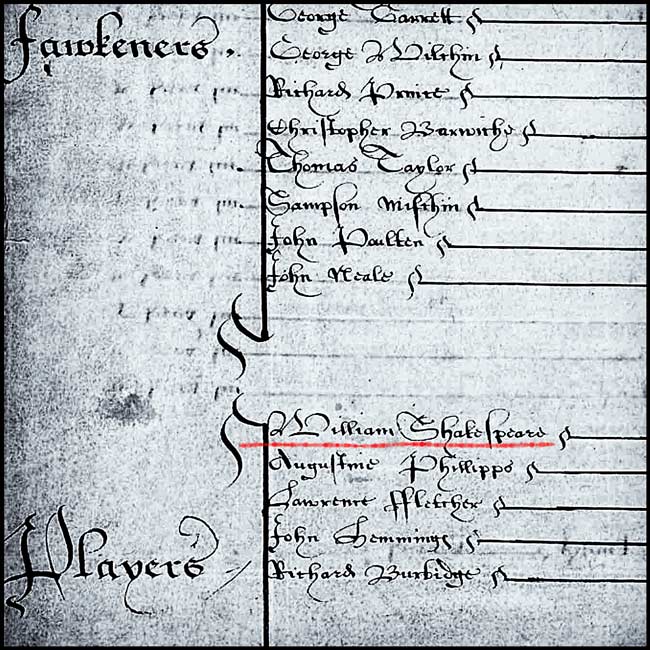
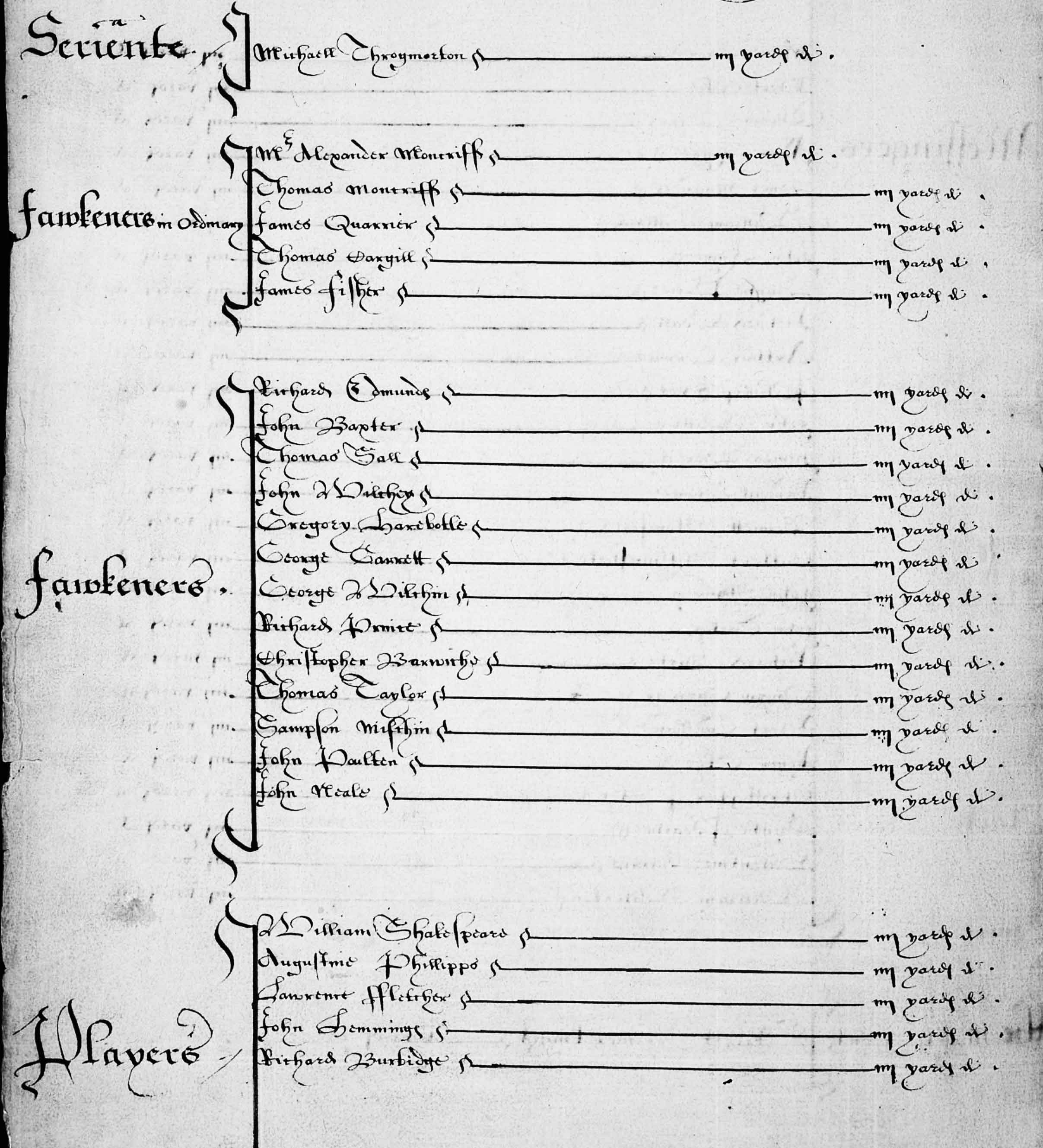
5. Documented business relationship
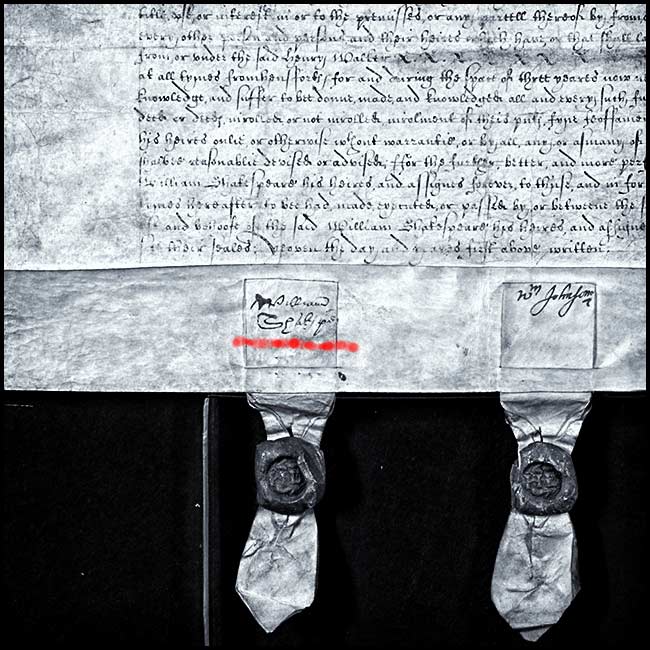
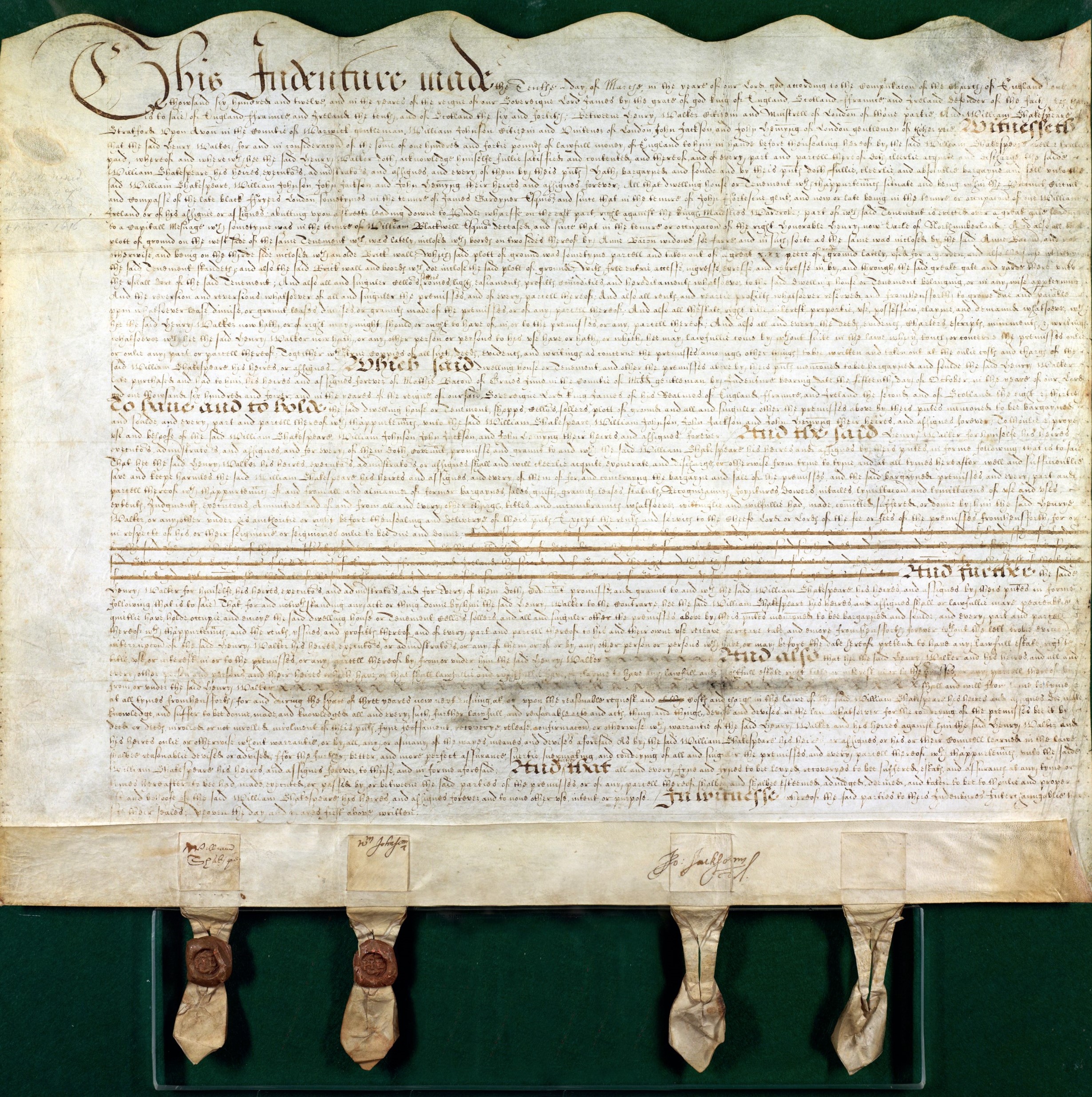
6. Fellow player named as trustee
Part III: Explicit Testimony
The men who knew him best named him explicitly, in sworn legal documents and in print, with no motive to deceive and every reason to know.
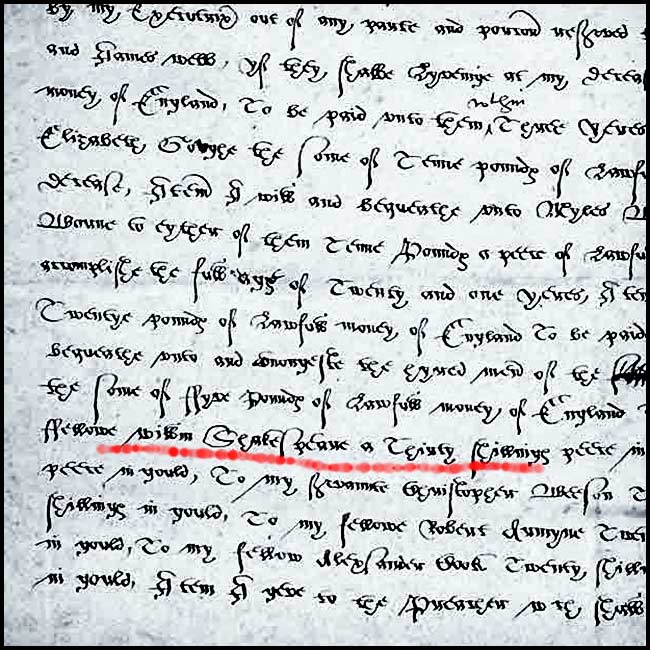
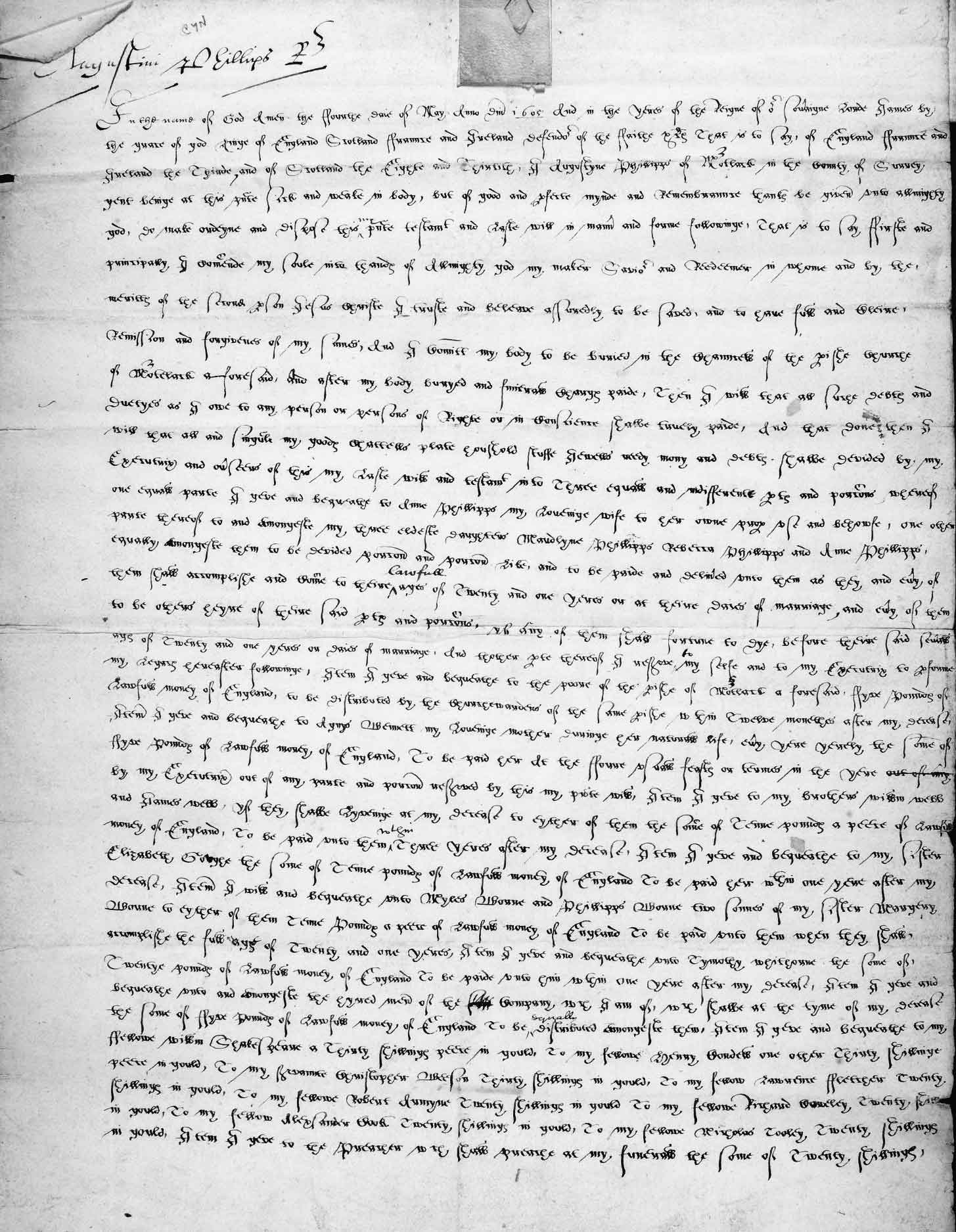
7. Named as fellow in a player's will
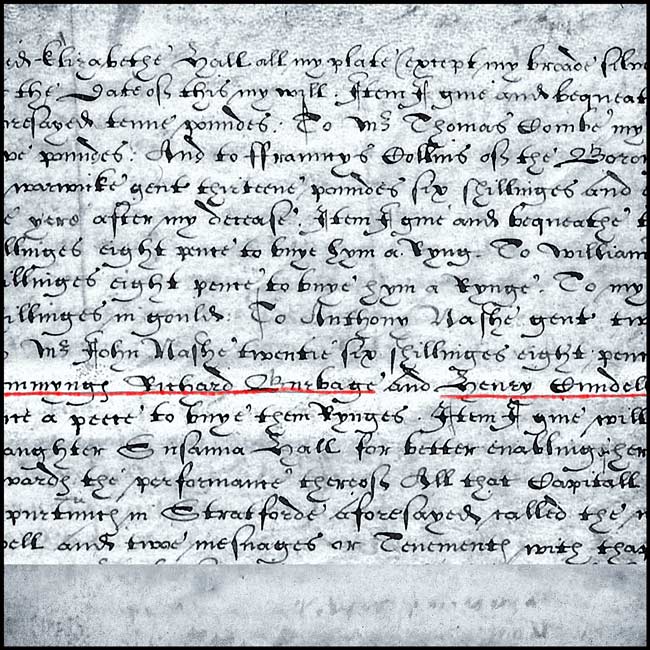
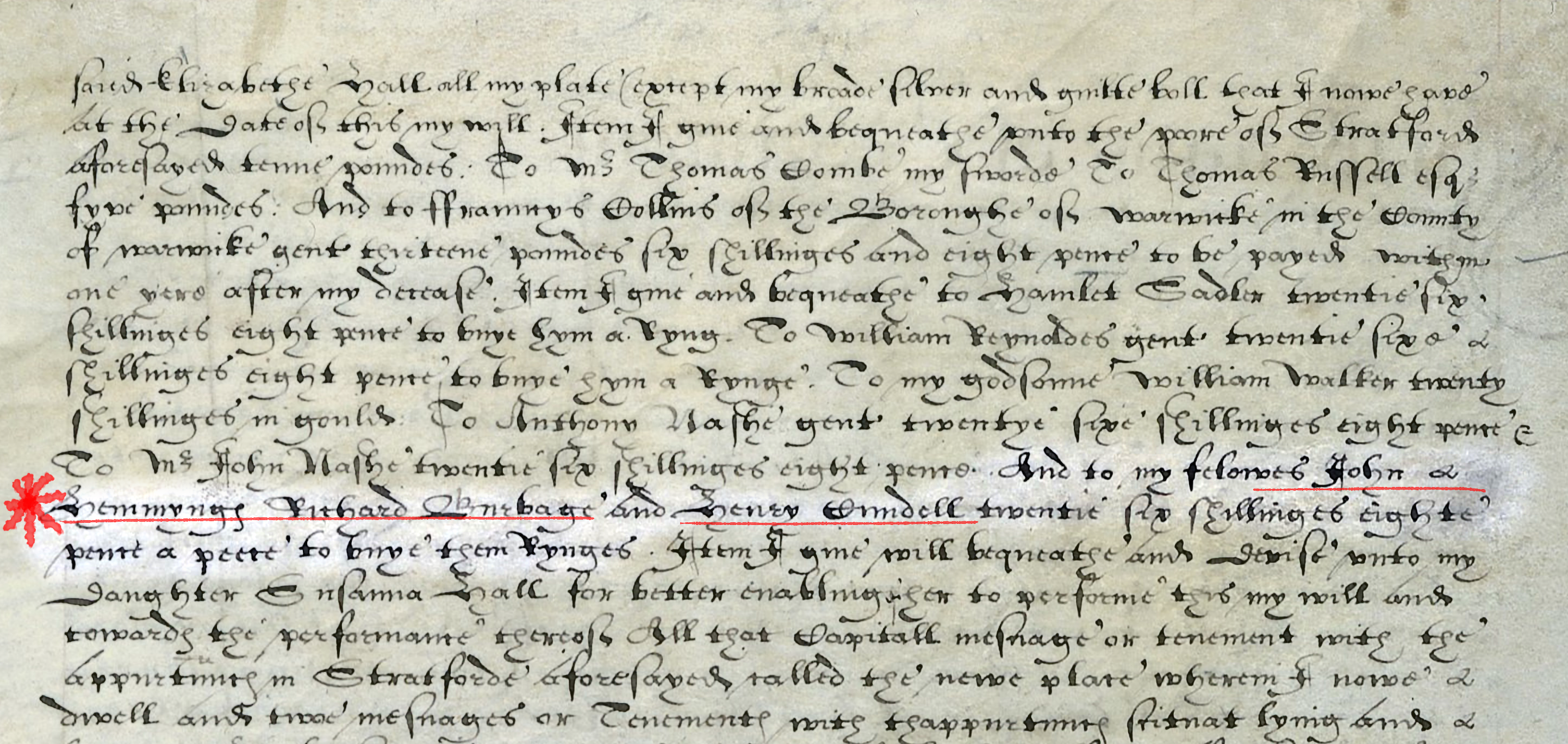
8. Left money to fellow players
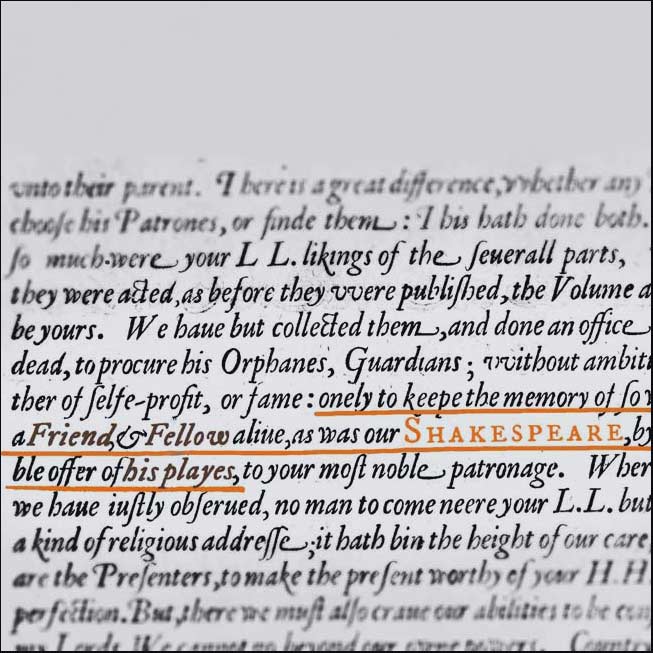
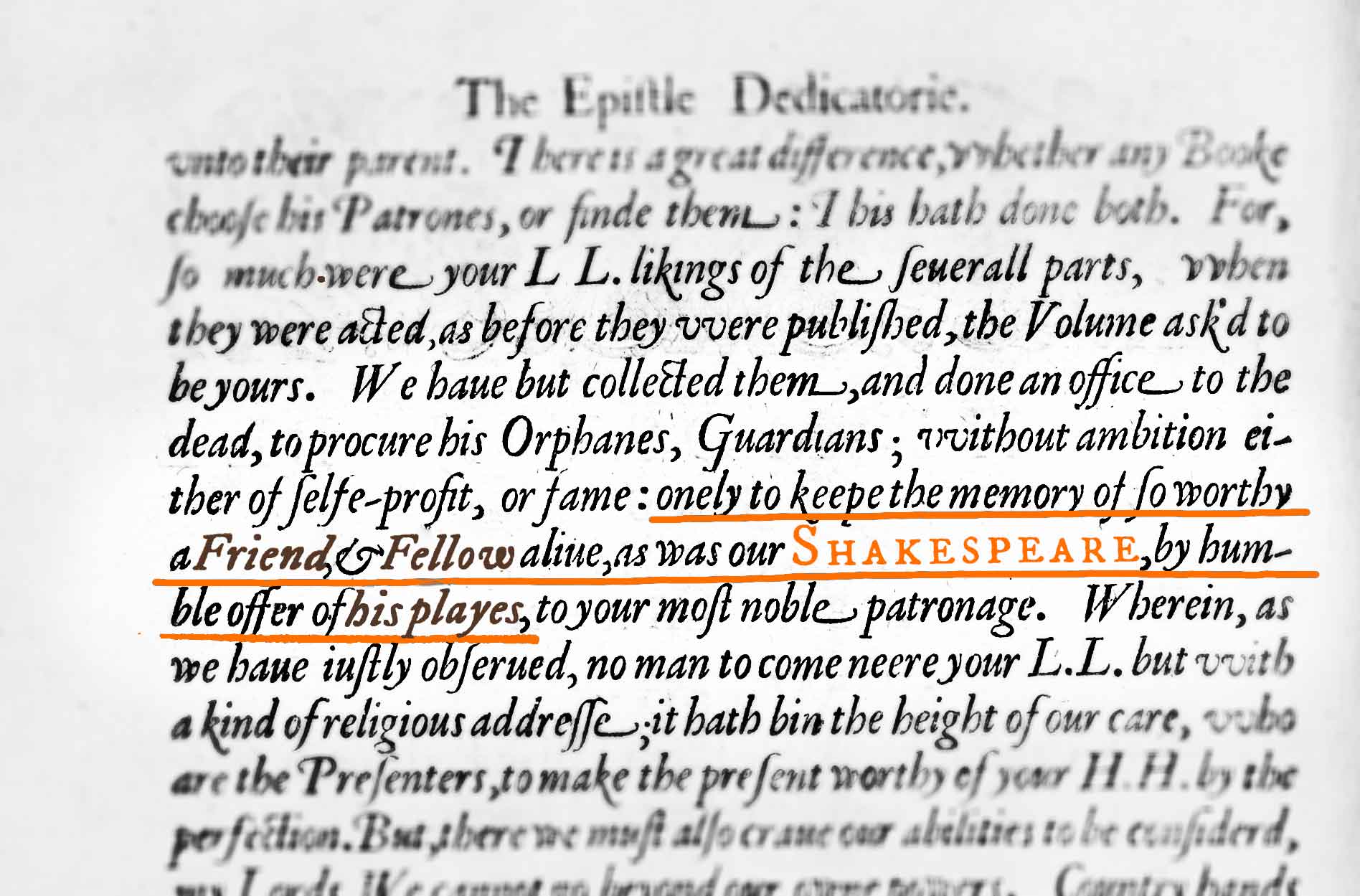
9. Friend and fellow
Concluding Statement
These nine links form a chain, not a list. Each document was created independently, for legal or commercial purposes unrelated to literary credit. None of them was written to prove Shakespeare’s authorship—which is precisely what makes them collectively conclusive. He was named on title pages during his lifetime; he was a gentleman, uniquely identified; he was a principal shareholder in the company that performed his plays for twenty-five years; he was embedded in a network of mutual professional and personal obligation documented in wills, property deeds and royal patents; and the men who compiled his works after his death2, knowing which to include as canonical and which to omit as inauthentic, the same men who had worked alongside him, trusted him with property, and named him in their own wills.
The prima facie case is complete. It falls to those who dispute it to produce evidence of comparable weight for any alternative candidate. In over a century of organised effort, none has appeared.
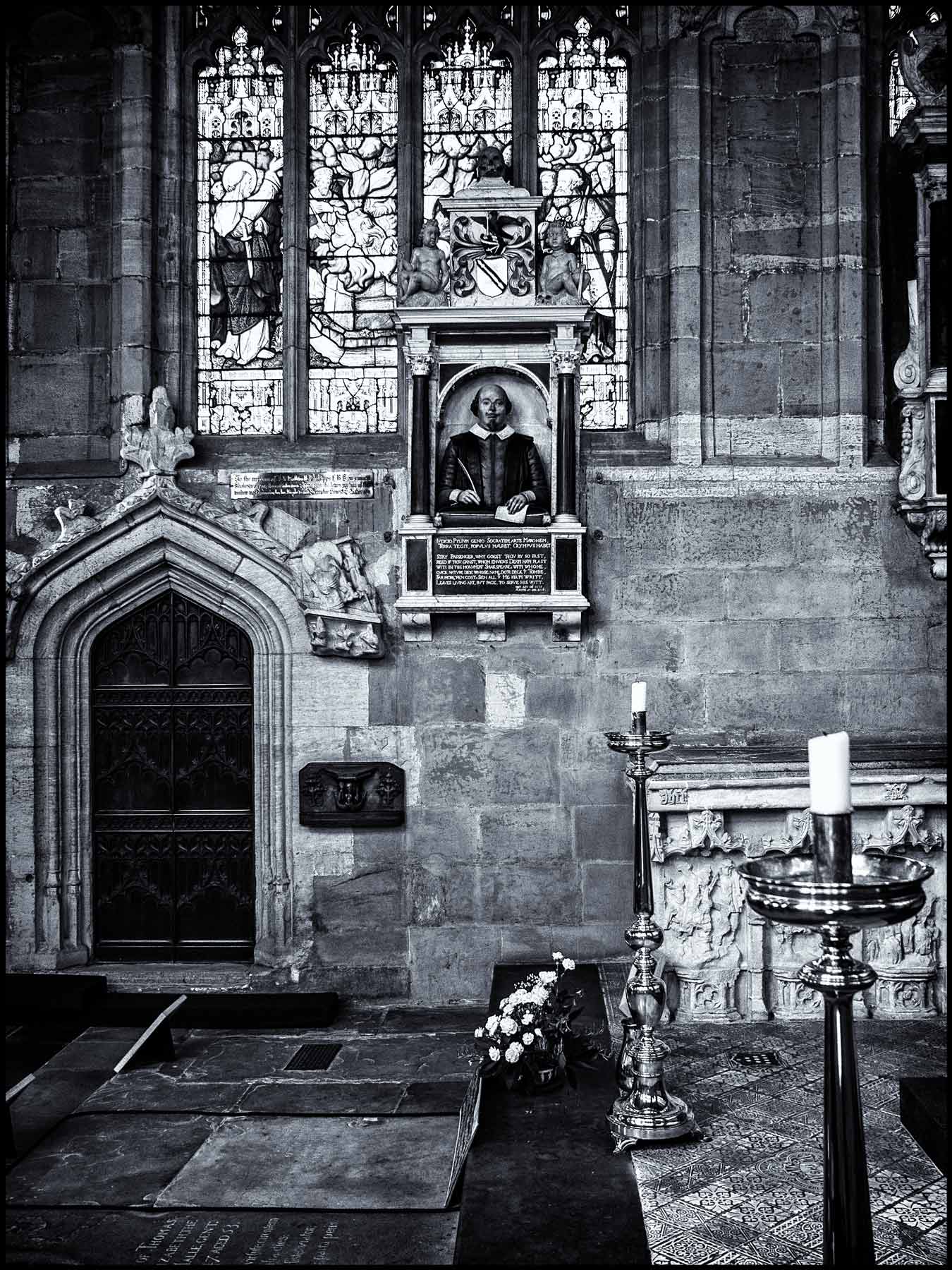
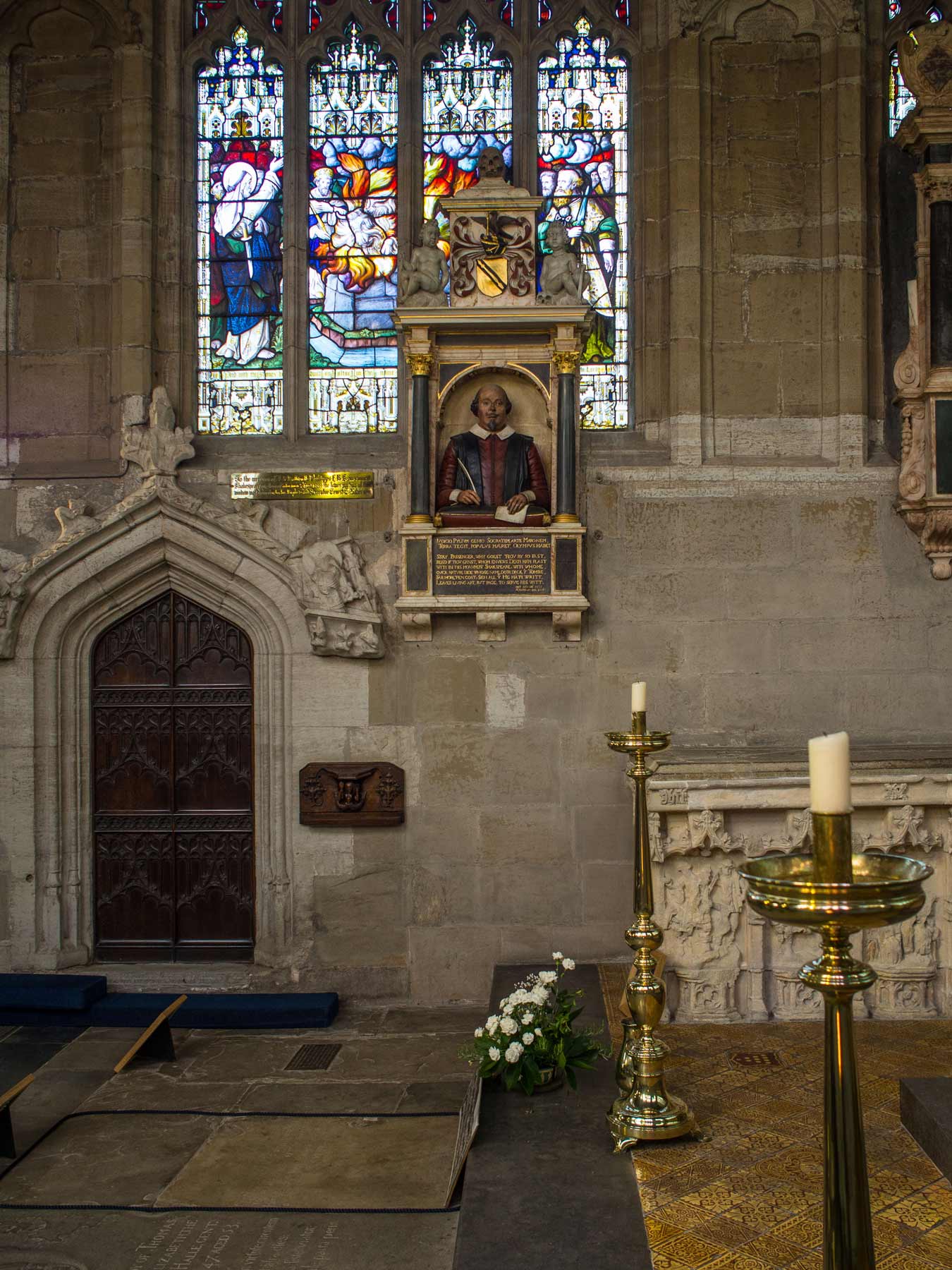
William Shakespeare’s monument, Holy Trinity Church, Stratford upon Avon. The monument was erected before 1623, when Leonard Digges referred to it in his commendatory verses in the First Folio. It identifies the subject as a writer—‘a Pylus in judgement, a Socrates in genius, a Virgil in art’—and connects the Folio’s author to the man buried beneath. Oxfordians have devoted considerable energy to disputing the monument’s original form, since in its present state it is an insurmountable obstacle to their thesis. ⌕
Footnotes
William Shakespeare, Mr. William Shakespeares Comedies, histories & tragedies, published according to the true originall copies. London, printed by Isaac Jaggard and Edward Blount, 1623., (London: William Jaggard, Edward Blount, L. Smithweeke, and W. Aspley, 1623, 1623).↩︎
John Heminges and Henry Condell, the two senior partners in the King’s Men who compiled the First Folio, name the author of the plays as “Shakespeare,” their “friend and fellow.” Evidence from diverse primary sources supports a prima facie case that this identification applies to William Shakespeare of Stratford upon Avon—and only William Shakespeare.↩︎