Shakespeare’s Hand in The Play of Sir Thomas More
Alfred William Pollard (1859–1944)
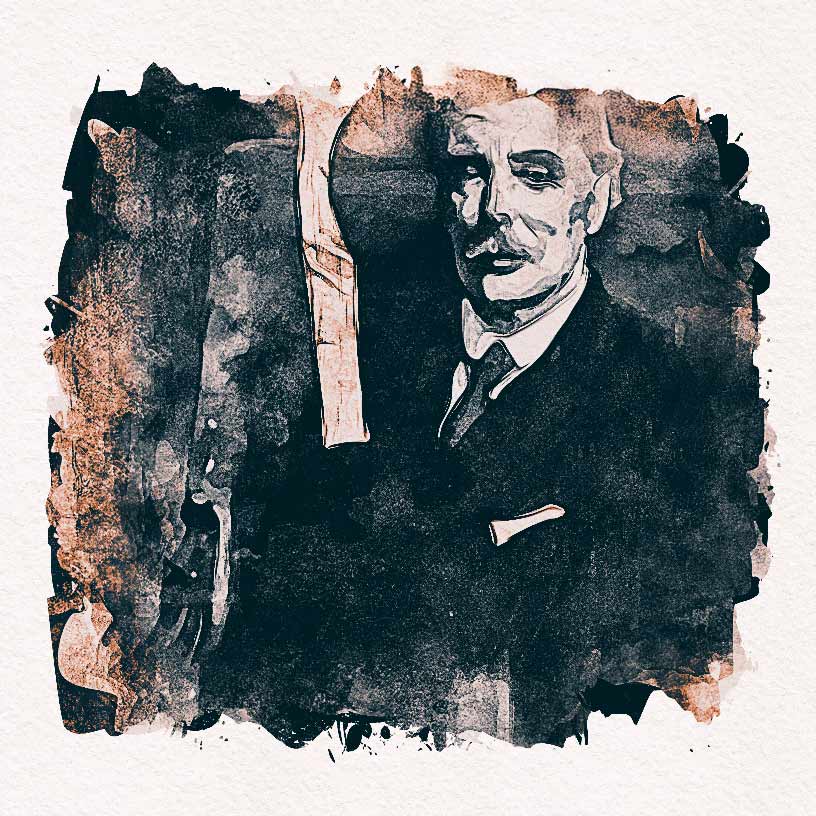
In his key Shakespearean document on Hand D, Pollard (1923) included Maunde Thompson’s long analysis carried out for the tercentary celebrations in 1916 under the aegis of The Oxford University Press. These events were occluded by those in France that summer but the date demonstrates that the work was not done, as almost all doubters contend, “to respond to the growing popularity of the authorship question after the release of Looney’s Shakespeare Identified which launched the candidacy of The Earl of Oxford”1 . In a writing career that continued until his death in 1944, it’s unlikely that Pollard gave more than the single thought below to Oxford’s claim. He certainly never mentions it anywhere else. The remaining “Oxford”s in the book are all references to the university—so much for the pressure from The Flat Shakespeare Society.
The book includes other essays on the subject2 alongside Maunde Thompson’s prodigious work on the handwriting and his conclusions which have yet to be challenged by serious palaeographers.
Preface
An example of academic caution with a new theory.
THE object of this book is to strengthen the evidence of the existence (in the Harleian MS. 7368 at the British Museum) of three pages written by Shakespeare in his own hand as part of the play of Sir Thomas More. The contributors have tried not to be over-eager in pressing their contention, or to claim more than they can make good. They would not have their readers less critical than they have tried to be themselves, and are aware that from one quarter at least searching criticism is to be expected, since if Shakespeare wrote these three pages the discrepant theories which unite in regarding the “Stratford man” as a mere mask concealing the activity of some noble lord (a I7th Earl of Oxford,a 6th Earl of Derby, or a Viscount St Albans) come crashing to the ground.
It is here contended that the writing of the three pages is compatible with a development into the hand seen in Shakespeare’s considerably later extant signatures and explains misprints in his text; that the speiling of the three pages can all be paralleled from the text of the best editions of single plays printed in Shakespeare’s life, and that the temper and even the phrasing of the three pages in the two crucial points involved, the attitude to authority and the attitude to the crowd, agree with and render more intelligible passages in much later plays. In the Introduction it is shown that the most likely date at which the three pages were written is one which easily admits of their composition by Shakespeare for the company for which he habitually wrote.
All these contentions may be mistaken; but the Editor may at least claim for his contributors that they have earned a right to their opinions and that their conclusions cannot lightly be dismissed.While there has been some friendly interchange of criticism each contributor must be understood as taking responsibility only for his own paper. Grateful acknowledgement is offered to the Delegates of the Clarendon Press for their kindness in allowing use to be made of the facsimiles of the six signatures in Sir E. Maunde Thompson’s book on Shakespeare’s Handwriting published by them in 1916.
June 1923
Footnotes
This exact claim is made more than once on Ros Barber’s Authorship MOOC. https://www.coursera.org/learn/shakespeare/home/module/1↩︎