1 Samuel: Marks, References and Matches
Bible
Geneva Bible
Folger Marks
Shaheen References
Stritmatter Diagnostics
The First Book of Samuel (1 Samuel) in the Bible contains 31 chapters, 810 verses, and approximately 20,837 words in the original Hebrew, or around 25,000 words in the King James Version (KJV). It is the 10th longest book in the Bible. 1 Samuel is the book most heavily marked in the Folger Geneva Bible — 80 marks, more than any other book. It is also the book where Stritmatter makes most of his interventions, adding 15 references and 6 direct diagnostics to Shaheen’s baseline of 72 Shakespeare references. The table below shows every marked verse in the book. The internat’s only online Geneva Bible does not support remote text retrieval, so the actual bible verses are pulled from the Bodleian King James Version and the scene line numbers collected from Shaheen are from his bibliography and notes and so deliver links to the University of Victoria’s curated text library.
The clusters of marks in the David and Saul narrative (chapters 14–19, 24–28) reflect the interests of a serious Protestant reader engaging with questions of kingship, conscience and divine authority. They do not connect well with Shakespeare, whose references to 1 Samuel are as thinly and randomly distributed as his references to any other book of similar length. Stritmatter is almost casual in his conclusion that the marks are all Oxford’s but while this is his most propitious chapter, the marks of the red underliner would be much better suited to a later De Vere, Aubrey, who was active in the English Civil in which the Divine Right of Kings was the central issue.
Key: M Mark ✓ Match R Reference S Stritmatter ~ Close
1 Samuel in numbers: 31 chapters | 810 verses | 20,837 words Hebrew | 25,000 words English | 80 marks | 72 Shakespeare references (Shaheen) | 18 matches | 21 Stritmatter interventions | 16 matches only with Stritmatter’s additions | 810 total verses
The marks cluster in the David and Saul narrative (chapters 14–28). Shakespeare’s references are spread across the whole book with no corresponding cluster. Even in the chapters most heavily marked — 15, 16, 19, 24 — the majority of verses with marks have no Shakespeare reference at all. The argument that the annotator and the playwright were the same person requires us to believe that this annotator marked the verses Shakespeare didn’t use.
Warning: package 'ggplot2' was built under R version 4.5.3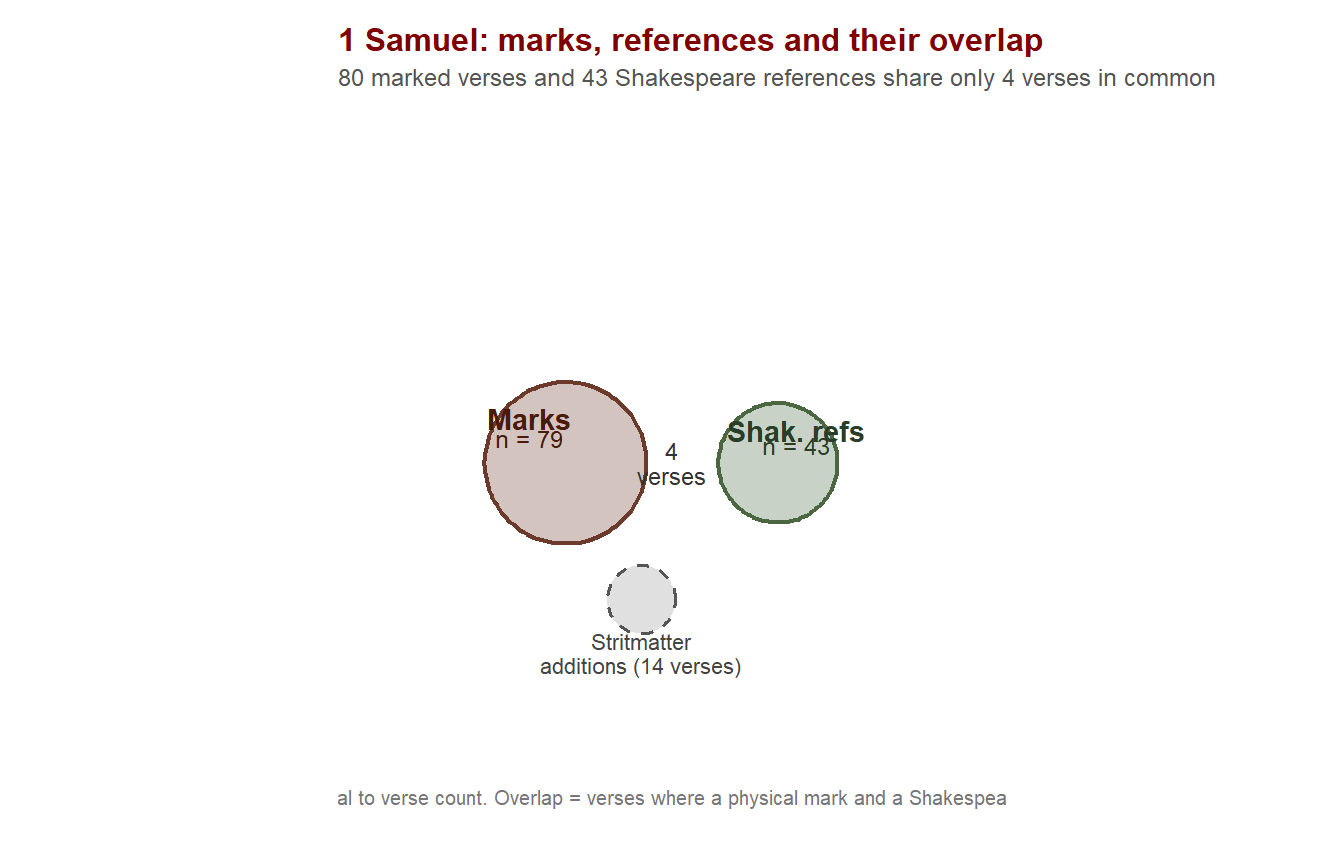
The odds of a reference being marked, by Bible book
The table below shows every Bible book that appears in Shaheen’s reference list, sorted by the number of Shaheen references. The Odds column expresses how many Shaheen references exist per Folger Bible mark for that book — the higher the number, the less likely a referenced passage is to be marked. Oxfordian arguments typically present only the books where this ratio looks favourable; the full picture is rather different. Books where the Folger mark count is zero are shown with ∞ — references with no corresponding marks at all.
Note that the odds are calculated on Shaheen references only, not including Stritmatter’s additions. Including Stritmatter’s additions would inflate the apparent density of references against marks, which is precisely how Oxfordian presentations overstate the case.
The ∞ rows are the most telling: 0 Bible books appear in Shaheen’s list with no corresponding Folger mark at all. If the annotator were Shakespeare, we would expect the opposite pattern — the most-referenced books most heavily marked. We do not find it.