Shakespeare Gent.

Explicit Title Page

2. Master William Shakespeare gentleman
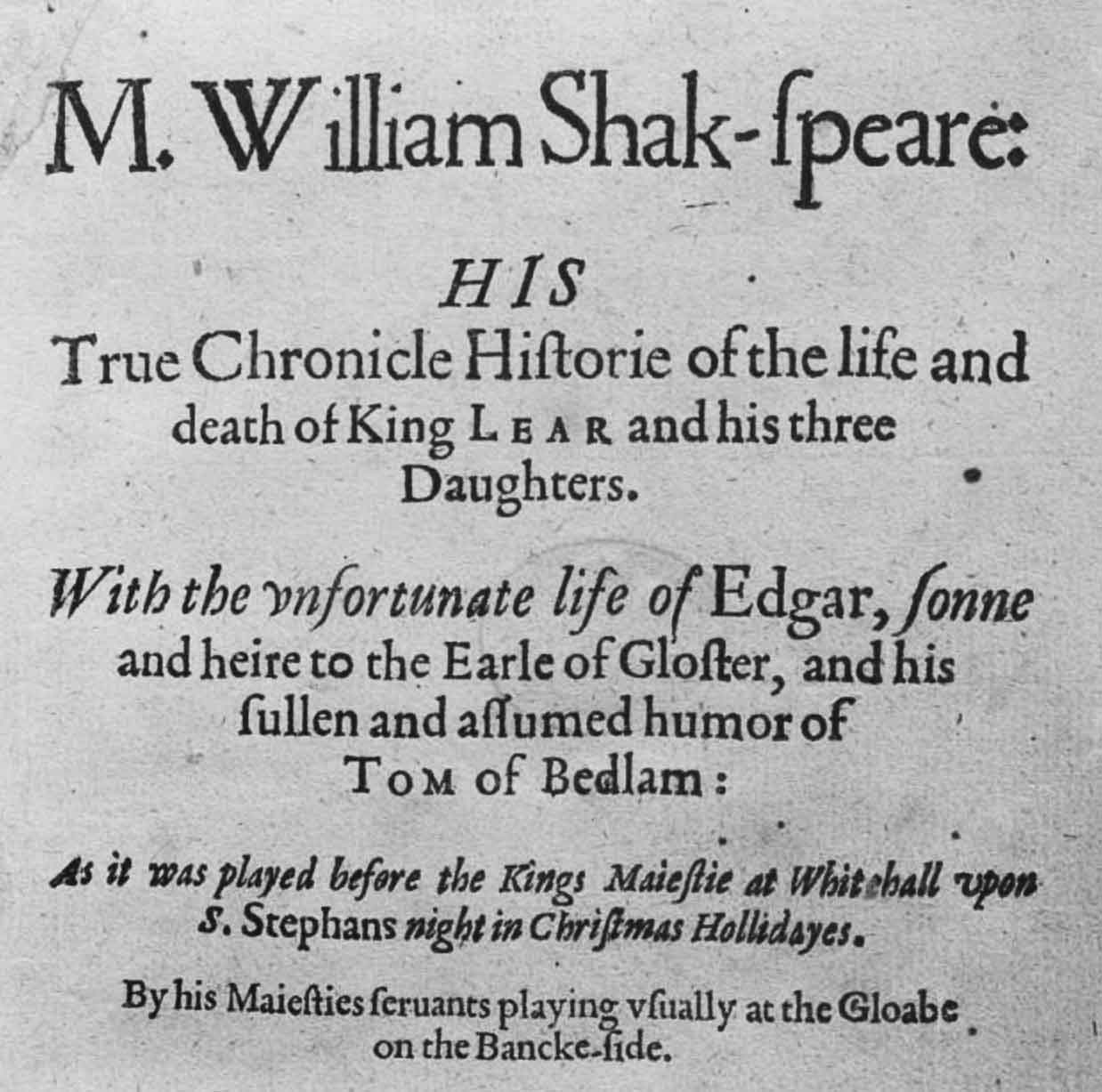
Explicit title page omitting no important connection to the man from Stratford. William Shakespeare’s armigerous status uniquely identifies him as the William Shakespeare from Stratford-upon-Avon because the College of Arms records no other qualifying William Shakespeare in the entire country at the time, but does record the grant of arms to John Shakespeare of Stratford-upon-Avon for his services in various “offices of honour”. The parish records recording that William was the eldest son of John Shakespeare of Stratford-upon-Avon survive, as does the monument to William Shakespeare in Holy Trinity Church with the coat of arms granted to John Shakespeare upon it. We have, therefore, reliable evidence that the armigerous William Shakespeare was the one from Stratford-upon-Avon. When we have references to Shakespeare in a literary context that also mention his status as a gentleman, that uniquely identifies the writer as the William Shakespeare from Stratford-upon-Avon. It’s a basic commutative property: William Shakespeare of Stratford-upon-Avon was the only armigerous gentleman of that name. An armigerous gentleman named William Shakespeare was identified as a writer. “M.” - or “Mr.”, a title that would apply to an individual whose family was entitled to bear arms. “M. William Shak-speare: his True Chronicle Historie of the life and death of King Lear and his three Daughters. With the unfortunate life of Edgar, sonne and heire to the Earle of Gloster, and his sullen and assumed humor of Tom of Bedlam. As it was played before the Kings Maiestie at Whitehall vpon S. Stephans night in Christmas Hollidayes. By his Maiesties seruants playing usually at the Gloabe on the Banckeside.” A “Gent.” in deed.

Explicit title page1 omitting no important connection to the man from Stratford.2 William Shakespeare’s armigerous status uniquely identifies him as the William Shakespeare from Stratford-upon-Avon because the College of Arms records no other qualifying William Shakespeare in the entire country at the time, but does record the grant of arms to John Shakespeare of Stratford-upon-Avon for his services in various “offices of honour”. The parish records recording that William was the eldest son of John Shakespeare of Stratford-upon-Avon survive, as does the monument to William Shakespeare in Holy Trinity Church with the coat of arms granted to John Shakespeare upon it. We have, therefore, reliable evidence that the armigerous William Shakespeare was the one from Stratford-upon-Avon. When we have references to Shakespeare in a literary context that also mention his status as a gentleman, that uniquely identifies the writer as the William Shakespeare from Stratford-upon-Avon. It’s a basic commutative property: William Shakespeare of Stratford-upon-Avon was the only armigerous gentleman of that name. An armigerous gentleman named William Shakespeare was identified as a writer. “M.” - or “Mr.”, a title that would apply to an individual whose family was entitled to bear arms. “M. William Shak-speare: his True Chronicle Historie of the life and death of King Lear and his three Daughters. With the unfortunate life of Edgar, sonne and heire to the Earle of Gloster, and his sullen and assumed humor of Tom of Bedlam. As it was played before the Kings Maiestie at Whitehall vpon S. Stephans night in Christmas Hollidayes. By his Maiesties seruants playing usually at the Gloabe on the Banckeside.” A “Gent.” in deed.

‘M. William Shak-speare:3 his True Chronicle Historie of the life and death of King Lear and his three Daughters… As it was played before the Kings Maiestie at Whitehall vpon S. Stephans night in Christmas Hollidayes. By his Maiesties seruants playing usually at the Gloabe on the Banckeside.’

Every element of this title page—the name, the title, the company, the venue—connects to a single documented individual. Only one William Shakespeare held a gentleman’s title during the period the plays were published. No Doubter has ever identified a second candidate.

← Back to the Prima Facie Case

Footnotes

  1. Shakespeare, William, 1564-1616, Plays in print, Print, British Library, 1600s, Shakespeare’s name printed on the title page or dedicatory leaf of his work in his lifetime, King Lear DOI: doi.org/10.37078/599 https://shakespearedocumented.folger.edu/resource/document/king-lear-first-edition↩︎

  2. Stationers’ Registry entry for King Lear https://shakespearedocumented.folger.edu/resource/document/stationers-register-entry-king-lear↩︎

  3. The hyphenated form “Shake-speare” appears in other places, sometimes, as in Ben Jonson’s cast lists in his Works (1573?-1637. Jonson Ben, The workes of Beniamin Ionson, (London :: Printed by W: Stansby, and are to be sould by Rich: Meighen, 1616)), both variants appearing in one publication created and edited by a lifetime colleague of Shakespeare’s. A full list of variant spellings in EEBO appears here.↩︎